24/7 Space News
ROCKET SCIENCE
Hypersonica completes milestone hypersonic missile flight test in Norway
illustration only

Hypersonica completes milestone hypersonic missile flight test in Norway

by Clarence Oxford
Los Angeles CA (SPX) Feb 17, 2026

Hypersonica has completed its first hypersonic test flight at Andoya Space in Norway, marking what the company describes as a major step toward a European sovereign hypersonic strike capability by 2029.

The Anglo-German defense and aerospace company reported that its missile prototype accelerated to speeds above Mach 6 and flew more than 300 kilometers during the mission. All systems performed nominally during ascent and on the vehicle's high-speed descent through the atmosphere, and engineers validated performance down to the subcomponent level at hypersonic speeds.

Co-founders Dr. Philipp Kerth, CEO, and Dr. Marc Ewenz, CTO, said the mission delivered critical flight data for future hypersonic strike systems and for analyzing potential adversary weapon profiles. They highlighted that Hypersonica, as a privately funded startup, moved from design to the launch pad in just nine months, a pace they argue should reset expectations for the cost and timelines associated with developing hypersonic weapons.

The executives framed the effort as both a technological and strategic milestone for European defense innovation. They stressed that, as Europeans committed to freedom and democracy, they see the development of hypersonic strike technology as carrying a particular responsibility for safe and principled deployment. The company also acknowledged the role of Andoya Space as a key partner in enabling the maiden flight.

Hypersonica is pursuing a phased test program that starts with achieving and characterizing hypersonic flight, then demonstrating advanced flight control at hypersonic speeds, followed by complex maneuvering, and ultimately meeting full operational mission requirements. The successful Andoya mission is positioned as the first in this series of increasingly demanding flight demonstrations.

Preparation for the test campaign covered concept development, detailed design, hardware procurement, system integration, and ground testing. In parallel, the company completed export control procedures, regulatory clearances, flight safety assessments, and test range coordination, all within the same nine-month window from initial design to launch.

At the core of the program is a modular architecture that Hypersonica says allows rapid upgrades and shorter development cycles compared with traditional missile programs. According to the company, this approach can reduce development costs by more than 80 percent relative to conventional methods, while enabling faster iteration as new requirements or technologies emerge.

Hypersonica argues that this accelerated, lower-cost pathway will allow Europe to field hypersonic capabilities within the timeframes set out in both NATO and the United Kingdom's 2030 hypersonic frameworks. The company positions its effort as a way for European nations to obtain advanced strike options on a schedule and budget that would previously have been considered unrealistic.

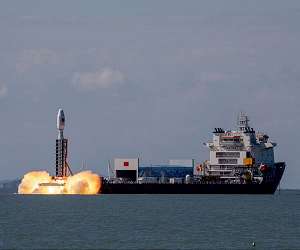
The test campaign also underscores the role of Andoya Space in hosting high-speed flight trials from its Norwegian range. Imagery from the mission shows the prototype and launch operations at the coastal site, with the company emphasizing that the system and test infrastructure are developed and operated in Europe, for European customers.

Related Links
Hypersonica GmbH
Rocket Science News at Space-Travel.Com

Subscribe Free To Our Daily Newsletters
Tweet

RELATED CONTENT
The following news reports may link to other Space Media Network websites.
ROCKET SCIENCE
NASA backs studies to boost hypersonic flight testing
Los Angeles CA (SPX) Feb 02, 2026
NASA is preparing for a new phase in hypersonic aviation by funding industry studies aimed at expanding flight test capabilities for reusable airbreathing vehicles that can cruise at several times the speed of sound. The agency has awarded short term study contracts to SpaceWorks Enterprises of Atlanta, Georgia, and Stratolaunch of Mojave, California, to examine how existing platforms could be adapted to conduct frequent and affordable hypersonic flight experiments. The work is managed under NASA' ... read more

ROCKET SCIENCE
International crew takes off for space station

NASA confirms first flight to ISS since medical evacuation

The coming end of ISS, symbol of an era of global cooperation

Crew 12 set for Dragon launch to Station in February

ROCKET SCIENCE
Isar Aerospace expands engine and stage testing at Esrange

UK backs new electric propulsion hub for satellite engines

Macron calls Musk 'an oversubsidised guy', prompting retort

Latvian startup advances nuclear-fueled power for satellites and future Moon missions

ROCKET SCIENCE
Curiosity Blog, Sols 4788-4797: Welcome Back from Conjunction

NASA Study: Non-biologic Processes Don't Fully Explain Mars Organics

Martian toxin found to toughen microbe built bricks

Perseverance rover completes landmark AI guided trek across Jezero rim

ROCKET SCIENCE
Dragon spacecraft gears up for crew 12 arrival and station science work

China prepares offshore test base for reusable liquid rocket launches

Retired EVA workhorse to guide China's next-gen spacesuit and lunar gear

Tiangong science program delivers data surge

ROCKET SCIENCE
BlackSky expands Gen 3 Assured deals with new defense customer

Muon Space ramps up multi-mission satellite constellations

ESA member states back SWISSto12 HummingSat with fresh funding round

Aerospacelab expands Pulsar navigation constellation work with new Xona satellite order

ROCKET SCIENCE
AI's bitter rivalry heads to Washington

NGA taps Vantor for AI change detection from space

ReOrbit and Google Cloud develop orbital space cloud network

Momentus and NASA plan joint mission to test orbital servicing technologies

ROCKET SCIENCE
Engineered microbes use light to build new molecules

Survey of 80 near Earth asteroids sharpens view of their origins and risks

Lab made cosmic dust experiment reveals paths to life chemistry

Einstein effect clears planets from tight double star systems

ROCKET SCIENCE
Jupiter size refined by new radio mapping

Polar weather on Jupiter and Saturn hints at the planets' interior details

Europa ice delamination may deliver nutrients to hidden ocean

Birth conditions fixed water contrast on Jupiters moons

Subscribe Free To Our Daily Newsletters


The content herein, unless otherwise known to be public domain, are Copyright 1995-2024 - Space Media Network. All websites are published in Australia and are solely subject to Australian law and governed by Fair Use principals for news reporting and research purposes. AFP, UPI and IANS news wire stories are copyright Agence France-Presse, United Press International and Indo-Asia News Service. ESA news reports are copyright European Space Agency. All NASA sourced material is public domain. Additional copyrights may apply in whole or part to other bona fide parties. All articles labeled "by Staff Writers" include reports supplied to Space Media Network by industry news wires, PR agencies, corporate press officers and the like. Such articles are individually curated and edited by Space Media Network staff on the basis of the report's information value to our industry and professional readership. Advertising does not imply endorsement, agreement or approval of any opinions, statements or information provided by Space Media Network on any Web page published or hosted by Space Media Network. General Data Protection Regulation (GDPR) Statement Our advertisers use various cookies and the like to deliver the best ad banner available at one time. All network advertising suppliers have GDPR policies (Legitimate Interest) that conform with EU regulations for data collection. By using our websites you consent to cookie based advertising. If you do not agree with this then you must stop using the websites from May 25, 2018. Privacy Statement. Additional information can be found here at About Us.