





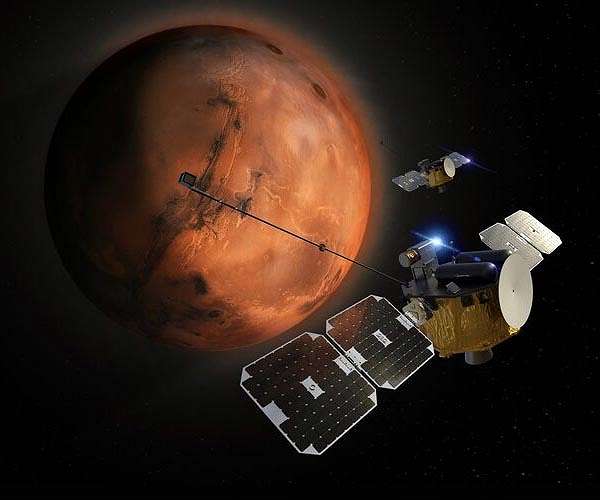
The company argues that without a capable relay network, Mars missions cannot deliver their full value. Past orbiters have mapped the Martian surface in detail and rovers have identified signs of ancient lakes and rivers, while future spacecraft are expected to return samples and pave the way for human crews. According to Rocket Lab, spacecraft and astronauts at Mars cannot routinely send large volumes of scientific and engineering data directly to Earth on their own, and an MTO-class relay orbiter would become a vital node to ensure that discoveries and high-value observations reliably reach Earth.
Rocket Lab also highlights the financial stake already committed to Mars exploration. Decades of NASA Mars missions have been funded by taxpayers and have produced results of global scientific significance. The current Mars Relay Network that supports these assets is described as fragile, aging and limited, and the recent loss of contact with the MAVEN spacecraft is cited as a warning that time is running out to install new, dependable links at Mars. Without a modern relay, the flow of data from spacecraft already operating at the Red Planet could diminish or cease, whereas an MTO would be intended to secure continuity of their science return.
Beyond sustaining current spacecraft, Rocket Lab frames a Mars Telecommunications Orbiter as a force multiplier for future missions. A single dedicated relay platform could support dozens of spacecraft over its lifetime, increasing how much science each lander, rover or orbiter can transmit. In this view, adding one well-equipped communications orbiter makes every other Mars mission more productive by enabling higher data rates, more frequent downlinks and greater operational flexibility.
The concept is also tied directly to NASA's plans for human exploration. The agency's long-term Mars strategy extends beyond robotic landings to sustained human presence and operations on the surface. Human crews will require continuous communications with Earth for navigation support, science coordination, safety, mission planning and basic personal contact. Rocket Lab maintains that such communications are essential infrastructure rather than optional add-ons, and that an MTO-class relay would provide the reliable, long-lived connectivity needed to support those human exploration goals.
Rocket Lab further connects the proposed mission to broader questions of national space leadership. The company argues that leadership in space is not only about reaching destinations but also about constructing enduring infrastructure that enables continued activity, drawing analogies to historical investments in ships, railroads and communications satellites. It contends that communications infrastructure will define the next phase of Mars exploration and that the United States should lead in deploying it. Within this narrative, Rocket Lab's independently launched MTO is presented as a necessary element of its wider Mars Sample Return architecture rather than a secondary consideration.
The company also emphasizes the role of commercial services in deep space communications. NASA's Space Communications and Navigation (SCaN) Program aims to transition from government-owned communications assets to commercially provided alternatives, seeking smarter and more cost-effective systems. Rocket Lab positions its Mars Telecommunications Orbiter as a direct response to this policy direction, intended to maintain continuity for national space priorities at Mars while reducing long-term costs for taxpayers.
To support its case, Rocket Lab describes MTO as critical infrastructure that demands extensive experience in spacecraft engineering and operations. The mission profile requires expertise in designing deep space platforms, managing interplanetary trajectories, integrating high-performance communications systems and delivering complete mission solutions. The company presents itself as a vertically integrated provider that can combine spacecraft design and manufacture, deep space mission operations, communications payloads and launch services in a single package.
Rocket Lab points to recent missions as evidence that it can deliver such capabilities. The company launched and operated NASA's CAPSTONE mission to the Moon and followed it with the ESCAPADE twin spacecraft mission to Mars. It notes that these are operational spacecraft in deep space rather than concepts on paper, and that its launch vehicle has completed more than 80 missions, establishing a record as one of the most frequently flown small orbital rockets. Rocket Lab also cites its hardware and software contributions to major NASA Mars missions, including the InSight lander, the Perseverance rover and the Ingenuity helicopter, as proof of its experience with Martian environments and mission requirements.
Finally, Rocket Lab presents its position within the broader U.S. exploration portfolio as an advantage. The company is not part of the Artemis lunar program and therefore portrays itself as able to focus squarely on delivering a Mars Telecommunications Orbiter aligned with national objectives at Mars. By offering an independently launched relay mission, Rocket Lab aims to strengthen America's capability at the Red Planet with a dedicated, commercially provided communications asset. The company concludes that it is "Mars tested and MTO ready," signaling that it sees the Mars Telecommunications Orbiter as a natural extension of its existing deep space activities.
Related Links
Rocket Lab
Mars News and Information at MarsDaily.com
Lunar Dreams and more
| Subscribe Free To Our Daily Newsletters |

| Subscribe Free To Our Daily Newsletters |







