24/7 Space News
SPACEMART
China tests AI satellite swarm for space-based computing
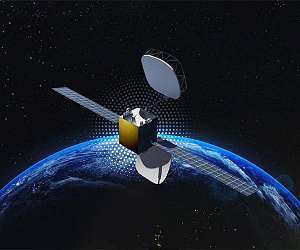
illustration only

China tests AI satellite swarm for space-based computing

by Riko Seibo
Tokyo, Japan (SPX) Feb 16, 2026

China has advanced its vision for space-based computing with a satellite network that deploys 10 artificial intelligence models in orbit and demonstrates inter-satellite networking capabilities.

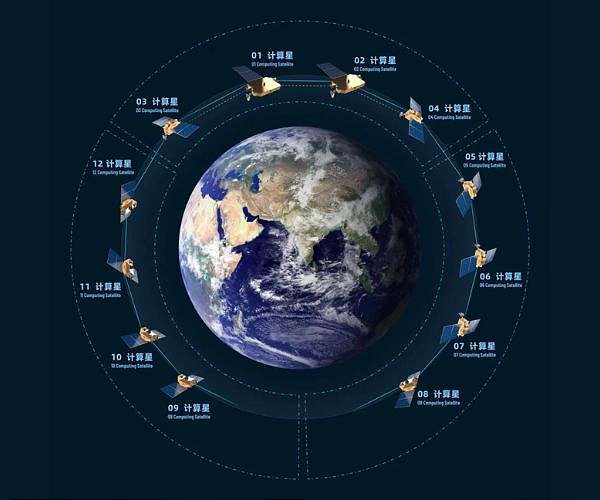
Developed by Zhejiang Lab in cooperation with international partners, the experimental space computing network is built around the Three-Body Computing Constellation, a planned fleet of more than 1,000 satellites designed to deliver large-scale processing power in space.

The first 12 satellites of the constellation were launched in May 2025, marking the start of an on-orbit test campaign that has now run for nearly nine months.

During this period, mission controllers verified key functions including crosslink networking between spacecraft, distributed computing across the constellation, deployment of AI models on orbit and operation of scientific payloads.

Among the payloads are two large space-based AI systems: an 8-billion-parameter remote sensing model and an 8-billion-parameter astronomical time-domain model, which rank among the most capable AI models currently operating in orbit.

In November 2025, the remote sensing model was used to carry out an infrastructure survey over an area of 189 square kilometers in northwest China, automatically identifying features such as stadiums and bridges even when they were covered by heavy snow.

For astrophysics, two satellites carry cosmic X-ray polarization detectors that work with an onboard AI model to classify gamma-ray bursts in real time, achieving an accuracy rate of 99 percent while sharply reducing the amount of data that must be transmitted to the ground and processed on Earth.

The team has also demonstrated inter-satellite links among six spacecraft in the fleet, a critical milestone for creating a functional space-based computing network capable of routing and sharing data in orbit.

According to Zhejiang Lab, once the full constellation of more than 1,000 satellites is deployed, the system is expected to provide an aggregate computing performance of around 100 quintillion operations per second.

With this architecture, part of the data collected in space could be processed directly on orbit and then delivered to end users in near real time, reducing latency and easing the burden on ground-based data centers and communications links.

Li Chao, a researcher at Zhejiang Lab, said the computing constellation concept points toward a future in which satellites handle more of the data-processing workload themselves, enabling new applications in deep space exploration, smart city management and large-scale natural resource surveys.

Related Links
Zhejiang Lab
The latest information about the Commercial Satellite Industry

Subscribe Free To Our Daily Newsletters
Tweet

RELATED CONTENT
The following news reports may link to other Space Media Network websites.
SPACEMART
ESA member states back SWISSto12 HummingSat with fresh funding round
Renens, Switzerland (SPX) Jan 21, 2026
SWISSto12 has secured 73 million euros in financial support from European Space Agency (ESA) member states through the HummingSat ARTES partnership project, reinforcing development and industrialization of its compact geostationary telecommunications platform. The company now has more than 100 million euros in total recent funding after combining this institutional backing with additional capital from European private investors raised in the second half of 2025. The new ESA investment will acceler ... read more

SPACEMART
Launch to ISS pushed to Thursday over weather: NASA

NASA crew set for flight to ISS

Voyager wins NASA ISS mission management role through 2030

Sophie Adenot, the second French woman to fly to space

SPACEMART
xAI sees key staff exits, Musk promises moon factories

Vietnam licenses Musk's satellite internet firm Starlink

UK space firm Skyrora explores buying assets of struggling rival Orbex

Ariane 6 four booster launcher completes on schedule mission

SPACEMART
Mars' 'Young' Volcanoes Were More Complex Than Scientists Once Thought

Curiosity Blog, Sols 4788-4797: Welcome Back from Conjunction

NASA Study: Non-biologic Processes Don't Fully Explain Mars Organics

Martian toxin found to toughen microbe built bricks

SPACEMART
Dragon spacecraft gears up for crew 12 arrival and station science work

China prepares offshore test base for reusable liquid rocket launches

Retired EVA workhorse to guide China's next-gen spacesuit and lunar gear

Tiangong science program delivers data surge

SPACEMART
BlackSky expands Gen 3 Assured deals with new defense customer

Muon Space ramps up multi-mission satellite constellations

ESA member states back SWISSto12 HummingSat with fresh funding round

Aerospacelab expands Pulsar navigation constellation work with new Xona satellite order

SPACEMART
Abundant element alloy enables rare earth free cryogenic cooling

JUNO VR system brings detector events into immersive 3D space

Astroscale Japan to mature electric refueling for future GEO servicing

Anthropic unveils new AI model as OpenAI rivalry heats up

SPACEMART
Debris disc oddities point to hidden outer planets

Hydrogen sulfide detected in distant gas giant exoplanets for the first time

JWST study links sulfur rich gas giants to core growth in distant HR 8799 system

Pressure driven leakage from marine snow feeds deep ocean microbes

SPACEMART
Jupiter size refined by new radio mapping

Polar weather on Jupiter and Saturn hints at the planets' interior details

Europa ice delamination may deliver nutrients to hidden ocean

Birth conditions fixed water contrast on Jupiters moons

Subscribe Free To Our Daily Newsletters


The content herein, unless otherwise known to be public domain, are Copyright 1995-2024 - Space Media Network. All websites are published in Australia and are solely subject to Australian law and governed by Fair Use principals for news reporting and research purposes. AFP, UPI and IANS news wire stories are copyright Agence France-Presse, United Press International and Indo-Asia News Service. ESA news reports are copyright European Space Agency. All NASA sourced material is public domain. Additional copyrights may apply in whole or part to other bona fide parties. All articles labeled "by Staff Writers" include reports supplied to Space Media Network by industry news wires, PR agencies, corporate press officers and the like. Such articles are individually curated and edited by Space Media Network staff on the basis of the report's information value to our industry and professional readership. Advertising does not imply endorsement, agreement or approval of any opinions, statements or information provided by Space Media Network on any Web page published or hosted by Space Media Network. General Data Protection Regulation (GDPR) Statement Our advertisers use various cookies and the like to deliver the best ad banner available at one time. All network advertising suppliers have GDPR policies (Legitimate Interest) that conform with EU regulations for data collection. By using our websites you consent to cookie based advertising. If you do not agree with this then you must stop using the websites from May 25, 2018. Privacy Statement. Additional information can be found here at About Us.