24/7 Space News
EXO WORLDS
Frozen hydrogen cyanide crystals may have helped spark early chemistry for life
illustration only

Frozen hydrogen cyanide crystals may have helped spark early chemistry for life

by Clarence Oxford
Los Angeles CA (SPX) Mar 04, 2026
Hydrogen cyanide is highly poisonous to humans, yet new work suggests it could have played a constructive role in the emergence of life on early Earth and in other cold environments in the solar system and beyond. At very low temperatures this molecule forms solid crystals, and those crystals can host chemistry that would normally be far too slow or even impossible under such frigid conditions.

In a study reported in the journal ACS Central Science, researchers used computer simulations to investigate how frozen hydrogen cyanide behaves at the molecular level. They focused on how electric fields at the surfaces of tiny crystals might concentrate charge and promote reactions, potentially turning a simple toxic molecule into a platform for building more complex compounds.

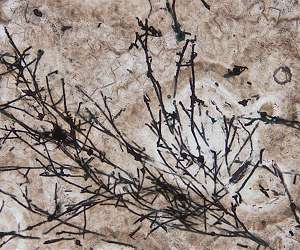
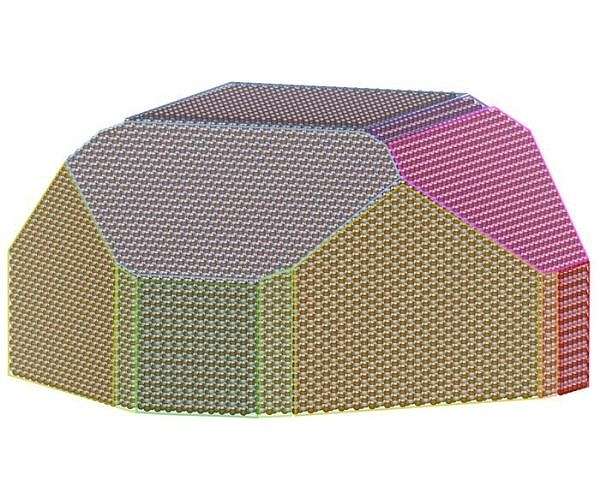
The team, led by Martin Rahm with coauthors Marco Capelletti and Hilda Sandstrom, modeled a stable hydrogen cyanide crystal as a cylinder around 450 nanometers long. The simulated crystal had a rounded base and a multifaceted top that resembled a cut gemstone, a geometry that matches strange cobweb like structures observed previously when hydrogen cyanide freezes and its crystals branch out from central points.

According to the calculations, some facets at the tips of these crystals are particularly reactive, creating local conditions that can drive chemical transformations in extreme cold. The simulations showed that surfaces on the crystals could support electric fields strong enough to change how molecules are oriented and how easily they exchange atoms and electrons during reactions.

From this analysis, the researchers identified two possible reaction pathways in which hydrogen cyanide on the crystal surface converts into hydrogen isocyanide, a more reactive isomer. These transformations could occur on timescales from minutes to days, depending on the temperature, indicating that significant chemistry is possible even in environments that would ordinarily suppress reaction rates.

Hydrogen cyanide and its derivatives are already known to form polymers, amino acids and nucleobases when mixed with water, linking this molecule to the origin of proteins and DNA. The new work suggests that when hydrogen cyanide freezes, its crystal surfaces could act as reactive hubs that further diversify the set of prebiotic molecules, with hydrogen isocyanide serving as a stepping stone toward more complex precursors of life.

The study also highlights that hydrogen cyanide is widespread in the universe, having been detected on comets and in the atmospheres of planets and moons such as Saturns moon Titan. If frozen hydrogen cyanide crystals can drive fast surface chemistry in these places, then cobweb like networks of crystals could contribute to organic complexity far from Earth as well as on the early planet.

Rahm notes that while the exact path from simple molecules to living systems may never be fully reconstructed, identifying plausible mechanisms for each intermediate step is achievable. The work shows that a molecule best known for its toxicity can, under the right conditions, create environments where new chemistry flourishes in the cold.

The researchers now encourage laboratory experiments to test these predictions under realistic cryogenic conditions. They suggest crushing hydrogen cyanide crystals in the presence of substances such as water and monitoring whether the freshly exposed surfaces indeed generate hydrogen isocyanide and other complex molecules at very low temperatures.

The authors report that their project received funding from the Swedish Research Council and from the National Academic Infrastructure for Supercomputing in Sweden, which provided the computational resources needed for the simulations.

Research Report:Electric Fields Can Assist Prebiotic Reactivity on Hydrogen Cyanide Surfaces

Related Links
National Academic Infrastructure for Supercomputing in Sweden
Lands Beyond Beyond - extra solar planets - news and science
Life Beyond Earth

Subscribe Free To Our Daily Newsletters
RELATED CONTENT
EXO WORLDS
Scientist wins 'Environment Nobel' for shedding light on hidden fungal networks
Washington, US (AFP) Jan 14, 2026
Beneath the surface of forests, grasslands and farms across the world, vast fungal webs form underground trading systems to exchange nutrients with plant roots, acting as critical climate regulators as they draw down 13 billion tons of carbon annually. Yet until recently, these "mycorrhizal networks" were greatly underestimated: seen as merely helpful companions to plants rather than one of Earth's vital circulatory systems. American evolutionary biologist Toby Kiers has now been awarded the Tyl ... read more

EXO WORLDS
NASA announces overhaul of Artemis lunar program amid technical delays

Texas AM partners with Aegis to orbit TAMU SPIRIT research hub on ISS

Regrowing marginal farmland can curb emissions without cutting food output

Chinese visitors to Japan slump as spat rumbles on

EXO WORLDS
Prometheus starts work on new Indiana solid rocket motor campus

NASA prepares Artemis II rocket for rollback after upper stage issue

Superconducting thruster cuts power and mass for space propulsion

Lithium trace in upper air linked to Falcon 9 rocket breakup

EXO WORLDS
Perseverance rover now self-locates precisely on Mars

Curiosity Blog, Sols 4798-4803: Back for More Science

Mars relay orbiter seen as backbone for future exploration

UAE extends Mars probe mission until 2028

EXO WORLDS
Dragon spacecraft gears up for crew 12 arrival and station science work

China prepares offshore test base for reusable liquid rocket launches

Retired EVA workhorse to guide China's next-gen spacesuit and lunar gear

Tiangong science program delivers data surge

EXO WORLDS
Infleqtion lists shares on NYSE as neutral atom quantum firm

AAC Clyde Space adds Sedna satellites to boost maritime data services

China tests AI satellite swarm for space-based computing

BlackSky expands Gen 3 Assured deals with new defense customer

EXO WORLDS
Dynamic terrain model boosts airborne gamma ray survey accuracy

KSAT prepares Hyperion in orbit relay test for satellite data

India chases 'DeepSeek moment' with homegrown AI models

ST Engineering iDirect and G&S SatCom align network and service management on Intuition

EXO WORLDS
Debris disc oddities point to hidden outer planets

Hydrogen sulfide detected in distant gas giant exoplanets for the first time

JWST study links sulfur rich gas giants to core growth in distant HR 8799 system

Survey of 80 near Earth asteroids sharpens view of their origins and risks

EXO WORLDS
Simple collapse may build cosmic snowman worlds

Jupiter size refined by new radio mapping

Polar weather on Jupiter and Saturn hints at the planets' interior details

Europa ice delamination may deliver nutrients to hidden ocean


The content herein, unless otherwise known to be public domain, are Copyright 1995-2026 - SpaceDaily.com. All websites are published in Australia and are solely subject to Australian law and governed by Fair Use principals for news reporting and research purposes. AFP, UPI and IANS news wire stories are copyright Agence France-Presse, United Press International and Indo-Asia News Service. ESA news reports are copyright European Space Agency. All NASA sourced material is public domain. Additional copyrights may apply in whole or part to other bona fide parties. All articles labeled "by Staff Writers" include reports supplied to Space Media Network by industry news wires, PR agencies, corporate press officers and the like. Such articles are individually curated and edited by Space Media Network staff on the basis of the report's information value to our industry and professional readership. Advertising does not imply endorsement, agreement or approval of any opinions, statements or information provided by Space Media Network on any Web page published or hosted by Space Media Network. General Data Protection Regulation (GDPR) Statement Our advertisers use various cookies and the like to deliver the best ad banner available at one time. All network advertising suppliers have GDPR policies (Legitimate Interest) that conform with EU regulations for data collection. By using our websites you consent to cookie based advertising. If you do not agree with this then you must stop using the websites from May 25, 2018. Privacy Statement. Additional information can be found here at About Us.
Subscribe Free To Our Daily Newsletters