





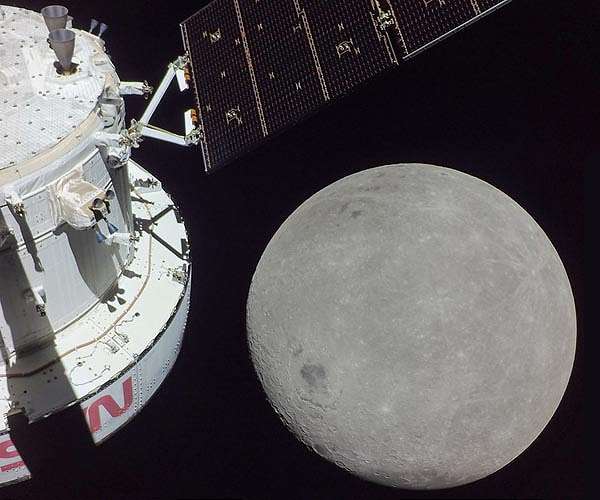
Artemis missions use both the Near Space Network and the Deep Space Network, which operate under the oversight of NASA's Space Communications and Navigation, or SCaN, Program. These networks combine ground antennas distributed around the world with relay satellites in orbit to maintain continuous links with Orion as it launches, orbits Earth, performs its translunar injection, travels to the Moon, and returns to splashdown. Their role is to route astronaut voice, images, video, and critical spacecraft telemetry across thousands and then hundreds of thousands of miles between the crew and controllers on the ground.
Ken Bowersox, associate administrator for NASA's Space Operations Mission Directorate and a former astronaut, emphasized that dependable communications are central to crewed missions. "Robust space communications aren't optional; they're the essential link that unites the crew and the exploration team on Earth to ensure safety and mission success, as I learned firsthand living and working aboard the International Space Station," he said. He noted that real-time conversations, data that informs key decisions and science, and even personal calls home all depend on these links as crews push farther into deep space.
Flight controllers will operate the Near Space Network and Deep Space Network in a tightly coordinated fashion throughout Artemis II. NASA's Mission Control Center at the Johnson Space Center in Houston will track the Space Launch System rocket, the Interim Cryogenic Propulsion Stage, and the Orion spacecraft as the mission progresses. Control teams will hand off communications and tracking responsibilities between multiple antennas and relay nodes on Earth and in space to ensure there are no gaps in coverage during critical phases of flight.
The Near Space Network, managed by NASA's Goddard Space Flight Center in Greenbelt, Maryland, will provide communications and navigation services during several mission stages close to Earth. Using a global collection of ground stations and a fleet of relay satellites, this network carries forward a long legacy of supporting human spaceflight operations in near-Earth orbit. It will handle communications while Orion is in low Earth orbit and during early parts of the translunar trajectory.
After Orion completes its translunar injection burn, its primary communications path will shift to the Deep Space Network, managed by NASA's Jet Propulsion Laboratory in Southern California. This network consists of large radio antennas located in California, Spain, and Australia, arranged so that at least one complex can see spacecraft in deep space at all times as Earth turns. The array will provide nearly continuous coverage for Orion and its crew as they travel to and around the Moon and on the return leg to Earth.
Network planners highlight that Artemis II will also showcase how traditional radio systems and new optical links can work together. Kevin Coggins, deputy associate administrator for the SCaN Program, described reliable communications as the lifeline of human spaceflight and stressed that future missions will demand even more capable and resilient networks. He pointed to strong collaboration with commercial partners as a key factor in advancing space communications infrastructure and enabling increasingly ambitious exploration campaigns.
Onboard Orion, NASA will fly the Orion Artemis II Optical Communications System, known as O2O, to test high-bandwidth laser links with real mission data from the crewed flight. The demonstration builds on experience from the Deep Space Optical Communications payload, which showed that optical systems can transmit more than 100 times the data volume of comparable radio systems even at distances of millions of miles. Although laser communications will not be part of Artemis III operations, the O2O demonstration is intended to pave the way for future optical terminals near the Moon and on Mars missions.
The optical payload is one element of a broader drive to improve communications and navigation for lunar and deep space missions. Orion will still experience a communications blackout of about 41 minutes when it passes behind the Moon, where the lunar body blocks radio frequency signals to and from Earth. Similar loss-of-signal periods occurred during Apollo missions and remain inherent when missions rely solely on Earth-based antennas to reach vehicles operating near the Moon's far side.
Once Orion emerges from behind the Moon, the Deep Space Network will quickly reacquire the spacecraft's signal and restore full communications with mission control. NASA expects such planned blackouts to remain part of operations for missions that rely on direct-to-Earth links. However, the agency is already working on architectures that would eventually eliminate these gaps and provide more robust coverage for surface and orbital assets on the lunar far side.
Looking ahead, the Lunar Communications Relay and Navigation Systems project is partnering with industry to deploy relay satellites in lunar orbit that can support both communications and precision navigation. A constellation of such satellites would provide persistent, high-bandwidth services for astronauts, landers, and orbiters operating on and around the Moon. In 2024 NASA selected Intuitive Machines to develop the first set of lunar relay spacecraft for a demonstration planned in conjunction with the Artemis III lunar surface mission.
Each Artemis flight will expand the networks' capabilities and refine how mission data is processed and managed. For Artemis II, data from Orion will be compressed after it reaches Earth to handle the large flow of information, with priority given to crew communications and mission-critical telemetry while still transmitting images and video at reduced quality. These upgrades and operational choices illustrate how the networks will evolve alongside the missions they support.
From liftoff through translunar cruise, lunar flyby, and splashdown, NASA's communications and navigation infrastructure will act as the crew's continuous link back to Earth. The combination of the Near Space Network, the Deep Space Network, and emerging optical and relay technologies is designed to keep Artemis II connected at every feasible step, while laying the groundwork for sustained human activity in deep space in the decades ahead.
Related Links
NASA Jet Propulsion Laboratory
Mars News and Information at MarsDaily.com
Lunar Dreams and more
| Subscribe Free To Our Daily Newsletters |

| Subscribe Free To Our Daily Newsletters |








