24/7 Space News
EXO WORLDS
Lab made cosmic dust experiment reveals paths to life chemistry
illustration only

Lab made cosmic dust experiment reveals paths to life chemistry

by Simon Mansfield
Sydney, Australia (SPX) Feb 03, 2026

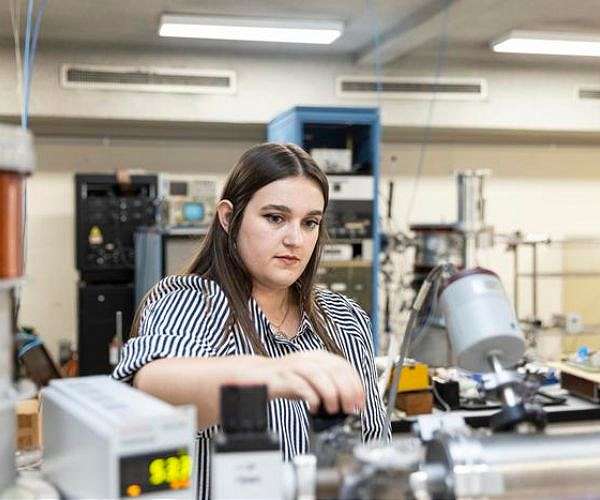
A PhD candidate at the University of Sydney has recreated a small slice of cosmic chemistry in the laboratory by manufacturing carbon rich dust under conditions that mimic space. Working in the School of Physics, materials and plasma physics researcher Linda Losurdo used a simple set of gases to simulate the harsh environments near aging stars and supernova remnants, then tracked how they assembled into complex solids.

Losurdo and her supervisor, Professor David McKenzie, filled evacuated glass tubes with nitrogen, carbon dioxide and acetylene before applying around 10,000 volts of electrical potential for about an hour. The resulting glow discharge plasma broke apart the gas molecules and drove them to recombine into new structures. Over time, these products condensed onto silicon chips inside the tubes as a thin layer of carbon rich dust.

Analysis showed that this laboratory dust contains a mixture of carbon, hydrogen, oxygen and nitrogen, the CHON elements that underpin many organic compounds associated with life. Infrared measurements revealed distinctive spectral fingerprints that match the signatures astronomers see from carbonaceous dust in interstellar space, comets, asteroids and meteorites. This close agreement indicates that the plasma process in the lab is a realistic analogue for dust formation in extreme astrophysical environments.

Cosmic dust grains form in the outer envelopes of giant, old stars, in explosive events such as supernovae, and in diffuse interstellar regions where gas and radiation constantly interact. In space, these particles are continuously bombarded by ions and electrons, which modify their structure while preserving a record of their history in their chemical bonds. The new study shows that those conditions can be recreated on Earth and studied under controlled parameters.

Losurdo explained that researchers no longer need to wait for meteorites or cometary samples to arrive on Earth to investigate such dust. By building analogue environments in the lab and reading their infrared fingerprints, scientists can infer how carbonaceous material forms and evolves as it circulates through stellar nurseries and debris clouds. This helps illuminate how life relevant chemistry operates inside cosmic dust clouds.

The work also relates directly to long standing questions about the origin of organic material on the early Earth. Between about 3.5 and 4.56 billion years ago, the planet was heavily bombarded by meteorites, micrometeorites and interplanetary dust particles derived from asteroids and comets. These impactors likely delivered large amounts of carbon rich material to the surface, but the precise steps that produced those molecules in space remain uncertain.

By comparing dust created under different ion bombardment intensities and temperatures, the Sydney team can distinguish the roles these factors play in building complex carbonaceous structures. Professor McKenzie said that making cosmic dust in the lab allows scientists to explore ranges of ion impact and thermal conditions that are impossible to probe directly in space. Understanding these regimes is essential for interpreting the chemical records preserved in meteorites and asteroid fragments.

Each dust grain carries a history of the environments it has passed through, encoded in its molecular structure and bonding. Experiments like this provide a way to calibrate that record, linking specific infrared features to particular formation pathways and processing histories. In turn, astronomers can use those calibrated fingerprints to identify promising regions of space for life relevant chemistry when they observe stellar nurseries or the remnants of dead stars.

The researchers plan to build a comprehensive database of infrared spectra from their lab made dust analogues. Such a library would allow observers to match astronomical data with specific dust recipes and plasma conditions, effectively letting them reverse engineer distant environments from their light. This approach could reveal where CHON rich grains are most abundant and how they are transformed as they move from stellar envelopes into interstellar clouds and planetary systems.

Beyond tracing the journey of dust, the work opens a window onto the earliest steps that may have led to life on Earth. If complex organic structures can form efficiently in plasma environments around stars and within interstellar clouds, then planetary systems may inherit a rich supply of prebiotic material from the outset. The Sydney experiments demonstrate that this chemistry is not only plausible but accessible to detailed laboratory study.

Losurdo received a best presentation award at the Annual Meeting of the Meteoritical Society for this research, highlighting its importance to the study of meteorites and cosmic dust. The work was supported by the Australian Research Council, and the team acknowledged assistance from the University of Sydney node of Microscopy Australia, which enabled detailed examination of the dust particles and their glittering, cosmic like appearance on the chips.

Research Report:Carbonaceous cosmic dust analogues distinguish between ion bombardment and temperature

Related Links
University of Sydney
Lands Beyond Beyond - extra solar planets - news and science
Life Beyond Earth

Subscribe Free To Our Daily Newsletters
Tweet

RELATED CONTENT
The following news reports may link to other Space Media Network websites.
EXO WORLDS
Engineered microbes use light to build new molecules
Los Angeles CA (SPX) Feb 02, 2026
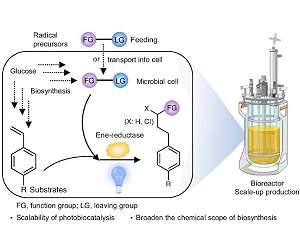
Researchers are developing new ways to reprogram the cellular machinery of microbes such as yeast and bacteria so they can manufacture useful products for medicine and industry. A team at the Carl R. Woese Institute for Genomic Biology has now shown that they can extend the biosynthetic capabilities of microbes by harnessing light to drive new types of chemical reactions inside cells. In work published in Nature Catalysis, the researchers demonstrate that the bacterium Escherichia coli can be engi ... read more

EXO WORLDS
Bezos's Blue Origin to 'pause' space tourism to focus on Moon efforts

Crew 12 set for Dragon launch to Station in February

NASA Heat Shield Technology Enables Space Industry Growth

Earliest launch window to ISS set for February 11: NASA

EXO WORLDS
NASA delays Moon mission over frigid weather

China sea launch boosts private rocket activity in 2026

Rocket Lab conducts second Electron mission in eight days to orbit Korean imaging satellite

NASA books fifth Axiom private astronaut flight to space station

EXO WORLDS
Martian toxin found to toughen microbe built bricks

Perseverance rover completes landmark AI guided trek across Jezero rim

New clues to Mars habitability in discovery of ancient beach

Ancient deltas reveal vast Martian ocean across northern hemisphere

EXO WORLDS
China prepares offshore test base for reusable liquid rocket launches

Retired EVA workhorse to guide China's next-gen spacesuit and lunar gear

Tiangong science program delivers data surge

China tallies record launch year as lunar and asteroid plans advance

EXO WORLDS
ESA member states back SWISSto12 HummingSat with fresh funding round

Aerospacelab expands Pulsar navigation constellation work with new Xona satellite order

ThinkOrbital raises seed funding to advance orbital defense and construction systems

China outlines mega constellations in ITU satellite filings

EXO WORLDS
Seismic networks offer new way to track space junk reentering atmosphere

Smartphone kit offers low cost on site radiation dose checks

JAXA taps ispace for lunar debris mitigation and disposal study

German software giant SAP's shares plunge on AI worries

EXO WORLDS
Survey of 80 near Earth asteroids sharpens view of their origins and risks

Einstein effect clears planets from tight double star systems

Metal rich winds detected in giant dusty cloud around distant star

Engineered microbes use light to build new molecules

EXO WORLDS
Polar weather on Jupiter and Saturn hints at the planets' interior details

Europa ice delamination may deliver nutrients to hidden ocean

Birth conditions fixed water contrast on Jupiters moons

Study links Europa's quiet seafloor to hidden potential for life

Subscribe Free To Our Daily Newsletters


The content herein, unless otherwise known to be public domain, are Copyright 1995-2024 - Space Media Network. All websites are published in Australia and are solely subject to Australian law and governed by Fair Use principals for news reporting and research purposes. AFP, UPI and IANS news wire stories are copyright Agence France-Presse, United Press International and Indo-Asia News Service. ESA news reports are copyright European Space Agency. All NASA sourced material is public domain. Additional copyrights may apply in whole or part to other bona fide parties. All articles labeled "by Staff Writers" include reports supplied to Space Media Network by industry news wires, PR agencies, corporate press officers and the like. Such articles are individually curated and edited by Space Media Network staff on the basis of the report's information value to our industry and professional readership. Advertising does not imply endorsement, agreement or approval of any opinions, statements or information provided by Space Media Network on any Web page published or hosted by Space Media Network. General Data Protection Regulation (GDPR) Statement Our advertisers use various cookies and the like to deliver the best ad banner available at one time. All network advertising suppliers have GDPR policies (Legitimate Interest) that conform with EU regulations for data collection. By using our websites you consent to cookie based advertising. If you do not agree with this then you must stop using the websites from May 25, 2018. Privacy Statement. Additional information can be found here at About Us.