24/7 Space News
ROCKET SCIENCE
GE and Lockheed validate compact rotating detonation ramjet for hypersonic missiles
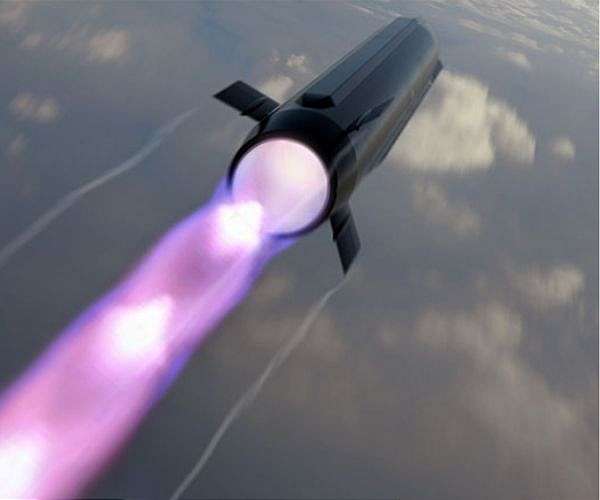
illustration only

GE and Lockheed validate compact rotating detonation ramjet for hypersonic missiles

by Clarence Oxford
Los Angeles CA (SPX) Jan 15, 2026
GE Aerospace and Lockheed Martin have completed a series of engine tests that demonstrate the viability of a liquid fueled rotating detonation ramjet for hypersonic missile applications. The work marks the first initiative launched under a broader joint technology development arrangement between the two companies.

The partners report that the experimental propulsion system is designed to deliver higher speed and extended range while lowering production and operating costs compared to conventional ramjet architectures. The compact rotating detonation ramjet layout creates additional volume that missile designers can allocate to fuel or payload, and it simplifies manufacturing steps that drive unit cost.

According to the companies, the new engine concept improves fuel efficiency and thrust generation, which translates directly into greater missile range at super and hypersonic speeds. The system is also configured to ignite at lower incoming air speeds, allowing future weapons to rely on smaller, less expensive boosters to accelerate the airframe to ramjet start conditions.

Instead of using traditional constant pressure combustion, the rotating detonation ramjet burns fuel and air through detonation waves propagating around an annular combustor. This mode of combustion generates high specific thrust suitable for sustained super and hypersonic flight while maintaining a smaller engine size and lower overall propulsion system weight, both of which enhance standoff range for the missile.

Program officials describe the propulsion concept as well suited to engage high value, time sensitive targets in contested environments. High speed, extended range and a compact form factor are intended to give operators more flexibility in mission planning, launch platform selection and routing, while preserving payload capacity for a variety of warhead options.

Mark Rettig, vice president and general manager of Edison Works Advanced Programs at GE Aerospace, said the effort reflects rapid progress in the companys hypersonic propulsion portfolio. "GE Aerospaces hypersonic capabilities continue to advance at a rapid pace, and this collaboration with Lockheed Martin is another step forward in our journey," he said. "The testing on the rotating detonation ramjet and inlet exceeded expectations, and we are excited about this collaboration to continue maturing our advanced air breathing hypersonic propulsion technologies."

Randy Crites, vice president and general manager at Lockheed Martin Advanced Programs, linked the test campaign to a two year period of internal investment and joint technology work. "Following two years of internal investment, this demonstration is a testament to the power of collaboration, innovation and joint commitment to get affordable capability into the hands of warfighters at the speed of relevance," he said. "This compact ramjet applies Lockheed Martins expertise in ramjet inlets and offers extended range at extreme speeds. Were committed to delivering a propulsion system that advances Americas hypersonic capability in an intensifying threat environment."

The tested configuration combines GE Aerospaces rotating detonation combustion system with a Lockheed Martin tactical inlet that conditions high speed airflow entering the combustor. Engineers designed the inlet to manage the shock structure and pressure recovery required to support stable detonation wave combustion across the intended flight envelope.

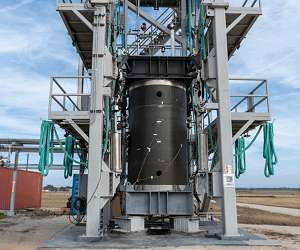
GE Aerospace hosted a series of direct connect tests at its research center in Niskayuna, New York, to evaluate ramjet ignition and steady cruise operation under representative conditions. During these campaigns, engineers injected high speed air into the inlet to simulate supersonic flight at a range of Mach numbers and altitudes expected for future missile trajectories.

The team also examined operation at high cruising altitudes where thin air makes reliable combustion more challenging. By tailoring the inlet and combustor to maintain the detonation process in these low density conditions, the demonstrator validated key aspects of the design needed to sustain thrust across long range, high altitude segments of flight.

With the initial round of testing complete, GE Aerospace and Lockheed Martin plan to continue maturing the rotating detonation ramjet through 2026. Future work is expected to focus on expanding the tested operating envelope, refining component durability and integrating the propulsion system concepts into notional missile configurations for potential customer applications.

GE Aerospaces Edison Works organization is leading the companys advanced defense propulsion and systems development and is using rapid prototyping and digital engineering to accelerate maturation of hypersonic technologies. Lockheed Martin is drawing on decades of experience in high speed aerodynamics, ramjet inlet design and tactical missile integration to position the new engine concept for transition into operational weapon programs once customer requirements are defined.

Related Links
Lockheed Martin
Rocket Science News at Space-Travel.Com

Subscribe Free To Our Daily Newsletters
Tweet

RELATED CONTENT
ROCKET SCIENCE
Firefly prepares Alpha Block II upgrade for Flight 8
Los Angeles CA (SPX) Jan 14, 2026
Firefly Aerospace has announced a Block II configuration upgrade for its Alpha small launch vehicle, with qualification testing for the new second stage hardware now underway at the companys Rocket Ranch test facility in Briggs, Texas. The Block II program is intended to boost reliability, streamline manufacturing, and improve launch operations to better support commercial, civil, and national security customers across the global launch market. Alpha Flight 7, targeted to lift off in the coming we ... read more

ROCKET SCIENCE
Tourists hit record in Japan, despite plunge from China

What happens when fire ignites in space? 'A ball of flame'

ISS astronauts splash down on Earth after first-ever medical evacuation

NASA Back for Seconds with New Food System Design Challenge

ROCKET SCIENCE
Major equity deal backs Gilmour Space expansion of sovereign launch capability

Stratolaunch secures major funding to scale hypersonic flight services

GE and Lockheed validate compact rotating detonation ramjet for hypersonic missiles

China tests Long March 12B reusable first stage at Jiuquan

ROCKET SCIENCE
Ancient deltas reveal vast Martian ocean across northern hemisphere

Tiny Mars' big impact on Earth's climate

The electrifying science behind Martian dust

Sandblasting winds sculpt Mars landscape

ROCKET SCIENCE
Tiangong science program delivers data surge

China tallies record launch year as lunar and asteroid plans advance

China harnesses nationwide system to drive spaceflight and satellite navigation advances

Shenzhou 21 crew complete eight hour spacewalk outside Tiangong station

ROCKET SCIENCE
Aerospacelab expands Pulsar navigation constellation work with new Xona satellite order

ThinkOrbital raises seed funding to advance orbital defense and construction systems

China outlines mega constellations in ITU satellite filings

Multiple satellite filings demonstrate transparency, responsibility and ambition: China Daily editorial

ROCKET SCIENCE
China starts large scale production of T1000 carbon fiber

Orion to advance IARPA system for tracking small space debris

Atomic 6 debris shields selected for Portal Space Systems mission

JAXA taps ispace for lunar debris mitigation and disposal study

ROCKET SCIENCE
Frozen hydrogen cyanide crystals may have helped spark early chemistry for life

Berkeley Scientists set to home in on 100 signals from Seti at Home

Scientist wins 'Environment Nobel' for shedding light on hidden fungal networks

Pandora exoplanet mission checks in after launch

ROCKET SCIENCE
Jupiter's moon Europa has a seafloor that may be quiet and lifeless

Uranus and Neptune may be rock rich worlds

SwRI links Uranus radiation belt mystery to solar storm driven waves

Looking inside icy moons


The content herein, unless otherwise known to be public domain, are Copyright 1995-2026 - SpaceDaily.com. All websites are published in Australia and are solely subject to Australian law and governed by Fair Use principals for news reporting and research purposes. AFP, UPI and IANS news wire stories are copyright Agence France-Presse, United Press International and Indo-Asia News Service. ESA news reports are copyright European Space Agency. All NASA sourced material is public domain. Additional copyrights may apply in whole or part to other bona fide parties. All articles labeled "by Staff Writers" include reports supplied to Space Media Network by industry news wires, PR agencies, corporate press officers and the like. Such articles are individually curated and edited by Space Media Network staff on the basis of the report's information value to our industry and professional readership. Advertising does not imply endorsement, agreement or approval of any opinions, statements or information provided by Space Media Network on any Web page published or hosted by Space Media Network. General Data Protection Regulation (GDPR) Statement Our advertisers use various cookies and the like to deliver the best ad banner available at one time. All network advertising suppliers have GDPR policies (Legitimate Interest) that conform with EU regulations for data collection. By using our websites you consent to cookie based advertising. If you do not agree with this then you must stop using the websites from May 25, 2018. Privacy Statement. Additional information can be found here at About Us.
Subscribe Free To Our Daily Newsletters