24/7 Space News
SPACE TRAVEL
ISS astronauts splash down on Earth after first-ever medical evacuation

ISS astronauts splash down on Earth after first-ever medical evacuation

By Charlotte Causit
Washington, United States (AFP) Jan 15, 2026

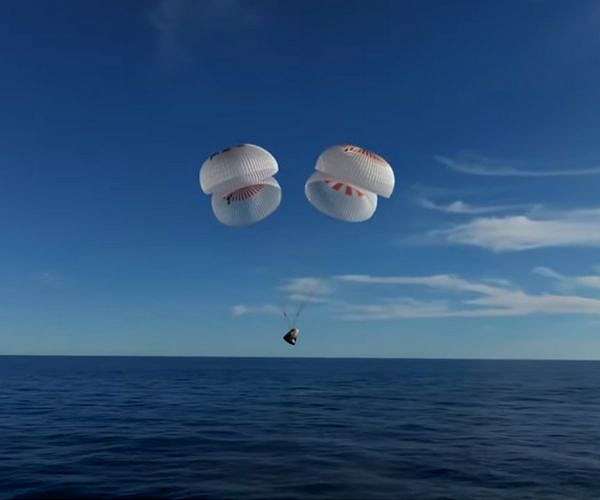
Four International Space Station crewmembers splashed down in the Pacific Ocean on Thursday, NASA footage showed, after the first ever medical evacuation in the orbital lab's history.

A video feed from NASA showed the capsule carrying American astronauts Mike Fincke and Zena Cardman, Russian cosmonaut Oleg Platonov and Japanese astronaut Kimiya Yui land off the coast of San Diego at 12:41 am (0841 GMT).

"On behalf of SpaceX and NASA, welcome home," mission control told the crew moments after landing.

"It's so good to be home, with deep gratitude to the teams that got us there and back," Cardman replied.

A health issue prompted their mission to be cut short, after spending five months in space.

The US space agency has declined to disclose any details about the health issue but stressed the return was not an emergency situation.

The affected crewmember "is doing fine," NASA Administrator Jared Isaacman told reporters after the splashdown.

Isaacman said only that the crewmember experienced "a serious medical condition" that "could have happened on Earth completely outside of the microgravity environment."

He said all crewmembers are safe, in good spirits and were undergoing standard post-arrival medical checks.

"They just executed... a near-perfect mission on orbit," Isaacman said.

Fincke, the SpaceX Crew-11 pilot, shared a similar message in a social media post earlier this week: "First and foremost, we are all OK. Everyone on board is stable, safe, and well cared for."

"This was a deliberate decision to allow the right medical evaluations to happen on the ground, where the full range of diagnostic capability exists. It's the right call, even if it's a bit bittersweet."

The Crew-11 quartet arrived at the ISS in early August and had been scheduled to stay onboard the space station until they were rotated out in mid-February with the arrival of the next crew.

James Polk, NASA's chief health and medical officer, previously said "lingering risk" and a "lingering question as to what that diagnosis is" led to the decision to bring back the crew earlier than originally scheduled.

- Ready for the unexpected -

The crew conducted a little under 900 hours of experiments during its 167 days in orbit, said Joel Montalbano, deputy associate administrator of NASA's Space Operations Mission Directorate.

American astronaut Chris Williams and Russian cosmonauts Sergey Kud-Sverchkov and Sergei Mikaev, who arrived at the station in November aboard a Russian Soyuz spacecraft, remained on the ISS.

The Russian Roscosmos space agency operates alongside NASA on the outpost, and the two agencies take turns transporting a citizen of the other country to and from the orbiter -- one of the few areas of bilateral cooperation that still endure between the United States and Russia.

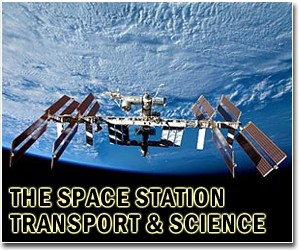
Continuously inhabited since 2000, the International Space Station seeks to showcase multinational cooperation, bringing together Europe, Japan, the United States and Russia.

Located some 400 kilometers (248.5 miles) above Earth, the ISS functions as a testbed for research that supports deeper space exploration -- including eventual missions to return humans to the Moon and onward to Mars.

The four astronauts who were evacuated had been trained to handle unexpected medical situations, said Amit Kshatriya, a senior NASA official, praising how they have dealt with the situation.

The ISS is set to be decommissioned after 2030, with its orbit gradually lowered until it breaks up in the atmosphere over a remote part of the Pacific Ocean called Point Nemo, a spacecraft graveyard.

bur-lga/ami

ISS A/S

Related Links
Space Tourism, Space Transport and Space Exploration News

Subscribe Free To Our Daily Newsletters
Tweet

RELATED CONTENT
The following news reports may link to other Space Media Network websites.
SPACE TRAVEL
International Space Station crew to return early after astronaut medical issue
Washington, United States (AFP) Jan 8, 2026
NASA crewmembers at the International Space Station will return to Earth within days after an astronaut suffered a health issue, the US space agency said Thursday, the first such medical evacuation in the orbital lab's history. Officials did not provide details of the medical event but said the unidentified crewmember is stable. They said it did not result from any kind of injury onboard or from ISS operations. NASA chief medical officer James Polk said "lingering risk" and a "lingering question ... read more

SPACE TRAVEL
The Quiet Transformation of GPS - What's Coming by 2026

NASA Back for Seconds with New Food System Design Challenge

New orbital mapping system targets Earth Moon libration traffic

International Space Station crew to return early after astronaut medical issue

SPACE TRAVEL
PH-1 test flight advances Chinese reusable suborbital spacecraft plans

Starfighters completes supersonic tests for GE Aerospace ramjet program

Fueling research in nuclear thermal propulsion

Indian rocket hits snag during launch

SPACE TRAVEL
Ancient deltas reveal vast Martian ocean across northern hemisphere

Tiny Mars' big impact on Earth's climate

The electrifying science behind Martian dust

Sandblasting winds sculpt Mars landscape

SPACE TRAVEL
Tiangong science program delivers data surge

China tallies record launch year as lunar and asteroid plans advance

China harnesses nationwide system to drive spaceflight and satellite navigation advances

Shenzhou 21 crew complete eight hour spacewalk outside Tiangong station

SPACE TRAVEL
Aerospacelab expands Pulsar navigation constellation work with new Xona satellite order

China outlines mega constellations in ITU satellite filings

Multiple satellite filings demonstrate transparency, responsibility and ambition: China Daily editorial

ThinkOrbital raises seed funding to advance orbital defense and construction systems

SPACE TRAVEL
Momentus to flight test 3D printed fuel tank on Vigoride 7

How IVRT Testing Ensures Consistent Product Quality

The Silent Partner - How Machine Learning Quietly Powers Modern Space Operations

Quantum camera startup plans satellite and telescope constellations

SPACE TRAVEL
Creating hallucination-free, psychedelic-like molecules by shining light on life's basic building blocks

Pandora exoplanet mission checks in after launch

Mixed crystal phase of superionic water mapped inside giant planets

Berkeley Scientists set to home in on 100 signals from Seti at Home

SPACE TRAVEL
Jupiter's moon Europa has a seafloor that may be quiet and lifeless

Uranus and Neptune may be rock rich worlds

SwRI links Uranus radiation belt mystery to solar storm driven waves

Looking inside icy moons

Subscribe Free To Our Daily Newsletters


The content herein, unless otherwise known to be public domain, are Copyright 1995-2024 - Space Media Network. All websites are published in Australia and are solely subject to Australian law and governed by Fair Use principals for news reporting and research purposes. AFP, UPI and IANS news wire stories are copyright Agence France-Presse, United Press International and Indo-Asia News Service. ESA news reports are copyright European Space Agency. All NASA sourced material is public domain. Additional copyrights may apply in whole or part to other bona fide parties. All articles labeled "by Staff Writers" include reports supplied to Space Media Network by industry news wires, PR agencies, corporate press officers and the like. Such articles are individually curated and edited by Space Media Network staff on the basis of the report's information value to our industry and professional readership. Advertising does not imply endorsement, agreement or approval of any opinions, statements or information provided by Space Media Network on any Web page published or hosted by Space Media Network. General Data Protection Regulation (GDPR) Statement Our advertisers use various cookies and the like to deliver the best ad banner available at one time. All network advertising suppliers have GDPR policies (Legitimate Interest) that conform with EU regulations for data collection. By using our websites you consent to cookie based advertising. If you do not agree with this then you must stop using the websites from May 25, 2018. Privacy Statement. Additional information can be found here at About Us.