24/7 Space News
ROCKET SCIENCE
Rocket Lab conducts second Electron mission in eight days to orbit Korean imaging satellite
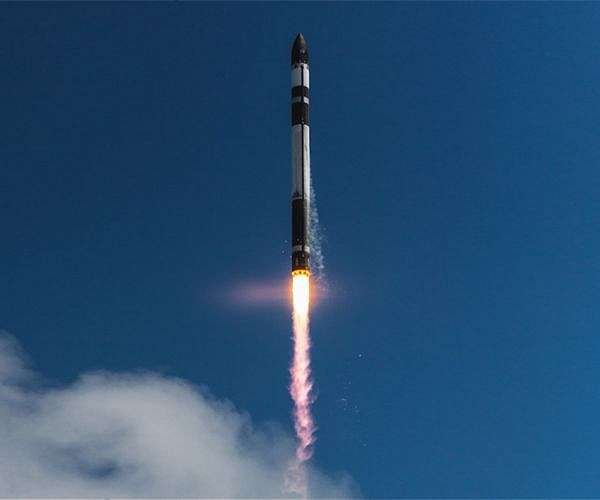
illustration only

Rocket Lab conducts second Electron mission in eight days to orbit Korean imaging satellite

by Simon Mansfield
Sydney, Australia (SPX) Jan 30, 2026

Rocket Lab Corporation has completed its 81st Electron mission, successfully deploying an Earth observation satellite for the Korea Advanced Institute of Science and Technology (KAIST) and marking its second launch in just eight days.

The mission, named Bridging The Swarm, lifted off on January 30 at 2:21 p.m. NZDT (01:21 UTC) from Rocket Lab's Launch Complex 1 in New Zealand to place the NEONSAT-1A spacecraft into a 540 kilometer low Earth orbit. NEONSAT-1A is an advanced Earth imaging satellite designed to demonstrate technologies for South Korea's planned NEONSAT constellation, which will monitor natural disasters and national security events along the Korean Peninsula.

The launch builds on Rocket Lab's previous support for the NEONSAT program. The company deployed the first satellite in the series, NEONSAT-1, in 2024 on a mission called Beginning of The Swarm, establishing the initial space-based capability for the planned constellation.

Rocket Lab founder and CEO Sir Peter Beck said the rapid flight cadence at the start of the year highlights both customer demand and the company's operational tempo. "Two launches in eight days is a strong start to the year that speaks volumes about the demand for Electron and the excellence and dedication of the Rocket Lab team. We cemented our position as the leader in reliable and responsive launch with our record-breaking year of launches in 2025, and these latest launches show we're gearing up for an even busier launch year in 2026," he said.

Bridging The Swarm was Rocket Lab's second mission of 2026 and reinforces Electron's role as a dedicated small launch vehicle for commercial, civil, and national security customers. The company notes that upcoming Electron missions this year include flights for commercial Earth observation operators, international space agencies, national security customers, and hypersonic technology development programs.

Rocket Lab's broader launcher and space systems portfolio underpins this growing manifest. Electron remains the world's most frequently flown dedicated small orbital rocket, while the HASTE variant provides hypersonic test launch capability for the U.S. government and allied partners. The company is also developing its larger Neutron launch vehicle to serve medium lift missions for constellation deployment, national security payloads, and exploration campaigns.

Beyond launch, Rocket Lab supplies spacecraft platforms and satellite components used across more than 1,700 missions to date, spanning commercial, defense, and national security applications including GPS, communications constellations, and planetary exploration missions to the Moon, Mars, and Venus. The NEONSAT-1A deployment extends this track record into a new Korean Earth observation constellation focused on regional resilience and security.

Electron's ability to provide dedicated access to tailored low Earth orbits is central to these missions. For NEONSAT-1A, the 540 kilometer orbit selected for Bridging The Swarm supports high-resolution imaging and frequent revisit opportunities over key locations, which are crucial for timely monitoring of natural hazards and fast-changing security situations.

Rocket Lab expects the steady cadence of small satellite launches to continue through 2026 as government and commercial operators expand their constellations. With a record number of launches in 2025 and multiple customers already manifested, the company is positioning Electron and its launch infrastructure to support responsive schedules and mission-specific orbital requirements for a wide range of satellite operators.

Related Links
Rocket Lab Corporation
Rocket Science News at Space-Travel.Com

Subscribe Free To Our Daily Newsletters
Tweet

RELATED CONTENT
The following news reports may link to other Space Media Network websites.
ROCKET SCIENCE
Galactic Energy conducts sixth offshore Ceres 1 mission from Yellow Sea platform
Beijing, China (SPX) Jan 19, 2026
Galactic Energy has carried out its sixth sea based mission of the Ceres 1 solid fuel launcher, adding four more spacecraft to the Tianqi commercial internet of things constellation. The latest Ceres 1 lifted off at 4:10 a.m. local time from a mobile offshore platform positioned in the Yellow Sea off Shandong province in eastern China, placing its payload into low Earth orbit about 850 kilometers above the planet. Built by Beijing based satellite operator Guodian Gaoke, the four satellites a ... read more

ROCKET SCIENCE
The coming end of ISS, symbol of an era of global cooperation

Bezos's Blue Origin to 'pause' space tourism to focus on Moon efforts

NASA confirms first flight to ISS since medical evacuation

Crew 12 set for Dragon launch to Station in February

ROCKET SCIENCE
Isar Aerospace expands engine and stage testing at Esrange

NASA Moon mission launch srubbed to March after test

NASA delays Moon mission over frigid weather

China sea launch boosts private rocket activity in 2026

ROCKET SCIENCE
Martian toxin found to toughen microbe built bricks

Curiosity Blog, Sols 4788-4797: Welcome Back from Conjunction

NASA Study: Non-biologic Processes Don't Fully Explain Mars Organics

Perseverance rover completes landmark AI guided trek across Jezero rim

ROCKET SCIENCE
Dragon spacecraft gears up for crew 12 arrival and station science work

China prepares offshore test base for reusable liquid rocket launches

Retired EVA workhorse to guide China's next-gen spacesuit and lunar gear

Tiangong science program delivers data surge

ROCKET SCIENCE
BlackSky expands Gen 3 Assured deals with new defense customer

ESA member states back SWISSto12 HummingSat with fresh funding round

Muon Space ramps up multi-mission satellite constellations

Aerospacelab expands Pulsar navigation constellation work with new Xona satellite order

ROCKET SCIENCE
Launching the idea of data centers in space

Gilat books multimillion order for Sidewinder inflight ESA terminals

Anthropic unveils new AI model as OpenAI rivalry heats up

NTU Singapore boosts agile space access with trio of new projects

ROCKET SCIENCE
Survey of 80 near Earth asteroids sharpens view of their origins and risks

Lab made cosmic dust experiment reveals paths to life chemistry

Einstein effect clears planets from tight double star systems

Engineered microbes use light to build new molecules

ROCKET SCIENCE
Jupiter size refined by new radio mapping

Polar weather on Jupiter and Saturn hints at the planets' interior details

Europa ice delamination may deliver nutrients to hidden ocean

Birth conditions fixed water contrast on Jupiters moons

Subscribe Free To Our Daily Newsletters


The content herein, unless otherwise known to be public domain, are Copyright 1995-2024 - Space Media Network. All websites are published in Australia and are solely subject to Australian law and governed by Fair Use principals for news reporting and research purposes. AFP, UPI and IANS news wire stories are copyright Agence France-Presse, United Press International and Indo-Asia News Service. ESA news reports are copyright European Space Agency. All NASA sourced material is public domain. Additional copyrights may apply in whole or part to other bona fide parties. All articles labeled "by Staff Writers" include reports supplied to Space Media Network by industry news wires, PR agencies, corporate press officers and the like. Such articles are individually curated and edited by Space Media Network staff on the basis of the report's information value to our industry and professional readership. Advertising does not imply endorsement, agreement or approval of any opinions, statements or information provided by Space Media Network on any Web page published or hosted by Space Media Network. General Data Protection Regulation (GDPR) Statement Our advertisers use various cookies and the like to deliver the best ad banner available at one time. All network advertising suppliers have GDPR policies (Legitimate Interest) that conform with EU regulations for data collection. By using our websites you consent to cookie based advertising. If you do not agree with this then you must stop using the websites from May 25, 2018. Privacy Statement. Additional information can be found here at About Us.