24/7 Space News
ROCKET SCIENCE
NASA backs studies to boost hypersonic flight testing
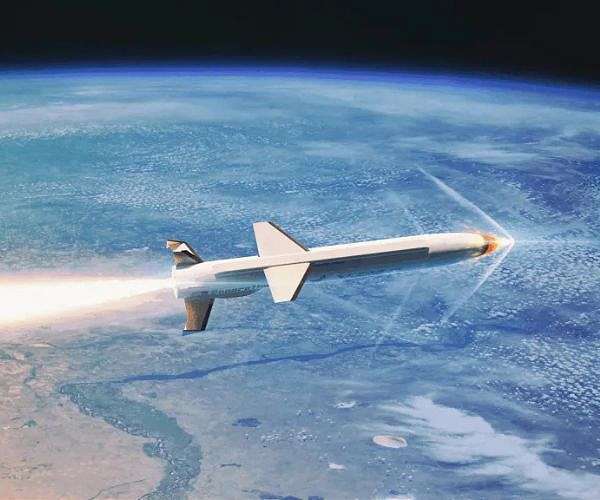
illustration only

NASA backs studies to boost hypersonic flight testing

by Clarence Oxford
Los Angeles CA (SPX) Feb 02, 2026

NASA is preparing for a new phase in hypersonic aviation by funding industry studies aimed at expanding flight test capabilities for reusable airbreathing vehicles that can cruise at several times the speed of sound.

The agency has awarded short term study contracts to SpaceWorks Enterprises of Atlanta, Georgia, and Stratolaunch of Mojave, California, to examine how existing platforms could be adapted to conduct frequent and affordable hypersonic flight experiments. The work is managed under NASA's Hypersonic Technology Project within the Advanced Air Vehicles Program.

While rockets routinely reach hypersonic speeds by carrying their own oxidizer to burn fuel, NASA is focusing on airbreathing hypersonic aircraft that ingest atmospheric air during flight instead of relying on onboard oxygen supplies. This approach supports longer duration cruise at hypersonic speeds and aligns with potential future commercial uses where reusability and operational tempo are critical.

The Hypersonic Technology Project is responding to growing commercial interest by looking for ways to bridge the gap between traditional ground testing and full scale hypersonic flight demonstrations. Ground facilities can replicate extreme temperatures and pressures for short durations, but they cannot easily reproduce the combination of long duration, real world atmospheric conditions and repeated flight cycles that industry needs to mature operational concepts.

In August, NASA selected SpaceWorks and Stratolaunch to carry out six month studies that will define how their current vehicles could be modified or used to support this kind of testing. SpaceWorks received 500,000 dollars to investigate options using its X 60 platform, while Stratolaunch was awarded 1.2 million dollars to analyze opportunities with its Talon A system.

The X 60 is a small rocket based flight research platform designed to be launched from an aircraft and reach relevant flight regimes for high speed experimentation. In the new study, SpaceWorks will examine how that platform could support reusable, high cadence test operations that would be useful to both NASA and commercial partners interested in hypersonic technologies.

Stratolaunch's Talon A is a reusable hypersonic test vehicle that can be air launched from the company's large carrier aircraft, enabling operations over a variety of test ranges without relying on fixed ground launch infrastructure. The NASA study funding will help the company and the agency explore how Talon A missions could be configured to provide the kind of repeatable flight opportunities needed to advance airbreathing hypersonic systems.

"With these awards, NASA will collaborate with the commercial hypersonics industry to identify new ways to evaluate technologies through flight tests while we address the challenges of reusable, routine, airbreathing, hypersonic flight," said Dr. Nateri Madavan, director of NASA's Advanced Air Vehicles Program. The goal is to leverage industry capabilities while guiding them toward test conditions that match NASA's long term research objectives.

The two studies will feed into a broader NASA effort to define what an integrated hypersonic test campaign should look like once candidate platforms are available. Through the contracts, NASA wants industry to help describe the performance envelopes, payload accommodations, flight rates and logistical support needed for future test services that can be used by government and commercial customers.

Insights from the work with SpaceWorks and Stratolaunch may also support planning for a potential future NASA initiative called Making Advancements in Commercial Hypersonics, or MACH. That project, if pursued, would focus on enabling commercial hypersonic vehicles by developing infrastructure such as cost models, schedule frameworks, and other planning tools needed to bring a flight test capability from concept to routine operation.

The Hypersonic Technology Project is part of NASA's broader aeronautics portfolio that targets revolutionary advances in air transportation, including supersonic and hypersonic flight. By concentrating on fundamental airbreathing hypersonic technologies and partnering with companies that already operate or are developing relevant vehicles, NASA aims to reduce technical and economic barriers to regular hypersonic flight testing.

Through these new awards and related efforts, the agency intends to help establish a pathway from experimental concepts to practical systems that might eventually support commercial travel, rapid cargo delivery, or other applications requiring sustained flight at very high speeds. The resulting knowledge is expected to inform not only vehicle design, but also the operational frameworks, safety considerations and regulatory discussions that will shape hypersonic aviation in the coming decades.

Related Links
Hypersonic Technology Project at NASA
Rocket Science News at Space-Travel.Com

Subscribe Free To Our Daily Newsletters
Tweet

RELATED CONTENT
The following news reports may link to other Space Media Network websites.
ROCKET SCIENCE
NASA and GE run hybrid jet engine test toward commercial flight
Los Angeles CA (SPX) Jan 28, 2026
To an untrained eye, the aircraft engine sitting outside a Cincinnati area facility in December looked like standard hardware. For NASA and GE Aerospace researchers watching the unit fire up for a demonstration, it represented a hybrid engine performing at a level that could potentially power an airliner. The engine, tested at GE Aerospace's Peebles Test Operation site in Ohio, is a modified version of the company's Passport engine configured with hybrid-electric capability. The system can extract ... read more

ROCKET SCIENCE
What Does It Take to Win a Personal Injury Lawsuit in Washington DC

Bezos's Blue Origin to 'pause' space tourism to focus on Moon efforts

NASA Heat Shield Technology Enables Space Industry Growth

Earliest launch window to ISS set for February 11: NASA

ROCKET SCIENCE
NASA delays Moon mission over frigid weather

China sea launch boosts private rocket activity in 2026

Rocket Lab conducts second Electron mission in eight days to orbit Korean imaging satellite

NASA Testing Advances Space Nuclear Propulsion Capabilities

ROCKET SCIENCE
New clues to Mars habitability in discovery of ancient beach

Ancient deltas reveal vast Martian ocean across northern hemisphere

Tiny Mars' big impact on Earth's climate

The electrifying science behind Martian dust

ROCKET SCIENCE
China prepares offshore test base for reusable liquid rocket launches

Retired EVA workhorse to guide China's next-gen spacesuit and lunar gear

Tiangong science program delivers data surge

China tallies record launch year as lunar and asteroid plans advance

ROCKET SCIENCE
How Fault Is Proven in Car Accident Cases

ESA member states back SWISSto12 HummingSat with fresh funding round

Aerospacelab expands Pulsar navigation constellation work with new Xona satellite order

ThinkOrbital raises seed funding to advance orbital defense and construction systems

ROCKET SCIENCE
Understanding USDT How Stablecoins Maintain Value in Volatile Markets

Seismic networks offer new way to track space junk reentering atmosphere

Smartphone kit offers low cost on site radiation dose checks

What Is Homework Backwards? The Meme and The Meaning

ROCKET SCIENCE
Metal rich winds detected in giant dusty cloud around distant star

ALMA survey maps turbulent youth of distant planetary systems

Icy cycles may have driven early protocell evolution

Cosmic dust chemistry forges peptide building blocks in deep space

ROCKET SCIENCE
Polar weather on Jupiter and Saturn hints at the planets' interior details

Birth conditions fixed water contrast on Jupiters moons

Study links Europa's quiet seafloor to hidden potential for life

Europa ice delamination may deliver nutrients to hidden ocean

Subscribe Free To Our Daily Newsletters


The content herein, unless otherwise known to be public domain, are Copyright 1995-2024 - Space Media Network. All websites are published in Australia and are solely subject to Australian law and governed by Fair Use principals for news reporting and research purposes. AFP, UPI and IANS news wire stories are copyright Agence France-Presse, United Press International and Indo-Asia News Service. ESA news reports are copyright European Space Agency. All NASA sourced material is public domain. Additional copyrights may apply in whole or part to other bona fide parties. All articles labeled "by Staff Writers" include reports supplied to Space Media Network by industry news wires, PR agencies, corporate press officers and the like. Such articles are individually curated and edited by Space Media Network staff on the basis of the report's information value to our industry and professional readership. Advertising does not imply endorsement, agreement or approval of any opinions, statements or information provided by Space Media Network on any Web page published or hosted by Space Media Network. General Data Protection Regulation (GDPR) Statement Our advertisers use various cookies and the like to deliver the best ad banner available at one time. All network advertising suppliers have GDPR policies (Legitimate Interest) that conform with EU regulations for data collection. By using our websites you consent to cookie based advertising. If you do not agree with this then you must stop using the websites from May 25, 2018. Privacy Statement. Additional information can be found here at About Us.