24/7 Space News
OUTER PLANETS
Study links Europa's quiet seafloor to hidden potential for life
illustration only

Study links Europa's quiet seafloor to hidden potential for life

by Clarence Oxford
Los Angeles CA (SPX) Jan 21, 2026

The giant planet Jupiter has nearly 100 known moons, but none has captured scientific attention quite like Europa, which likely hides a global salty ocean beneath an icy crust that may contain twice as much water as all of Earth's oceans combined. A new modeling study led by Washington University in collaboration with Woods Hole Oceanographic Institution (WHOI) suggests that, despite this ocean, Europa's seafloor probably lacks the vigorous tectonic and volcanic activity that powers dramatic hydrothermal systems on Earth.

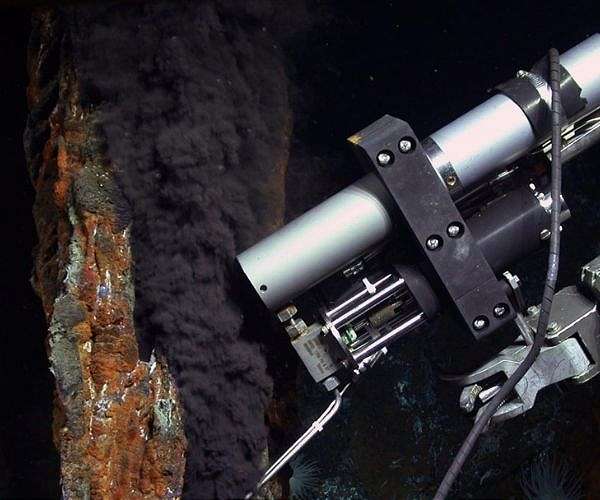
The research team used models that accounted for Europa's size, rocky interior, long-term cooling, and the powerful tidal forces exerted by Jupiter to assess whether the moon's seafloor could sustain modern-day volcanism. Their calculations indicate that the rocky core should have cooled substantially over the age of the solar system, making it resemble Earth's present-day Moon more than Earth's geologically active seafloor. As a result, the study concludes that Europa is unlikely to host intense seafloor volcanism and classic "black smoker" hydrothermal vent fields like those that dot mid-ocean ridges on Earth.

"Our study shows that there might not be a lot happening down there, from a geophysical perspective," said Chris German, a WHOI senior scientist and co-author of the study. The apparent lack of vigorous tectonic activity at Europa's seafloor aligns with spacecraft observations of the moon's icy surface, which show limited signs of recent large-scale geological disruption. Taken together, these lines of evidence point to a relatively quiet rocky interior today.

Lead author Paul Byrne, an associate professor of Earth, environmental, and planetary sciences at Washington University, noted that Europa still experiences some tidal heating, which helps prevent the ocean from freezing solid and may have been stronger in the distant past. "Europa likely still has some tidal heating, which is why it isn't completely frozen, and it may have experienced much more heating in the distant past," Byrne said. "But we don't see much evidence of active geology on Europa's icy surface today. Our calculations suggest that the geological processes operating at the seafloor, considering tides, long-term interior cooling, and mantle convection, aren't strong enough to drive significant activity right now."

Despite this apparent quiescence, the new work points to an alternative pathway for sustaining habitable conditions beneath Europa's ocean. "What our work at WHOI has shown is that so long as Europa's seafloor has been geologically active in the past," German said, "it could still have more than enough capacity to host lower-temperature forms of fluid flow, also well-known on Earth, that could underpin a geothermally-driven food chain." Instead of intense, high-temperature black smokers, Europa may support more diffuse, lower-temperature hydrothermal circulation that can still release nutrients and support chemical energy sources for life over long timescales.

With no way yet to directly probe Europa's seafloor, the study relies on combining known properties of the moon with analogs from Earth's geology and experience from other planetary bodies. This approach allows scientists to constrain how much internal heat is likely available today and how that heat might drive fluid circulation through the rocky crust beneath the ocean. Even if current heat flow is modest, long-lived low-temperature systems could continue to alter rocks, release dissolved chemicals into the ocean, and sustain redox gradients that potential microbial ecosystems could exploit.

The findings feed directly into a new five-year, 5 million dollar NASA project that WHOI has been selected to lead, called Investigating Ocean Worlds. This initiative brings together experts from 16 U.S. laboratories to study how organic compounds are generated and altered as they travel through the subseafloor of ocean worlds, move upward through their oceans, and eventually reach icy surfaces, where future spacecraft could detect them. By tracing these pathways, the project aims to link deep interior processes to surface signatures that remote missions can measure.

"One of the core components of that new project, inspired by this work, will be an investigation of fluids circulating at lower temperatures beneath the seafloor of an ocean world like Europa," German said. "We will investigate how these fluids continue to release nutrients, synthesize organic molecules and, perhaps, even host primitive microbial life, just as they do here in Earth's deep oceans." This focus reflects growing recognition that life can thrive in a wide range of hydrothermal environments, not only at the hottest and most visually dramatic vents.

The team also looks ahead to the arrival of NASA's Europa Clipper mission, which is scheduled to begin flybys of Europa in 2031. "This is an exciting time to be starting the next stage of our investigations," German said. "By 2031, when the Europa Clipper begins flybys of that moon, we plan to have much more information available to help interpret the precise measurements of its ice caps and oceans that the spacecraft will make. We plan to be ready." By integrating modeling, terrestrial analog studies, and mission planning, researchers hope to turn Europa's quiet seafloor from a challenge into an opportunity for understanding how life might emerge and persist on ocean worlds across the solar system.

Research Report:Little to no active faulting likely at Europa's seafloor today

Related Links
Woods Hole Oceanographic Institution
The million outer planets of a star called Sol

Subscribe Free To Our Daily Newsletters
Tweet

RELATED CONTENT
The following news reports may link to other Space Media Network websites.
OUTER PLANETS
Birth conditions fixed water contrast on Jupiters moons
Los Angeles CA (SPX) Jan 21, 2026
While Io, the most volcanically active moon in the solar system, appears completely dry and devoid of water ice, its neighbor Europa is thought to harbor a vast global ocean of liquid water beneath an icy crust. A new international study co-led by Aix-Marseille University and Southwest Research Institute finds that this stark contrast in water content was imprinted at birth as the moons formed around Jupiter, rather than arising from later evolutionary processes. Since the first spacecraft explore ... read more

OUTER PLANETS
NASA astronaut stuck in space for nine months retires

Tourists hit record in Japan, despite plunge from China

What happens when fire ignites in space? 'A ball of flame'

ISS astronauts splash down on Earth after first-ever medical evacuation

OUTER PLANETS
NASA moves moon rocket to launch pad ahead of Artemis 2 mission

Starfighters completes key wind tunnel campaign for STARLAUNCH 1 air launch vehicle

Interstellar raises major Series F funding to expand launch and satellite business

Major equity deal backs Gilmour Space expansion of sovereign launch capability

OUTER PLANETS
Ancient deltas reveal vast Martian ocean across northern hemisphere

Tiny Mars' big impact on Earth's climate

The electrifying science behind Martian dust

Sandblasting winds sculpt Mars landscape

OUTER PLANETS
China prepares offshore test base for reusable liquid rocket launches

Retired EVA workhorse to guide China's next-gen spacesuit and lunar gear

Tiangong science program delivers data surge

China tallies record launch year as lunar and asteroid plans advance

OUTER PLANETS
Aerospacelab expands Pulsar navigation constellation work with new Xona satellite order

ThinkOrbital raises seed funding to advance orbital defense and construction systems

China outlines mega constellations in ITU satellite filings

Multiple satellite filings demonstrate transparency, responsibility and ambition: China Daily editorial

OUTER PLANETS
Understanding USDT How Stablecoins Maintain Value in Volatile Markets

Seismic networks offer new way to track space junk reentering atmosphere

Comtech wins multi-million dollar follow-on contract for civil space components

China lofts AlSat 3A imaging craft for Algeria

OUTER PLANETS
Hidden magma oceans could shield rocky exoplanets from harmful radiation

Cosmic dust chemistry forges peptide building blocks in deep space

Hidden magma oceans could shield rocky exoplanets from harmful radiation

Icy cycles may have driven early protocell evolution

OUTER PLANETS
Computer models let scientists peer into the mystery beneath Jupiter's clouds

Polar weather on Jupiter and Saturn hints at the planets' interior details

Europa ice delamination may deliver nutrients to hidden ocean

Birth conditions fixed water contrast on Jupiters moons

Subscribe Free To Our Daily Newsletters


The content herein, unless otherwise known to be public domain, are Copyright 1995-2024 - Space Media Network. All websites are published in Australia and are solely subject to Australian law and governed by Fair Use principals for news reporting and research purposes. AFP, UPI and IANS news wire stories are copyright Agence France-Presse, United Press International and Indo-Asia News Service. ESA news reports are copyright European Space Agency. All NASA sourced material is public domain. Additional copyrights may apply in whole or part to other bona fide parties. All articles labeled "by Staff Writers" include reports supplied to Space Media Network by industry news wires, PR agencies, corporate press officers and the like. Such articles are individually curated and edited by Space Media Network staff on the basis of the report's information value to our industry and professional readership. Advertising does not imply endorsement, agreement or approval of any opinions, statements or information provided by Space Media Network on any Web page published or hosted by Space Media Network. General Data Protection Regulation (GDPR) Statement Our advertisers use various cookies and the like to deliver the best ad banner available at one time. All network advertising suppliers have GDPR policies (Legitimate Interest) that conform with EU regulations for data collection. By using our websites you consent to cookie based advertising. If you do not agree with this then you must stop using the websites from May 25, 2018. Privacy Statement. Additional information can be found here at About Us.