24/7 Space News
TECH SPACE
Momentus and NASA plan joint mission to test orbital servicing technologies
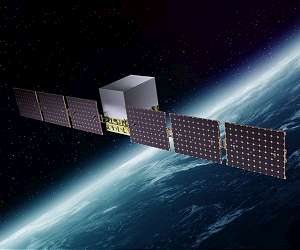
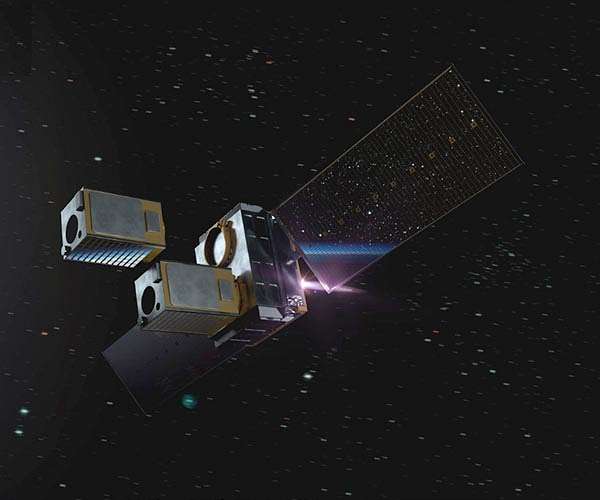
illustration only

Momentus and NASA plan joint mission to test orbital servicing technologies

by Clarence Oxford
Los Angeles CA (SPX) Feb 10, 2026
Momentus Inc. has entered into a Space Act Agreement with NASA for a new low Earth orbit mission that will test technologies for in-orbit servicing, assembly, and autonomous operations. The collaboration centers on using the companys Vigoride 7 Orbital Service Vehicle as a host platform for multiple demonstrations designed to improve how spacecraft maneuver, communicate, and work together in space.

Under the agreement, Momentus will deliver a NASA CubeSat to low Earth orbit to carry out joint rendezvous and proximity operations and formation flying activities with Vigoride 7. At the heart of the mission is NASAs R5 Spacecraft 10, or R5-S10, which will operate as a free-flying imager to monitor the health and performance of the Vigoride 7 vehicle during these operations.

The R5-S10 technology demonstration is funded and managed by NASAs Small Spacecraft Technology program and the Engineering Directorate at NASAs Johnson Space Center in Houston. The Small Spacecraft Technology program is based at NASAs Ames Research Center in Californias Silicon Valley and operates within the agencys Space Technology Mission Directorate, which focuses on developing new capabilities for future missions.

Mission planners view the R5-S10 work as an important step in advancing In-Space Assembly and Manufacturing capabilities. By refining how spacecraft approach, inspect, and operate near one another, the mission aims to help pave the way for future autonomous construction, maintenance, and servicing of infrastructure in orbit.

NASA is also supporting Momentus on a separate but related effort during the Vigoride 7 mission involving the Low-Cost Multispectral RPO Sensor suite, known as LCMRS. Momentus has been selected to perform this rendezvous demonstration mission for the Air Force Research Labs SPACEWERX organization, the innovation arm of the U.S. Air Force.

The LCMRS system is designed to improve spacecraft situational awareness and relative navigation by using multispectral sensing to track nearby objects. These capabilities are considered critical for in-space assembly, autonomous satellite servicing, and the management of space debris, where precise knowledge of positions and motion is essential for safe operations.

In addition to the proximity operations and sensing experiments, the mission will test inter-satellite links using WiFi-based data transmission between the CubeSat and the Vigoride host platform. The CubeSat will send large data files to Vigoride 7, which will then downlink the information to the Momentus Operations Center and to NASA Johnson.

This communications demonstration is intended to show how real-time or near-real-time data transfer between cooperating spacecraft can support more complex missions. If successful, such links could enable future constellations and servicing vehicles to share imagery, health data, and navigation information without relying solely on ground stations.

R5-S10 will fly alongside several other payloads aboard Vigoride 7, which is scheduled to launch no earlier than March 2026 on a SpaceX Transporter rideshare mission to low Earth orbit. Momentus reports that the Vigoride 7 Orbital Service Vehicle is fully booked with hosted payloads, underscoring demand for multi-manifest missions that can support a range of government and commercial objectives on a single platform.

According to the company, combining multiple payloads on one in-orbit mission increases the value and fidelity of each individual experiment, as instruments can cross-calibrate and share data in a common environment. Hosted payloads and servicing demonstrations such as these are viewed as a way to reduce costs while accelerating the pace of technology development in orbit.

Momentus positions Vigoride 7 as part of a broader strategy to provide satellite buses, hosted payload services, and in-space infrastructure to both government and commercial customers. Use cases include national security tracking missions, scientific research, and future autonomous operations that rely on vehicles capable of repositioning and supporting other spacecraft.

The upcoming mission with NASA builds on this strategy by emphasizing cost-effective and scalable approaches to space servicing. By integrating rendezvous and proximity operations, inter-satellite communications, and formation flying into a single mission profile, the partners aim to demonstrate a toolkit of capabilities relevant to a wide range of future orbital activities.

If the demonstrations perform as planned, the technologies proven on Vigoride 7 could support next-generation concepts such as modular space stations, on-orbit refueling depots, and debris-removal tugs. The collaboration is therefore seen as part of a larger shift toward a more service-oriented space economy in low Earth orbit and beyond.

Related Links
Momentus Inc.
Space Technology News - Applications and Research

Subscribe Free To Our Daily Newsletters
Tweet

RELATED CONTENT
TECH SPACE
Terran Orbital to supply Nebula satellite platform for Mitsubishi Electric LEO mission
Los Angeles CA (SPX) Feb 03, 2026
Terran Orbital has announced it will provide its Nebula satellite platform for the Mitsubishi Electric LEO Demo Mission, a new project developed with Mitsubishi Electric Corporation and Mitsubishi Electric US to support future low Earth orbit constellations. The mission is described as a key step in advancing technologies needed for LEO satellite systems and associated services. The Mitsubishi Electric LEO Demo Mission will fly a Nebula spacecraft bus configured to host a Quantum Key Distribution ... read more

TECH SPACE
Bezos's Blue Origin to 'pause' space tourism to focus on Moon efforts

NASA Heat Shield Technology Enables Space Industry Growth

Earliest launch window to ISS set for February 11: NASA

NASA astronaut stuck in space for nine months retires

TECH SPACE
Isar Aerospace expands engine and stage testing at Esrange

UK backs new electric propulsion hub for satellite engines

SpaceX shifts focus from Mars to Moon, Musk says

NASA backs studies to boost hypersonic flight testing

TECH SPACE
New clues to Mars habitability in discovery of ancient beach

Ancient deltas reveal vast Martian ocean across northern hemisphere

Tiny Mars' big impact on Earth's climate

The electrifying science behind Martian dust

TECH SPACE
China prepares offshore test base for reusable liquid rocket launches

Retired EVA workhorse to guide China's next-gen spacesuit and lunar gear

Tiangong science program delivers data surge

China tallies record launch year as lunar and asteroid plans advance

TECH SPACE
ESA member states back SWISSto12 HummingSat with fresh funding round

Muon Space ramps up multi-mission satellite constellations

Aerospacelab expands Pulsar navigation constellation work with new Xona satellite order

ThinkOrbital raises seed funding to advance orbital defense and construction systems

TECH SPACE
ESA adjusts Cluster orbits for rare twin reentry campaign

Astroscale Japan to mature electric refueling for future GEO servicing

Terran Orbital to supply Nebula satellite platform for Mitsubishi Electric LEO mission

Momentus and NASA plan joint mission to test orbital servicing technologies

TECH SPACE
Pressure driven leakage from marine snow feeds deep ocean microbes

Icy cycles may have driven early protocell evolution

Metal rich winds detected in giant dusty cloud around distant star

Cosmic dust chemistry forges peptide building blocks in deep space

TECH SPACE
Polar weather on Jupiter and Saturn hints at the planets' interior details

Europa ice delamination may deliver nutrients to hidden ocean

Birth conditions fixed water contrast on Jupiters moons

Study links Europa's quiet seafloor to hidden potential for life


The content herein, unless otherwise known to be public domain, are Copyright 1995-2026 - SpaceDaily.com. All websites are published in Australia and are solely subject to Australian law and governed by Fair Use principals for news reporting and research purposes. AFP, UPI and IANS news wire stories are copyright Agence France-Presse, United Press International and Indo-Asia News Service. ESA news reports are copyright European Space Agency. All NASA sourced material is public domain. Additional copyrights may apply in whole or part to other bona fide parties. All articles labeled "by Staff Writers" include reports supplied to Space Media Network by industry news wires, PR agencies, corporate press officers and the like. Such articles are individually curated and edited by Space Media Network staff on the basis of the report's information value to our industry and professional readership. Advertising does not imply endorsement, agreement or approval of any opinions, statements or information provided by Space Media Network on any Web page published or hosted by Space Media Network. General Data Protection Regulation (GDPR) Statement Our advertisers use various cookies and the like to deliver the best ad banner available at one time. All network advertising suppliers have GDPR policies (Legitimate Interest) that conform with EU regulations for data collection. By using our websites you consent to cookie based advertising. If you do not agree with this then you must stop using the websites from May 25, 2018. Privacy Statement. Additional information can be found here at About Us.
Subscribe Free To Our Daily Newsletters