





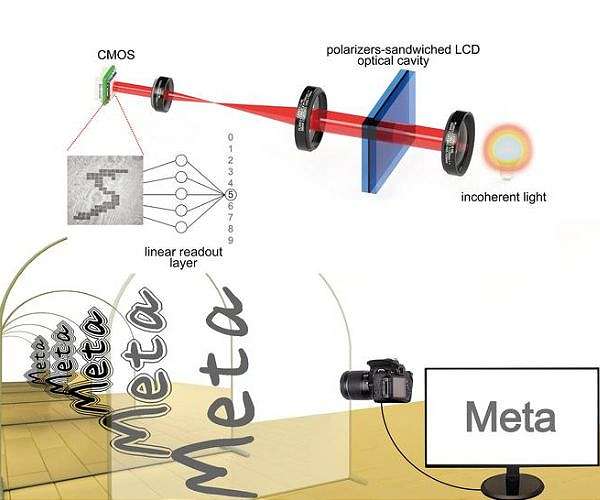
The researchers built a prototype device that routes light through a compact multi pass optical loop resembling an infinity mirror. Within this loop, tiny optical elements encode data directly into beams of light, and a microscopic camera records the resulting patterns as outputs. By keeping information in the optical domain for more of the computation, the system can execute AI workloads faster and with significantly less electrical energy than traditional circuitry.
In a question and answer discussion, lead investigator Xingjie Ni explained that optical computing differs from standard digital hardware by using photons instead of electrons to carry information. Traditional computers represent data as binary digits and rely on large numbers of transistors switching states, a flexible approach that also produces substantial heat and power consumption. Optical systems instead steer light through components such as lenses and mirrors so that the spatial or intensity patterns of the light itself represent the computation.
Ni noted that photons typically do not interact with one another under normal conditions, allowing many optical signals to traverse the same system at once. This makes optical hardware attractive for math heavy tasks like pattern recognition, where large data sets must be processed in parallel. Because the transformations occur at the speed of light and can use minimally powered or passive components, the operations can have very low latency and high energy efficiency.
Previous optical AI accelerators have mainly handled linear parts of the workload, in which outputs scale proportionally with inputs and combine in straightforward ways. The nonlinear operations that give AI models their decision making power have usually been implemented using electronic circuits or specialized optical materials driven by high optical power. Those arrangements require repeated conversions between optical and electronic signals, adding complexity, slowing performance, and increasing energy use.
The Penn State design addresses this bottleneck by allowing nonlinear behavior to emerge from repeated passes of light through the multi pass loop rather than from exotic materials. As the pattern circulates, the system builds up a nonlinear relationship between input data and output response without demanding high power beams. The core hardware uses widely available technologies similar to those in standard LCD displays and LED lighting instead of rare components or high power lasers.
According to Ni, placing the most computation intensive parts of AI into such a compact, efficient optical module could ease the energy and cooling challenges now facing data centers. Companies might be able to deliver the same AI capabilities with less power consumption and lower operating costs, which in turn could support more sustainable cloud services. Reducing heat loads would also simplify facility design and cooling infrastructure.
Shrinking the size and power budget of AI accelerators would further enable more intelligence at the network edge. Many current devices must offload processing to the cloud because running advanced models locally would drain batteries or overheat small enclosures. An optical computing module integrated into cameras, sensors, vehicles, drones, industrial robots, or medical equipment could allow those systems to react in real time while keeping sensitive data on the device.
The team now aims to transform the proof of concept apparatus into a programmable, robust optical computing unit ready for deployment. They plan to give developers control over the nonlinear behavior so the same module can be tuned for different applications rather than relying on a fixed response. Another goal is to condense the optical loop and supporting components into a compact package that can plug into existing computing platforms with minimal electronic overhead.
Ni emphasized that optical hardware is not expected to replace electronic processors entirely. Instead, conventional electronics would continue to manage general control, memory, and flexibility, while optical modules handle specific, high volume numerical tasks that dominate AI energy use. If this division of labor can be implemented in practical systems, future AI platforms could run on smaller, faster, and more energy efficient hardware than is typical today.
Co authors on the work include faculty colleagues and doctoral researchers in electrical engineering at Penn State, along with a photonics test engineer who completed a doctorate in optical design at the university. The project received support from the Air Force Office of Scientific Research and the U.S. National Science Foundation, reflecting interest in new computing technologies that can address growing AI workloads without a matching surge in power demand.
Research Report: Nonlinear optical extreme learner via data reverberation with incoherent light
Related Links
Penn State
Space Technology News - Applications and Research
| Subscribe Free To Our Daily Newsletters |
| Subscribe Free To Our Daily Newsletters |







