24/7 Space News
EARLY EARTH
Deep sea wrinkles reveal ancient chemosynthetic microbes
illustration only

Deep sea wrinkles reveal ancient chemosynthetic microbes

by Clarence Oxford
Los Angeles CA (SPX) Feb 16, 2026

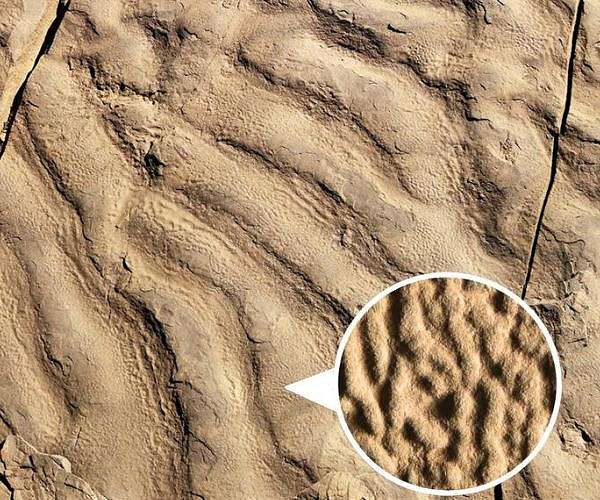
A chance observation on a Moroccan hillside has revealed that some wrinkled rock textures from the deep sea may actually be fossilized microbial communities, not just products of underwater landslides. While hiking in 2016, University of Texas at Austin geologist Rowan Martindale noticed a slab of sedimentary rock with a distinctive wrinkled surface that looked like classic microbial mat fossils from the geologic record.

Martindale, an associate professor at the Jackson School of Geosciences, recognized the texture from Early Triassic microbial mat examples she had studied in graduate school. Those earlier examples came from shallow, stressful environments or post-extinction settings where photosynthetic microbes could thrive and grazers were scarce. In contrast, the Moroccan wrinkle structures occur in sediments that were originally deposited in the deep ocean, about 600 feet below the surface, a setting long thought to be inhospitable to such microbial mats.

Conventional wisdom held that wrinkle-like features in deepwater rocks formed when turbidity currents or submarine landslides reshaped soft sediment into ridges and furrows. In that view, the structures were purely physical, with no biological component. Martindale was unconvinced, noting that the wrinkled textures overprinted larger ripples produced by the turbidity currents, and closely resembled known microbial mat fossils rather than random deformation structures.

In a new study published in the journal Geology, Martindale and colleagues propose that these wrinkle structures record chemosynthetic microbial mats that colonized the seafloor after a sediment gravity flow. Instead of harvesting sunlight, these microbes used chemical energy from nutrients and reduced compounds transported downslope by the landslide into the deep basin. This chemosynthetic metabolism would have allowed the microbial community to flourish far below the photic zone.

The team suggests that these deep-sea microbial mats may also have produced toxic sulfur compounds, helping to deter grazing by larger organisms and preserving the mat fabric long enough to be buried and fossilized. The resulting wrinkle structures form a subtle, fine-scale overprint on top of the larger ripples made by the turbidity current, creating a composite sedimentary texture. This combination of physical and biological features helped the researchers distinguish microbial mats from purely physical wrinkle-like structures.

Modern analogs for these ancient communities exist on the deep ocean floor today. Microbial mats colonize nutrient-rich patches such as whale falls, where carcasses that sink to the seafloor support dense, dark-ocean ecosystems. Similar chemosynthetic microbes, known as chemolithotrophs, tap chemical gradients rather than sunlight for energy in these settings. The new work argues that comparable communities may have been forming wrinkle structures in deepwater turbidites during the Early Jurassic.

Jake Bailey, a University of Minnesota scientist who studies microbe-environment interactions and was not involved in the research, notes that the findings expand how geologists interpret wrinkle structures in the rock record. Many paleontologists and sedimentologists have traditionally associated such textures with phototrophic microbial mats in shallow water. The new interpretation shows that some ancient wrinkles may instead record chemolithotrophic communities in the dark ocean, broadening the range of environments where microbial mat fossils may be preserved.

Martindale emphasizes that the discovery highlights a potential bias in how geologists classify wrinkled sedimentary surfaces. If all such structures in deepwater deposits are assumed to be purely physical, biologically generated textures could be overlooked or misidentified. The problem is compounded by loose terminology: the simple label "wrinkly" covers a wide variety of features, from soft-sediment deformation to true microbial mat fabrics, without a precise diagnostic vocabulary.

The work also marks a departure from Martindale's usual focus on ancient coral reefs and mass extinctions. The detour into deep-sea microbial mats began with a single puzzling outcrop and a geologist trained to recognize the right textural "search image." Martindale describes the project as an unexpected path driven by curiosity and persistence, sparked by the realization that the Moroccan wrinkles did not fit the standard deepwater explanation.

According to the researchers, recognizing chemosynthetic microbial wrinkle structures in turbidites could significantly increase the known occurrences of such communities in the fossil record. That, in turn, would reshape views of how microbial ecosystems occupied the deep ocean through time, and how often they were preserved in sediments traditionally interpreted as purely physical deposits. The study underscores how small textural details in ancient rocks can reveal hidden ecosystems and challenge long-standing assumptions about where life flourished on the early Earth.

Research Report: Chemosynthetic microbial communities formed wrinkle structures in ancient turbidites

Related Links
University of Texas at Austin Jackson School of Geosciences
Explore The Early Earth at TerraDaily.com

Subscribe Free To Our Daily Newsletters
Tweet

RELATED CONTENT
The following news reports may link to other Space Media Network websites.
EARLY EARTH
Ancient trilobite shells reveal durable chitin and long term carbon storage
Los Angeles CA (SPX) Feb 08, 2026
A UT San Antonio led international team has identified chitin in trilobite fossils more than 500 million years old, marking the first confirmed detection of this organic molecule in the extinct arthropod group. The discovery reveals that key biological polymers can persist in the rock record for far longer than scientists once assumed, reshaping ideas about how organic carbon is stored in Earths crust over geologic time. Chitin is the primary organic component of modern crab shells and insect exos ... read more

EARLY EARTH
International crew takes off for space station

NASA confirms first flight to ISS since medical evacuation

The coming end of ISS, symbol of an era of global cooperation

Crew 12 set for Dragon launch to Station in February

EARLY EARTH
Latvian startup advances nuclear-fueled power for satellites and future Moon missions

SpaceX shifts focus from Mars to Moon, Musk says

NASA books fifth Axiom private astronaut flight to space station

NASA Moon mission launch srubbed to March after test

EARLY EARTH
Curiosity Blog, Sols 4788-4797: Welcome Back from Conjunction

NASA Study: Non-biologic Processes Don't Fully Explain Mars Organics

Martian toxin found to toughen microbe built bricks

Perseverance rover completes landmark AI guided trek across Jezero rim

EARLY EARTH
Dragon spacecraft gears up for crew 12 arrival and station science work

China prepares offshore test base for reusable liquid rocket launches

Retired EVA workhorse to guide China's next-gen spacesuit and lunar gear

Tiangong science program delivers data surge

EARLY EARTH
BlackSky expands Gen 3 Assured deals with new defense customer

Muon Space ramps up multi-mission satellite constellations

ESA member states back SWISSto12 HummingSat with fresh funding round

Aerospacelab expands Pulsar navigation constellation work with new Xona satellite order

EARLY EARTH
Smartphone kit offers low cost on site radiation dose checks

SoftBank rides AI boom to post $1.6 billion net profit

Light based computing module aims to cut AI power demand

Latam-GPT: a Latin American AI to combat US-centric bias

EARLY EARTH
Engineered microbes use light to build new molecules

Survey of 80 near Earth asteroids sharpens view of their origins and risks

Lab made cosmic dust experiment reveals paths to life chemistry

Einstein effect clears planets from tight double star systems

EARLY EARTH
Jupiter size refined by new radio mapping

Polar weather on Jupiter and Saturn hints at the planets' interior details

Europa ice delamination may deliver nutrients to hidden ocean

Birth conditions fixed water contrast on Jupiters moons

Subscribe Free To Our Daily Newsletters


The content herein, unless otherwise known to be public domain, are Copyright 1995-2024 - Space Media Network. All websites are published in Australia and are solely subject to Australian law and governed by Fair Use principals for news reporting and research purposes. AFP, UPI and IANS news wire stories are copyright Agence France-Presse, United Press International and Indo-Asia News Service. ESA news reports are copyright European Space Agency. All NASA sourced material is public domain. Additional copyrights may apply in whole or part to other bona fide parties. All articles labeled "by Staff Writers" include reports supplied to Space Media Network by industry news wires, PR agencies, corporate press officers and the like. Such articles are individually curated and edited by Space Media Network staff on the basis of the report's information value to our industry and professional readership. Advertising does not imply endorsement, agreement or approval of any opinions, statements or information provided by Space Media Network on any Web page published or hosted by Space Media Network. General Data Protection Regulation (GDPR) Statement Our advertisers use various cookies and the like to deliver the best ad banner available at one time. All network advertising suppliers have GDPR policies (Legitimate Interest) that conform with EU regulations for data collection. By using our websites you consent to cookie based advertising. If you do not agree with this then you must stop using the websites from May 25, 2018. Privacy Statement. Additional information can be found here at About Us.