24/7 Space News
SOLAR SCIENCE
Thunderstorm, not eclipse, drove tree signal spike in Dolomites
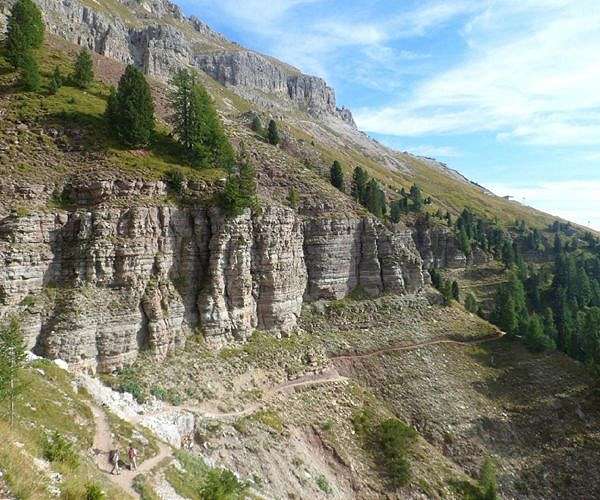
illustration only

Thunderstorm, not eclipse, drove tree signal spike in Dolomites

by Erica Marchand
Paris, France (SPX) Feb 08, 2026

Around 14 hours before a partial solar eclipse crossed the Dolomites in northern Italy, a cluster of spruce trees showed a sharp, synchronized rise in electrical activity. A new opinion paper argues that this spike did not reflect any anticipatory response to the eclipse but was instead triggered by a local thunderstorm and nearby lightning.

In a widely publicized study, Chiolerio and colleagues had reported that the trees appeared to "anticipate" the approaching eclipse, interpreting their bioelectrical signals as evidence that they were preparing for the temporary dimming of sunlight. The new analysis, published February 6 in the journal Trends in Plant Science, challenges that interpretation and proposes a simpler explanation rooted in established plant and atmospheric science.

"To me, this paper represents the encroachment of pseudoscience into the heart of biological research," says first author Ariel Novoplansky, an evolutionary ecologist at Ben-Gurion University of the Negev in Israel. "Instead of considering simpler, well-documented environmental factors, like a heavy rainstorm and a cluster of nearby lightning strikes, the authors leaned into the more seductive idea that the trees were anticipating the impending solar eclipse."

Plant biologists have long known that vegetation can detect and respond to changes in light, moisture, temperature, and other environmental cues, and in some cases can even adjust in advance to predictable stresses or competition. However, Novoplansky and co-authors argue that such anticipatory behavior only evolves when the predicted event poses a substantial challenge and is tightly linked to reliable cues that organisms can learn or encode.

In this case, the partial solar eclipse over the Dolomites was brief and relatively weak in intensity. According to the new analysis, the eclipse reduced available light by only about 10.5 percent over roughly two hours, and during that window the sunlight levels remained roughly double what the trees could actually use for photosynthesis. The authors note that ordinary variations in cloud cover at the site routinely cause much larger and more frequent swings in light quality and quantity than the eclipse did.

"The eclipse only reduced light by about 10.5% for two short hours, during which the level of sunlight was approximately twice what the trees could practically use," says Novoplansky. "Frequent fluctuations in cloud cover at the study location change light quality and quantity by much bigger amplitudes."

Even if the eclipse had represented a strong enough environmental stress to warrant anticipation, the trees would still lack a plausible mechanism to foresee its timing, the authors argue. The event was the 53rd eclipse in the Saros 124 sequence, a family of eclipses that recur every 18 years, 11 days, and 8 hours. Chiolerio et al. reported that older, larger trees showed stronger electrical responses than younger trees and suggested that this might reflect experience with earlier eclipses and some form of inter-tree communication.

The new paper counters that each eclipse in such a sequence differs in its path, magnitude, and duration, which undermines the idea that prior exposure could train trees to recognize or anticipate a specific future event. The authors also point out that the gravitational changes during a solar eclipse, proposed as the signal to which the trees were responding, are similar in scale to the routine tidal variations that occur with every new moon and thus provide little unique, actionable information.

The critique also highlights statistical and sampling limitations in the original work. Chiolerio and colleagues based their conclusions on measurements from only three living spruce trees and five stumps, a very small sample size for drawing broad inferences about forest-scale behavior or communication. Novoplansky and co-authors caution that strong claims of coordinated, anticipatory responses should rest on much more extensive and robust datasets.

Finally, the authors urge both researchers and the wider public to be wary of dramatic interpretations of plant electrical activity that are not firmly grounded in evidence. "The electrical activity of trees is a real phenomenon but it's still a nascent field of inquiry," says Novoplansky. "The idea that variations in electrical signals, observable even in dead logs, might encode memory, anticipation, or collective responsiveness requires a few extraordinary leaps, none of which were supported in the study. The forest is wondrous enough without inventing irrational yet superficially fantastic claims of anticipatory responsiveness or communication based only on correlation."

The opinion article, "Eclipse of reason: Debunking speculative anticipatory behavior in trees," appears in Trends in Plant Science and was supported by the Israel Science Foundation and the V. Kann Rasmussen Foundation.

Research Report:Eclipse of reason: Debunking speculative anticipatory behavior in trees

Related Links
Ben-Gurion University
Solar Science News at SpaceDaily

Subscribe Free To Our Daily Newsletters
Tweet

RELATED CONTENT
The following news reports may link to other Space Media Network websites.
SOLAR SCIENCE
NASAs IMAP Begins Primary Science Mission
Greenbelt MD (SPX) Feb 03, 2026
NASAs IMAP (Interstellar Mapping and Acceleration Probe) began its two-year primary science mission on Feb. 1 to explore and map the boundaries of our heliosphere - the protective bubble created by the solar wind that encapsulates our solar system. The mission, which launched on Sept. 24, 2025, relies on 10 scientific instruments to chart a comprehensive picture of what is roiling in space, from high-energy particles originating at the Sun, to magnetic fields in interplanetary space, to dust left ... read more

SOLAR SCIENCE
New crew set to launch for ISS after medical evacuation

The coming end of ISS, symbol of an era of global cooperation

Bezos's Blue Origin to 'pause' space tourism to focus on Moon efforts

Crew 12 set for Dragon launch to Station in February

SOLAR SCIENCE
NASA Moon mission launch srubbed to March after test

NASA delays Moon mission over frigid weather

China sea launch boosts private rocket activity in 2026

Rocket Lab conducts second Electron mission in eight days to orbit Korean imaging satellite

SOLAR SCIENCE
Martian toxin found to toughen microbe built bricks

Perseverance rover completes landmark AI guided trek across Jezero rim

New clues to Mars habitability in discovery of ancient beach

Ancient deltas reveal vast Martian ocean across northern hemisphere

SOLAR SCIENCE
Dragon spacecraft gears up for crew 12 arrival and station science work

China prepares offshore test base for reusable liquid rocket launches

Retired EVA workhorse to guide China's next-gen spacesuit and lunar gear

Tiangong science program delivers data surge

SOLAR SCIENCE
BlackSky expands Gen 3 Assured deals with new defense customer

ESA member states back SWISSto12 HummingSat with fresh funding round

Muon Space ramps up multi-mission satellite constellations

Aerospacelab expands Pulsar navigation constellation work with new Xona satellite order

SOLAR SCIENCE
Launching the idea of data centers in space

Anthropic unveils new AI model as OpenAI rivalry heats up

NTU Singapore boosts agile space access with trio of new projects

Musk merges xAI into SpaceX in bid to build space data centers

SOLAR SCIENCE
Survey of 80 near Earth asteroids sharpens view of their origins and risks

Lab made cosmic dust experiment reveals paths to life chemistry

Einstein effect clears planets from tight double star systems

Engineered microbes use light to build new molecules

SOLAR SCIENCE
Jupiter size refined by new radio mapping

Polar weather on Jupiter and Saturn hints at the planets' interior details

Europa ice delamination may deliver nutrients to hidden ocean

Birth conditions fixed water contrast on Jupiters moons

Subscribe Free To Our Daily Newsletters


The content herein, unless otherwise known to be public domain, are Copyright 1995-2024 - Space Media Network. All websites are published in Australia and are solely subject to Australian law and governed by Fair Use principals for news reporting and research purposes. AFP, UPI and IANS news wire stories are copyright Agence France-Presse, United Press International and Indo-Asia News Service. ESA news reports are copyright European Space Agency. All NASA sourced material is public domain. Additional copyrights may apply in whole or part to other bona fide parties. All articles labeled "by Staff Writers" include reports supplied to Space Media Network by industry news wires, PR agencies, corporate press officers and the like. Such articles are individually curated and edited by Space Media Network staff on the basis of the report's information value to our industry and professional readership. Advertising does not imply endorsement, agreement or approval of any opinions, statements or information provided by Space Media Network on any Web page published or hosted by Space Media Network. General Data Protection Regulation (GDPR) Statement Our advertisers use various cookies and the like to deliver the best ad banner available at one time. All network advertising suppliers have GDPR policies (Legitimate Interest) that conform with EU regulations for data collection. By using our websites you consent to cookie based advertising. If you do not agree with this then you must stop using the websites from May 25, 2018. Privacy Statement. Additional information can be found here at About Us.