





The team focused on roughly 14,000 alien plant species that are already known to spread beyond their original ranges. Using more than 51 million occurrence records drawn from the Global Biodiversity Information Facility, large databases and scientific literature, they modeled the climatic niche of each species and compared it with conditions in Arctic regions. The analysis identified 2,554 alien plant species that would find a suitable climatic niche in the Arctic today if they are transported there.
These species still need a way to reach the far north, but human activity is already providing many such pathways. One of the most probable transport mechanisms is unintentional hitchhiking with people, equipment, vehicles and cargo moving into the region for tourism, research, industry and settlement. "Our results show that alien species from virtually all over the world can find a niche in the Arctic. And with all the human activity in the Arctic now, there are lots of opportunities to get there," said associate professor Kristine Bakke Westergaard from the NTNU University Museum.
The researchers carried out what they describe as a horizon scan of potential new alien vascular plant species and their climatic niche space across the Arctic. First author Tor Henrik Ulsted, who recently completed a master's degree at NTNU and received the Faculty of Natural Science's award for a thesis contributing to sustainable development, led much of the data analysis. The resulting maps show hotspot areas where large numbers of alien species could tolerate the local climate if they arrive.
According to the study, northern Norway stands out as one of the Arctic's main hotspots for climatic suitability, reflecting both relatively mild conditions and intense human use. Other parts of the Arctic are not free from risk, however. "Our map shows hotspot areas in the Arctic where many alien species can tolerate the climate. The highest number of species are found in the north of Norway," Ulsted said. Even Svalbard, which is far north and sparsely vegetated, could support many potential newcomers under current conditions.
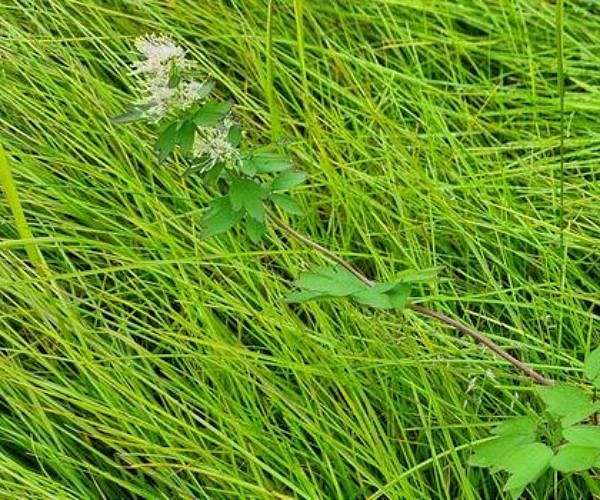
"Even in Svalbard, 86 alien species can find a climatic niche," Westergaard noted. In recent years, she and her colleagues have documented a surprisingly large number of alien species flourishing around Svalbard's settlements. In 2024, for example, they recorded common meadow rue, Thalictrum flavum, for the first time on Svalbard, where it was found in full bloom on a nutrient rich slope near Barentsburg. Such findings illustrate how quickly non native plants can arrive and establish when given suitable microhabitats and propagule pressure.
Rapid warming in the Arctic is amplifying these risks. As air and soil temperatures rise and growing seasons lengthen, more alien species that were previously limited by harsh conditions can potentially survive and reproduce. At the same time, tourism, shipping, research infrastructure and resource extraction continue to expand, increasing the volume of soil, seeds and plant material moved into the region. The combination of climatic opening and human vectors creates favorable conditions for large scale biological invasions.
The new study also aims to support authorities tasked with evaluating and managing these threats. In Norway and Svalbard, expert committees under the Norwegian Biodiversity Information Centre assess the ecological risk posed by alien species and maintain official risk lists. Westergaard explained that these committees have long struggled with the basic step of identifying which alien plants are relevant candidates for assessment in each area, given the sheer number of species worldwide.
By providing pre filtered lists of alien species that match the climatic conditions of specific Arctic regions, the horizon scan offers a practical starting point. The methodology allows experts to focus their detailed risk analyses on species that are actually likely to survive if introduced, rather than sifting through thousands of unlikely candidates. "Our long term goal is to help identify alien species before they become invasive and problematic," Ulsted said, emphasizing that early detection and prevention are far more effective than control efforts after invaders are well established.
The work is also designed to align with international and national policy frameworks on biodiversity. Westergaard noted that the approach supports the Kunming Montreal Global Biodiversity Framework, which calls for reducing the threat from invasive alien species and specifically aims to halve the introduction and establishment of such species by 2030. The results can likewise inform the Norwegian government's action plan against harmful alien organisms, which sets out measures to prevent introductions, improve surveillance and manage high risk species.
Beyond Norway, the authors argue that similar horizon scanning tools can help other Arctic nations prioritize monitoring around high risk entry points such as ports, airports, tourist hubs and industrial sites. By coupling large biodiversity databases with climate niche models, managers can develop region specific watch lists and allocate limited resources more strategically. The study underscores that, in a rapidly changing Arctic, proactive planning and international cooperation will be critical to protect native ecosystems from an impending wave of botanical invaders.
Research Report:Horizon scanning of potential new alien vascular plant species and their climatic niche space across the Arctic
Related Links
Norwegian University of Science and Technology
Beyond the Ice Age
| Subscribe Free To Our Daily Newsletters |

| Subscribe Free To Our Daily Newsletters |








