24/7 Space News
TECTONICS
Shifting seafloor carbon flows linked to ancient climate swings
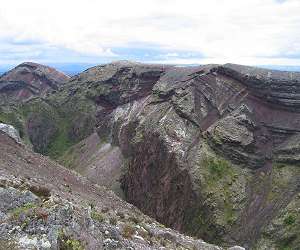
illustration only

Shifting seafloor carbon flows linked to ancient climate swings

by Simon Mansfield
Sydney, Australia (SPX) Jan 21, 2026

Carbon released from Earths spreading tectonic plates rather than from long chains of volcanoes may have driven major transitions between ancient ice ages and warm greenhouse climates, according to new research from Australia-based scientists. The work suggests that deep ocean ridges and gaps where plates pull apart dominated the long term carbon cycle for most of the last 540 million years, reshaping the picture of how the planet regulated its climate over geological time.

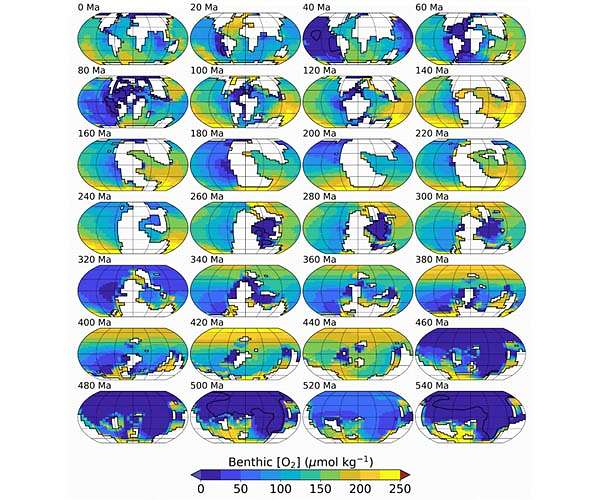
The study, published in Communications Earth and Environment, reconstructs how carbon moved between the deep Earth, seafloor spreading centres, volcanic arcs and the oceans through the Phanerozoic eon. Led by researchers at the Universities of Melbourne and Sydney, the analysis links plate tectonic reconstructions with global carbon cycle models to trace how carbon was stored, released and recycled as continents assembled, broke apart and drifted.

Lead author Dr Ben Mather from the University of Melbournes School of Geography, Earth and Atmospheric Sciences said the findings challenge the long held view that volcanic arcs built above colliding tectonic plates are the primary natural source of atmospheric carbon dioxide over deep time. "Our findings show that carbon gas released from gaps and ridges deep under the ocean from moving tectonic plates was instead likely driving major shifts between icehouse and greenhouse climates for most of Earths history," Dr Mather said.

By focusing on the mid ocean ridges and related spreading systems, the team identified a strong connection between seafloor carbon outgassing and swings between cold and warm global states. The results indicate that when seafloor spreading accelerated or reorganised, enhanced carbon release from beneath the oceans could push the climate toward greenhouse conditions, whereas reduced spreading and carbon outflow favoured extended icehouse intervals.

"We found that carbon emitted from volcanoes, around the Pacific ring of fire for example, only became a major carbon source in the last 100 million years, which challenges current scientific understanding," Dr Mather said. Earlier in Earths history, diffuse degassing along the vast network of spreading centres appears to have overshadowed the contribution from volcanic arcs at convergent plate boundaries.

Co author Professor Dietmar Muller from the University of Sydneys School of Geosciences said pairing detailed plate motion reconstructions with carbon cycle modelling allowed the team to reconstruct how tectonics steered atmospheric carbon levels. By tracking when and where plates separated or collided, the researchers could estimate how much carbon was likely injected into the oceans and atmosphere, and how much was drawn back down into the mantle in subduction zones.

"Our studys findings help explain key historical climate shifts, including the late Paleozoic ice age, the warm Mesozoic greenhouse world, and the emergence of the modern Cenozoic icehouse, by showing how changes in carbon released from spreading plates shaped these long term transitions to our climate," Professor Muller said. The framework links tectonic reorganisations to well known climatic turning points, highlighting the central role of deep Earth processes in driving surface environment changes.

Dr Mather said the work provides important context for the rapid climate change currently underway. "This research adds to a large pool of evidence that the amount of carbon in the Earths atmosphere is a key trigger to cause major swings in climate," he said. He noted that while tectonic processes can profoundly alter climate, they operate over millions of years, in contrast to the much faster pulse of carbon now coming from human activities.

"Understanding how Earth controlled its climate in the past highlights how unusual the present rate of change is. Human activities are now releasing carbon far faster than any natural geological process that weve seen to have taken place before. The climate scales are being tipped at an alarming rate," Dr Mather said. The authors argue that recognising the slow but powerful influence of plate tectonics on climate underscores just how strongly modern emissions have disrupted the planets long standing carbon balance.

The study draws on recent advances in global plate kinematic models, which reconstruct the positions and motions of continents and ocean basins over the last 540 million years. By integrating these reconstructions with models of mantle melting, seafloor hydrothermal systems and sediment subduction, the team assembled a comprehensive picture of how carbon cycled between Earths interior and surface environments over geological time.

The researchers conclude that tectonic plate divergence at mid ocean ridges has been the dominant geological driver of atmospheric carbon dioxide and climate state for much of Earths history, with volcanic arcs rising to prominence only in the more recent past. They suggest that future work combining high resolution plate models with additional geochemical records could further refine the timing and magnitude of tectonically driven carbon fluxes, providing an even clearer view of how Earths interior and surface have co evolved.

Research Report:Tectonic controls on Phanerozoic plate carbon degassing and climate transitions

Related Links
University of Melbourne
Tectonic Science and News

Subscribe Free To Our Daily Newsletters
Tweet

RELATED CONTENT
The following news reports may link to other Space Media Network websites.
TECTONICS
Ancient Tethys Ocean helped build Central Asia mountains
Sydney, Australia (SPX) Jan 15, 2026
New research from Adelaide University links the power of the ancient Tethys Ocean to the way Central Asia's landscape developed during the Cretaceous period. The work draws on decades of thermochronology data to reassess how mountains in the region rose and evolved. The study uses a big data approach built from hundreds of published thermal history models for Central Asia compiled over about 30 years. These models track when rocks cooled as they moved toward the surface during mountain uplift and ... read more

TECTONICS
Tourists hit record in Japan, despite plunge from China

International Space Station crew to return early after astronaut medical issue

Startups go public in litmus test for Chinese AI

Second ESCAPADE spacecraft completes key trajectory fix on path to Mars

TECTONICS
PH-1 test flight advances Chinese reusable suborbital spacecraft plans

Starfighters completes supersonic tests for GE Aerospace ramjet program

North Korea tests hypersonic missiles, says nuclear forces ready for war

Galileo satellites ride Ariane 6 to boost Europe navigation resilience

TECTONICS
Ancient deltas reveal vast Martian ocean across northern hemisphere

The electrifying science behind Martian dust

Sandblasting winds sculpt Mars landscape

Thin ice may have protected lake water on frozen Mars

TECTONICS
Tiangong science program delivers data surge

China tallies record launch year as lunar and asteroid plans advance

China harnesses nationwide system to drive spaceflight and satellite navigation advances

Shenzhou 21 crew complete eight hour spacewalk outside Tiangong station

TECTONICS
China outlines mega constellations in ITU satellite filings

Disaster losses drop in 2025, picture still 'alarming': Munich Re

Time-expanded network model cuts complexity in mega constellation launch planning

Southern Launch to Host Lux Aeterna Re-Entries South Australia

TECTONICS
China starts large scale production of T1000 carbon fiber

Swiss regulator opens inquiry into Microsoft license fees

Self-healing composite can make airplane, automobile and spacecraft components last for centuries

Fast FPGA pulse shaping clears neutron gamma pile ups in nuclear detectors

TECTONICS
Scientist wins 'Environment Nobel' for shedding light on hidden fungal networks

Pandora exoplanet mission checks in after launch

Mixed crystal phase of superionic water mapped inside giant planets

Creating hallucination-free, psychedelic-like molecules by shining light on life's basic building blocks

TECTONICS
Jupiter's moon Europa has a seafloor that may be quiet and lifeless

Uranus and Neptune may be rock rich worlds

SwRI links Uranus radiation belt mystery to solar storm driven waves

Looking inside icy moons

Subscribe Free To Our Daily Newsletters


The content herein, unless otherwise known to be public domain, are Copyright 1995-2024 - Space Media Network. All websites are published in Australia and are solely subject to Australian law and governed by Fair Use principals for news reporting and research purposes. AFP, UPI and IANS news wire stories are copyright Agence France-Presse, United Press International and Indo-Asia News Service. ESA news reports are copyright European Space Agency. All NASA sourced material is public domain. Additional copyrights may apply in whole or part to other bona fide parties. All articles labeled "by Staff Writers" include reports supplied to Space Media Network by industry news wires, PR agencies, corporate press officers and the like. Such articles are individually curated and edited by Space Media Network staff on the basis of the report's information value to our industry and professional readership. Advertising does not imply endorsement, agreement or approval of any opinions, statements or information provided by Space Media Network on any Web page published or hosted by Space Media Network. General Data Protection Regulation (GDPR) Statement Our advertisers use various cookies and the like to deliver the best ad banner available at one time. All network advertising suppliers have GDPR policies (Legitimate Interest) that conform with EU regulations for data collection. By using our websites you consent to cookie based advertising. If you do not agree with this then you must stop using the websites from May 25, 2018. Privacy Statement. Additional information can be found here at About Us.