24/7 Space News
ROCKET SCIENCE
PH-1 test flight advances Chinese reusable suborbital spacecraft plans
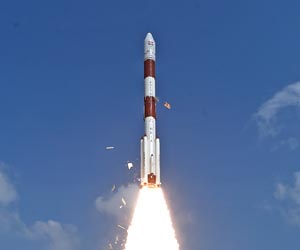
illustration only

PH-1 test flight advances Chinese reusable suborbital spacecraft plans

by Riko Seibo
Tokyo, Japan (SPX) Jan 13, 2026

A Chinese suborbital spacecraft designed for reusable operations and future space tourism has completed a key test flight, marking a new step in the country's commercial space ambitions.

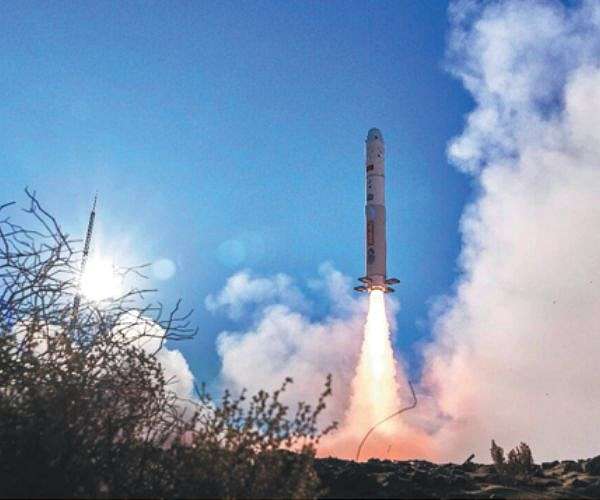
The vehicle, designated PH-1, is developed by Beijing-based commercial aerospace company CAS Space and is intended to support low cost scientific experiments in microgravity as well as pave the way for passenger carrying flights. The latest mission took place on Monday from the Jiuquan Satellite Launch Center on the edge of the Gobi Desert in the Inner Mongolia autonomous region.

PH-1 lifted off at about 4 pm local time and flew a suborbital trajectory that reached an altitude of roughly 120 kilometers, crossing the Karman line that is widely regarded as the boundary between Earth's atmosphere and outer space. After completing the upward phase of its mission profile, the vehicle descended back through the atmosphere toward its planned recovery zone.

During the flight the recoverable payload cabin separated from the booster at an altitude of about 70 kilometers and continued to climb on inertia before beginning its return. As it re entered denser layers of the atmosphere, the cabin deployed a parachute at around 10 kilometers above the ground and then carried out a controlled descent to a designated landing site.

CAS Space reported that the test validated a series of reusable spacecraft technologies, including re entry deceleration, parachute based recovery and precision landing control of the payload cabin. Engineers also monitored and assessed the performance of critical subsystems and components throughout the ascent, microgravity phase and descent segments of the flight.

According to the company, the mission demonstrated that PH-1 can provide a stable microgravity environment lasting more than 300 seconds, a duration that is difficult to match with ground based facilities. The unpowered payload cabin's flight profile is designed specifically to maximize the time available for experiments in reduced gravity conditions.

The payload for this test included an experimental laser based 3D printer intended to operate in microgravity, allowing researchers to investigate space based additive manufacturing processes. The mission also carried rose seeds that had previously been exposed to spaceflight aboard another spacecraft, supporting ongoing work in space based plant breeding.

Shi Xiaoning, the spacecraft's chief designer and project manager at CAS Space, said PH-1 is primarily intended to provide suborbital research services at relatively low cost. He noted that the vehicle can deliver minute level microgravity conditions that are more sustained and higher quality than those typically available from drop towers or parabolic aircraft flights.

Shi highlighted potential applications such as space based plant breeding, biomedical research and materials science investigations that benefit from extended periods of microgravity. He added that once the technologies involved reach sufficient maturity, similar spacecraft could be adapted for suborbital space tourism, allowing passengers to experience brief periods of weightlessness.

The PH-1 design emphasizes reusability, flexible mission profiles and efforts to reduce launch costs in the commercial market, according to CAS Space. The company plans to evolve the recoverable payload cabin into orbital grade spacecraft that could remain in orbit for up to one year, be reused around 10 times and support in orbit manufacturing activities.

China's commercial space sector has expanded quickly in recent years, with both state affiliated contractors and private enterprises pursuing reusable rockets and spacecraft. Several companies have already conducted test flights of reusable launch vehicles as part of broader efforts to lower space access costs and strengthen China's position in the global space industry.

Related Links
CAS Space
Rocket Science News at Space-Travel.Com

Subscribe Free To Our Daily Newsletters
Tweet

RELATED CONTENT
The following news reports may link to other Space Media Network websites.
ROCKET SCIENCE
Starfighters completes supersonic tests for GE Aerospace ramjet program
Los Angeles CA (SPX) Jan 06, 2026
Starfighters Space Inc has completed a supersonic flight test campaign for GE Aerospace in which a company F-104 aircraft carried an advanced propulsion test vehicle on multiple flights at supersonic speed. The work supports GE Aerospace's Atmospheric Test of Launched Air-breathing System (ATLAS) program, which is focused on solid fuel ramjet propulsion. As part of the ATLAS program, Starfighters flew three supersonic captive carry missions from Kennedy Space Center with the test vehicle mounted t ... read more

ROCKET SCIENCE
International Space Station crew to return early after astronaut medical issue

Second ESCAPADE spacecraft completes key trajectory fix on path to Mars

Why Space Exploration Depends on Predicting the Unpredictable

China launches twin Shijian-29 satellites to test space-target detection tech

ROCKET SCIENCE
Starfighters completes supersonic tests for GE Aerospace ramjet program

Galileo satellites ride Ariane 6 to boost Europe navigation resilience

North Korea tests hypersonic missiles, says nuclear forces ready for war

AI systems proposed to boost launch cadence reliability and traffic management

ROCKET SCIENCE
The electrifying science behind Martian dust

Sandblasting winds sculpt Mars landscape

Thin ice may have protected lake water on frozen Mars

Curiosity's Nevado Sajama postcard captures Mars on the eve of conjunction

ROCKET SCIENCE
Tiangong science program delivers data surge

China tallies record launch year as lunar and asteroid plans advance

China harnesses nationwide system to drive spaceflight and satellite navigation advances

Shenzhou 21 crew complete eight hour spacewalk outside Tiangong station

ROCKET SCIENCE
Time-expanded network model cuts complexity in mega constellation launch planning

Southern Launch to Host Lux Aeterna Re-Entries South Australia

Smart modeling framework targets 6G spectrum chaos in space air and ground networks

K2 Space raises 250m to scale Mega class high power satellites

ROCKET SCIENCE
Momentus to flight test 3D printed fuel tank on Vigoride 7

How IVRT Testing Ensures Consistent Product Quality

This exotic form of ice just got weirder

Planet delivers first light image from Pelican 6 satellite capturing Lhasa Gonggar Airport

ROCKET SCIENCE
Joint ground- and space-based observations reveal Saturn-mass rogue planet

Creating hallucination-free, psychedelic-like molecules by shining light on life's basic building blocks

ALMA views giant dusty disk in Gomezs Hamburger with signs of early giant planet formation

Giant amoeba virus ushikuvirus sheds light on how complex cells evolved

ROCKET SCIENCE
Jupiter's moon Europa has a seafloor that may be quiet and lifeless

Uranus and Neptune may be rock rich worlds

SwRI links Uranus radiation belt mystery to solar storm driven waves

Looking inside icy moons

Subscribe Free To Our Daily Newsletters


The content herein, unless otherwise known to be public domain, are Copyright 1995-2024 - Space Media Network. All websites are published in Australia and are solely subject to Australian law and governed by Fair Use principals for news reporting and research purposes. AFP, UPI and IANS news wire stories are copyright Agence France-Presse, United Press International and Indo-Asia News Service. ESA news reports are copyright European Space Agency. All NASA sourced material is public domain. Additional copyrights may apply in whole or part to other bona fide parties. All articles labeled "by Staff Writers" include reports supplied to Space Media Network by industry news wires, PR agencies, corporate press officers and the like. Such articles are individually curated and edited by Space Media Network staff on the basis of the report's information value to our industry and professional readership. Advertising does not imply endorsement, agreement or approval of any opinions, statements or information provided by Space Media Network on any Web page published or hosted by Space Media Network. General Data Protection Regulation (GDPR) Statement Our advertisers use various cookies and the like to deliver the best ad banner available at one time. All network advertising suppliers have GDPR policies (Legitimate Interest) that conform with EU regulations for data collection. By using our websites you consent to cookie based advertising. If you do not agree with this then you must stop using the websites from May 25, 2018. Privacy Statement. Additional information can be found here at About Us.