Rescuers race to find missing as deadly floods ravage Mozambique
By Silaide Mutemba
Manhica, Mozambique Jan 20, 2026
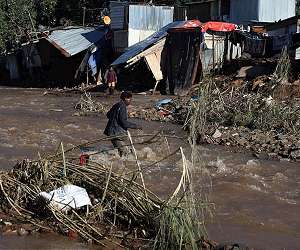
Rescuers in Mozambique clawed through thick mud and waded into waterlogged homes on Tuesday, racing to find survivors still unaccounted for after one of the country's worst floods in decades.
At least 114 people have died since the rainy season began in early October, including 51 since Christmas Eve, when downpours intensified and sent torrents of river water crashing through several villages.
The United Nations says the surging waters have spiralled into a rapidly escalating emergency.
In the southern Maputo province, emergency crews flew over swathes of land swallowed by floodwaters, scanning for stranded residents and assessing the damage.
Footage shared by the National Disasters Management Institute (INGD) captured a helicopter hovering above an inundated house in neighbouring Gaza province, lifting residents from the roof still visible above the floodwaters.
In another clip released by UNICEF, vast stretches of land in the same province had disappeared beneath a sheet of murky water, with a section of tarmac road torn away.
Six people remain missing in the country, according to INGD, although Maputo governor Manuel Tule warned the number could change as assessments continue.
"We do not have conclusive data but we estimate that more than 36,000 people are affected in the province and about 13,000 are in accommodation centres," he said.
"We still do not know exactly how many people need assistance."
More than half a million people had been affected in the country of about 35 million, the UN said on Tuesday.
"The numbers keep rising as extensive flooding continues and dams keep releasing water to avoid bursting," said Paola Emerson, head of Mozambique operations at the UN humanitarian agency OCHA.
Nearly 5,000 kilometres of road had been damaged across nine provinces, including the main artery linking Maputo to the rest of the country, she said.
The damage to roads and infrastructure was making it hard for aid agencies to reach those most affected, she added.
- 'Deadly threat' -
More than 50,000 people are sheltering in over 50 temporary accommodation centres across the country.
Tule appealed for urgent reinforcements at those centres, saying they were running short of treated water and fuel for boats.
The government was facing a significant funding shortfall of more than $100 million for humanitarian operations, spokesman Inocencio Impissa told reporters.
The strain is compounding an already fragile humanitarian landscape, the UN said.
Children's agency UNICEF said January's exceptionally heavy rains had "triggered a rapidly escalating emergency across vast swathes of Mozambique, particularly in the south".
"The flooding that we're seeing is not just destroying homes, schools, health centres and roads," said UNICEF spokesman Guy Taylor.
"It's really turning unsafe water, disease outbreaks and malnutrition into a deadly threat for children.
"The fact that Mozambique is now entering into its annual cyclone season creates the risk of a double crisis."
Taylor said disruption to food supplies and health services "threatens to push the most vulnerable children into a dangerous spiral".
"What happens in the coming days will really determine not only how many survive this emergency but how many can recover, how many can return to school and rebuild their futures," he said.
The latest deluge is already among the worst Mozambique has seen in years, and officials fear the toll could climb further with more heavy rain forecast.
A countrywide red?alert warning, the highest level, has been issued over the weather.
In 2000, devastating floods brought on by Cyclone Eline killed around 800 people and displaced hundreds of thousands.
Mozambique floods causing spiralling emergency: UN
Geneva (AFP) Jan 20, 2026 -
Severe flooding in Mozambique has triggered a rapidly escalating emergency that is already affecting more than half a million people, the United Nations warned on Tuesday.
"The numbers keep rising as extensive flooding continues and dams keep releasing water to avoid bursting," said Paola Emerson, head of Mozambique operations at the UN humanitarian agency OCHA.
Heavy rains and storms have battered Mozambique and neighbouring South Africa for weeks, claiming at least 150 lives, authorities in those countries have said.
"The situation remains fluid and dangerous," Emerson told a press conference in Geneva.
The damage to roads and infrastructure is making it hard for aid agencies to reach the worst-affected people, she said.
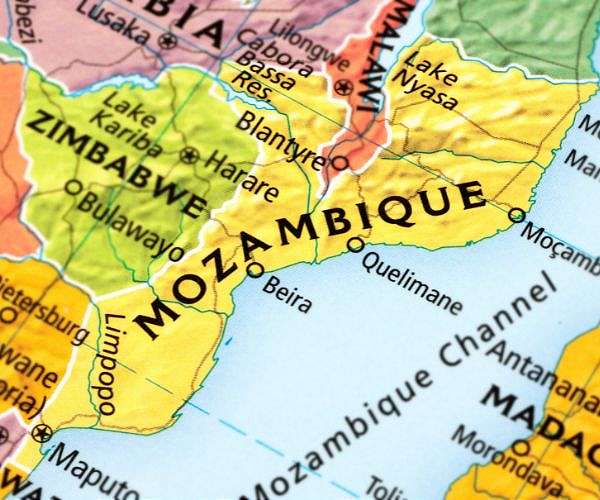
She was speaking from the city of Xai-Xai, around 200 kilometres (125 miles) northeast of the capital Maputo and in the Limpopo River basin.
Nearly 5,000 kilometres of roads had been damaged across nine provinces, including the main artery linking Maputo to the rest of the country, she said.
More than 50,000 people are sheltering in over 50 temporary accommodation centres.
The agency called for additional funding.
"This flooding emergency comes on top of massive conflict-related displacement in northern Mozambique that has depleted stocks," Emerson explained.
"This latest disaster is a stark reminder of Mozambique's vulnerability to the convergence of multiple shocks -- including conflict, drought, cyclones in recent years and now severe flooding."
- Crocodile threat -
Several rivers have burst their banks and swallowed entire neighbourhoods, raising risk of crocodiles entering communities, notably in Xai-Xai.
"The crocodiles that are in the Limpopo river, in this case, are able to get into... urban or populated areas that are now submerged under water," she said.
UN children's agency UNICEF said January's exceptionally heavy rains had "triggered a rapidly escalating emergency across vast swathes of Mozambique, particularly in the south".
"The flooding that we're seeing is not just destroying homes, schools, health centres and roads," said UNICEF spokesman Guy Taylor.
"It's really turning unsafe water, disease outbreaks and malnutrition into a deadly threat for children.
"The fact that Mozambique is now entering into its annual cyclone season creates the risk of a double crisis."
Taylor said disruption to food supplies and health services "threatens to push the most vulnerable children into a dangerous spiral".
"What happens in the coming days will really determine not only how many survive this emergency but how many can recover, how many can return to school and rebuild their futures," he said.
Related Links
Bringing Order To A World Of Disasters
When the Earth Quakes
A world of storm and tempest