24/7 Space News
TIME AND SPACE
Quantum collapse models point to subtle limits in timekeeping accuracy
illustration only

Quantum collapse models point to subtle limits in timekeeping accuracy

by Clarence Oxford
Los Angeles CA (SPX) Jan 21, 2026

Quantum mechanics describes a microscopic world in which particles exist in a superposition of states, being in multiple places and configurations at once, encoded in a mathematical object called a wavefunction. But this picture clashes with everyday experience, where objects appear in definite locations and configurations, never in superpositions.

To account for this, standard quantum theory assumes that when a quantum system interacts with a measuring device or an observer, its wavefunction suddenly collapses into a single, definite state. An international team supported by the Foundational Questions Institute FQxI has now explored a family of alternative quantum collapse models and shown that they have unexpected implications for the nature of time and for the ultimate precision of clocks.

In the 1980s, physicists began developing models in which wavefunction collapse happens spontaneously, without any need for observation or measurement. Unlike interpretations of quantum mechanics that leave experimental predictions unchanged, these quantum collapse models lead to concrete, testable deviations from standard quantum theory.

"What we did was to take seriously the idea that collapse models may be linked to gravity," says Nicola Bortolotti, a PhD student at the Enrico Fermi Museum and Research Centre CREF in Rome, Italy, who led the study. "And then we asked a very concrete question: What does this imply for time itself?"

Bortolotti and colleagues examined two prominent collapse models. One is the Diosi Penrose model, named after Lajos Diosi and Sir Roger Penrose, which has long suggested a connection between gravity and wavefunction collapse. The other is the Continuous Spontaneous Localization model, and the team has now established a quantitative link between this model and gravitational spacetime fluctuations.

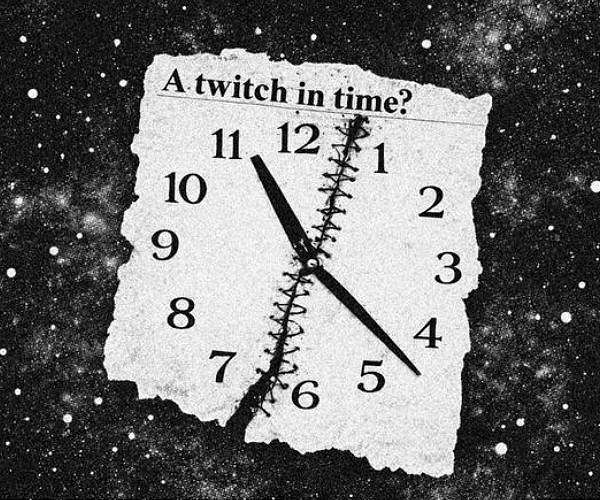
Their calculations show that if these collapse models are correct, then time itself must exhibit a tiny intrinsic uncertainty. This built in fuzziness in time translates into a fundamental, though extremely small, limit on how precisely any clock can measure time.

"Once you do the calculation, the answer is clear and surprisingly reassuring," says Bortolotti. The predicted uncertainty is far below the sensitivity of current or foreseeable timekeeping technologies.

As a result, there is no need to worry about practical consequences for wristwatches or even the most advanced atomic clocks. "The uncertainty is many orders of magnitude below anything we can currently measure, so it has no practical consequences for everyday timekeeping," says Catalina Curceanu, a member of FQxI and research director at the Laboratori Nazionali di Frascati of the National Institute for Nuclear Physics INFN LNF in Frascati, Italy. "Our results explicitly show that modern timekeeping technologies are entirely unaffected," adds co author Kristian Piscicchia of CREF and INFN LNF.

Physicists have long sought a unified framework that brings together quantum mechanics and gravity. Quantum theory governs the microscopic realm of subatomic particles, while Einstein's general theory of relativity describes gravity and the large scale structure of spacetime, from stars and galaxies to the universe as a whole.

The two theories treat time in very different ways. In standard quantum mechanics, time appears as an external, classical parameter that is not influenced by the quantum system under study. In general relativity, by contrast, time and space form a dynamical spacetime fabric that bends and warps in response to mass and energy.

By exploring collapse models that connect quantum behaviour to spacetime fluctuations, the new work hints that quantum mechanics may be just one part of a deeper theoretical structure. In this view, subtle quantum gravitational effects could underlie both wavefunction collapse and the tiny intrinsic uncertainty in time.

"There are not many foundations in the world which are supporting research on these types of fundamental questions about the universe, space, time, and matter," says Curceanu, highlighting the role of FQxI in backing unorthodox approaches. "Our work shows that even radical ideas about quantum mechanics can be tested against precise physical measurements, and that, reassuringly, timekeeping remains one of the most stable pillars of modern physics."

The study, "Fundamental limits on clock precision from spacetime uncertainty in quantum collapse models," was published in Physical Review Research in November 2025.

Research Report:Fundamental limits on clock precision from spacetime uncertainty in quantum collapse models

Related Links
Foundational Questions Institute FQxI
Understanding Time and Space

Subscribe Free To Our Daily Newsletters
Tweet

RELATED CONTENT
The following news reports may link to other Space Media Network websites.
TIME AND SPACE
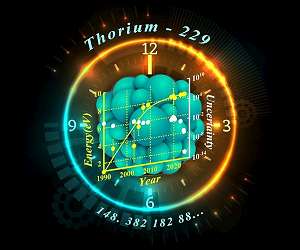
Thorium 229 nuclei driven by laser in opaque solid moves optical nuclear clock research forward
Berlin, Germany (SPX) Dec 18, 2025
A team from the University of California Los Angeles (UCLA), Ludwig Maximilian University of Munich (LMU), and Johannes Gutenberg University Mainz (JGU) has for the first time excited the atomic nucleus of the isotope thorium 229 with laser light while the atoms are embedded in a non transparent solid host. The experiment demonstrates that nuclear laser excitation is possible even when the surrounding material is almost opaque at the excitation wavelength of 148 nanometers, opening a new class of solids ... read more

TIME AND SPACE
Explore the World with These Travel Tips

The Quiet Transformation of GPS - What's Coming by 2026

NASA Back for Seconds with New Food System Design Challenge

New orbital mapping system targets Earth Moon libration traffic

TIME AND SPACE
NASA moves moon rocket to launch pad ahead of Artemis 2 mission

Interstellar raises major Series F funding to expand launch and satellite business

GE and Lockheed validate compact rotating detonation ramjet for hypersonic missiles

China tests Long March 12B reusable first stage at Jiuquan

TIME AND SPACE
Tiny Mars' big impact on Earth's climate

Ancient deltas reveal vast Martian ocean across northern hemisphere

The electrifying science behind Martian dust

Sandblasting winds sculpt Mars landscape

TIME AND SPACE
Tiangong science program delivers data surge

China tallies record launch year as lunar and asteroid plans advance

China harnesses nationwide system to drive spaceflight and satellite navigation advances

Shenzhou 21 crew complete eight hour spacewalk outside Tiangong station

TIME AND SPACE
ThinkOrbital raises seed funding to advance orbital defense and construction systems

Aerospacelab expands Pulsar navigation constellation work with new Xona satellite order

Multiple satellite filings demonstrate transparency, responsibility and ambition: China Daily editorial

China outlines mega constellations in ITU satellite filings

TIME AND SPACE
The decentralized future of space transactions

Top 5 Best Live Sports Betting Sites For North Carolina Sports Fans

How IVRT Testing Ensures Consistent Product Quality

How Path Social's AI Targeting Really Works: A Deep Dive into the Tech

TIME AND SPACE
Hidden magma oceans could shield rocky exoplanets from harmful radiation

Frozen hydrogen cyanide crystals may have helped spark early chemistry for life

Berkeley Scientists set to home in on 100 signals from Seti at Home

Scientist wins 'Environment Nobel' for shedding light on hidden fungal networks

TIME AND SPACE
Computer models let scientists peer into the mystery beneath Jupiter's clouds

Jupiter's moon Europa has a seafloor that may be quiet and lifeless

Uranus and Neptune may be rock rich worlds

SwRI links Uranus radiation belt mystery to solar storm driven waves

Subscribe Free To Our Daily Newsletters


The content herein, unless otherwise known to be public domain, are Copyright 1995-2024 - Space Media Network. All websites are published in Australia and are solely subject to Australian law and governed by Fair Use principals for news reporting and research purposes. AFP, UPI and IANS news wire stories are copyright Agence France-Presse, United Press International and Indo-Asia News Service. ESA news reports are copyright European Space Agency. All NASA sourced material is public domain. Additional copyrights may apply in whole or part to other bona fide parties. All articles labeled "by Staff Writers" include reports supplied to Space Media Network by industry news wires, PR agencies, corporate press officers and the like. Such articles are individually curated and edited by Space Media Network staff on the basis of the report's information value to our industry and professional readership. Advertising does not imply endorsement, agreement or approval of any opinions, statements or information provided by Space Media Network on any Web page published or hosted by Space Media Network. General Data Protection Regulation (GDPR) Statement Our advertisers use various cookies and the like to deliver the best ad banner available at one time. All network advertising suppliers have GDPR policies (Legitimate Interest) that conform with EU regulations for data collection. By using our websites you consent to cookie based advertising. If you do not agree with this then you must stop using the websites from May 25, 2018. Privacy Statement. Additional information can be found here at About Us.