24/7 Space News
PHYSICS NEWS
Keck backed team advances first graviton detector concept
illustration only

Keck backed team advances first graviton detector concept

by Clarence Oxford
Los Angeles CA (SPX) Jan 19, 2026

Modern physics faces a deep inconsistency between quantum theory, which explains nature using discrete particles and interactions, and general relativity, which describes gravity as a smooth curvature of space and time. For gravity to fit into a unified quantum framework, it must be mediated by particles called gravitons, but detecting even a single graviton was long considered fundamentally impossible, leaving quantum gravity as almost entirely theoretical.

That view shifted in 2024 when Igor Pikovski, assistant professor at Stevens Institute of Technology, and collaborators reported work in Nature Communications showing that graviton detection is possible using modern quantum technologies. In their analysis, they demonstrated that previous no go arguments fail once advances in quantum control and measurement of macroscopic systems are taken into account, reframing graviton detection as an experimental challenge rather than an absolute impossibility.

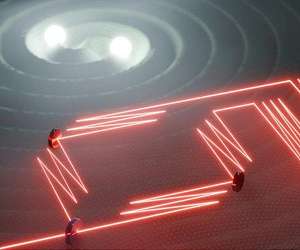
The new approach combines two major experimental breakthroughs. The first is the direct observation of gravitational waves, the ripples in space time produced by collisions of black holes or neutron stars that Einstein predicted more than a century ago and which were first observed in 2015. In a quantum picture, these classical looking waves can be viewed as large ensembles of gravitons acting collectively, so conventional detectors see only their macroscopic effect, not the individual quanta.

The second breakthrough arises from quantum engineering of massive systems. Over the past decade, researchers have learned to cool, control and read out increasingly heavy objects in genuine quantum states, extending quantum behavior far beyond atoms and molecules. In 2022, Jack Harris and his team at Yale University reported a landmark experiment in which they controlled and measured individual vibrational quanta of superfluid helium with a mass exceeding a nanogram, showing that macroscopic quantum motion can be resolved one quantum at a time.

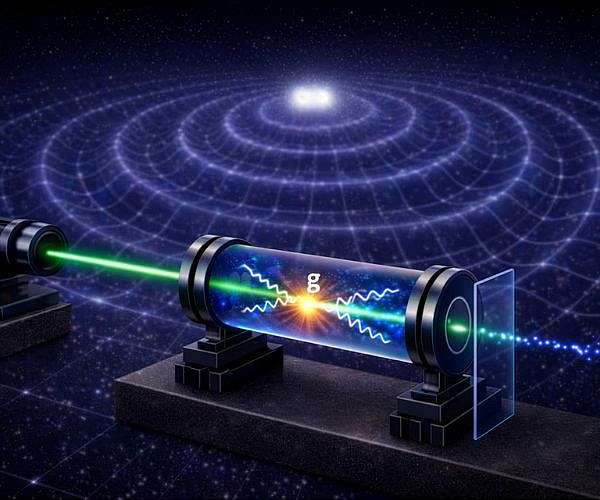
Pikovski recognized that combining gravitational wave sources with such macroscopic quantum sensors opens a pathway to single graviton detection. In this scheme, a passing gravitational wave can transfer exactly one quantum of energy one graviton into a large, ultra sensitive quantum system, producing a tiny but measurable shift in its vibrational energy. The main obstacle is that gravitons interact extremely weakly with matter, but theory indicates that gram to kilogram scale quantum systems exposed to intense waves from merging black holes or neutron stars could absorb individual gravitons at detectable rates.

Building on these theoretical insights, Pikovski and Harris have launched a first of its kind experimental program explicitly aimed at detecting individual gravitons. Supported by the W. M. Keck Foundation, they are developing a centimeter scale superfluid helium resonator engineered to approach the regime where single gravitons from astrophysical gravitational waves can be absorbed and converted into measurable mechanical excitations. This work moves graviton detection from an abstract concept toward a concrete laboratory platform.

The experimental design centers on a gram scale cylindrical resonator immersed in superfluid helium and cooled to its quantum ground state so that even a single added vibrational quantum can be resolved. Laser based measurements probe the resonator to detect individual phonons, the discrete vibrational quanta into which absorbed gravitons would be converted. The detector extends systems already operating in the Harris laboratory, but pushes them into a new regime by scaling the mass to the gram level while preserving the extremely high quantum sensitivity needed to see single quanta.

Successfully operating this platform will provide a blueprint for future detectors capable of reaching full graviton sensitivity. The team expects that once the gram scale device is demonstrated, subsequent generations can be scaled up and optimized to match the signal strengths from strong astrophysical gravitational wave sources. Such progress would open an experimental window on quantum gravity, enabling direct tests of how spacetime behaves at the most fundamental level.

Pikovski notes that the history of quantum physics began with carefully designed experiments on light and matter that revealed photons and other quanta. The new graviton detector project seeks to bring gravity into this same experimental domain, targeting gravitons with the same level of precision that early twentieth century physicists brought to photons. If successful, the effort could transform quantum gravity from a largely theoretical endeavor into a data driven science anchored in laboratory observations. Related Links
Stevens Institute of Technology
The Physics of Time and Space

Subscribe Free To Our Daily Newsletters
Tweet

RELATED CONTENT
The following news reports may link to other Space Media Network websites.
PHYSICS NEWS
Laser experiment proposed to probe quantum nature of gravity
Berlin, Germany (SPX) Dec 17, 2025
Researchers at Helmholtz-Zentrum Dresden-Rossendorf have outlined an experiment in which light exchanges discrete packets of energy with gravitational waves, potentially revealing the long-sought quantum properties of gravity. In the proposed scheme, a laser beam interacts with a passing gravitational wave so that the light loses or gains an energy amount corresponding to one or more gravitons, the hypothetical quantum carriers of the gravitational field. The work, led by theoretical physicist Prof. Ral ... read more

PHYSICS NEWS
Explore the World with These Travel Tips

The Quiet Transformation of GPS - What's Coming by 2026

NASA Back for Seconds with New Food System Design Challenge

New orbital mapping system targets Earth Moon libration traffic

PHYSICS NEWS
NASA moves moon rocket to launch pad ahead of Artemis 2 mission

PH-1 test flight advances Chinese reusable suborbital spacecraft plans

GE and Lockheed validate compact rotating detonation ramjet for hypersonic missiles

Firefly prepares Alpha Block II upgrade for Flight 8

PHYSICS NEWS
Ancient deltas reveal vast Martian ocean across northern hemisphere

Tiny Mars' big impact on Earth's climate

The electrifying science behind Martian dust

Sandblasting winds sculpt Mars landscape

PHYSICS NEWS
Tiangong science program delivers data surge

China tallies record launch year as lunar and asteroid plans advance

China harnesses nationwide system to drive spaceflight and satellite navigation advances

Shenzhou 21 crew complete eight hour spacewalk outside Tiangong station

PHYSICS NEWS
China outlines mega constellations in ITU satellite filings

ThinkOrbital raises seed funding to advance orbital defense and construction systems

Aerospacelab expands Pulsar navigation constellation work with new Xona satellite order

Multiple satellite filings demonstrate transparency, responsibility and ambition: China Daily editorial

PHYSICS NEWS
The decentralized future of space transactions

How IVRT Testing Ensures Consistent Product Quality

The Silent Partner - How Machine Learning Quietly Powers Modern Space Operations

Why Space Theme Slots Are Popular with Canadian Casino Players

PHYSICS NEWS
Frozen hydrogen cyanide crystals may have helped spark early chemistry for life

Pandora exoplanet mission checks in after launch

Mixed crystal phase of superionic water mapped inside giant planets

Berkeley Scientists set to home in on 100 signals from Seti at Home

PHYSICS NEWS
Jupiter's moon Europa has a seafloor that may be quiet and lifeless

Uranus and Neptune may be rock rich worlds

SwRI links Uranus radiation belt mystery to solar storm driven waves

Looking inside icy moons

Subscribe Free To Our Daily Newsletters


The content herein, unless otherwise known to be public domain, are Copyright 1995-2024 - Space Media Network. All websites are published in Australia and are solely subject to Australian law and governed by Fair Use principals for news reporting and research purposes. AFP, UPI and IANS news wire stories are copyright Agence France-Presse, United Press International and Indo-Asia News Service. ESA news reports are copyright European Space Agency. All NASA sourced material is public domain. Additional copyrights may apply in whole or part to other bona fide parties. All articles labeled "by Staff Writers" include reports supplied to Space Media Network by industry news wires, PR agencies, corporate press officers and the like. Such articles are individually curated and edited by Space Media Network staff on the basis of the report's information value to our industry and professional readership. Advertising does not imply endorsement, agreement or approval of any opinions, statements or information provided by Space Media Network on any Web page published or hosted by Space Media Network. General Data Protection Regulation (GDPR) Statement Our advertisers use various cookies and the like to deliver the best ad banner available at one time. All network advertising suppliers have GDPR policies (Legitimate Interest) that conform with EU regulations for data collection. By using our websites you consent to cookie based advertising. If you do not agree with this then you must stop using the websites from May 25, 2018. Privacy Statement. Additional information can be found here at About Us.