24/7 Space News
IRON AND ICE
ExLabs taps SpacePilot autonomy for Apophis asteroid mission
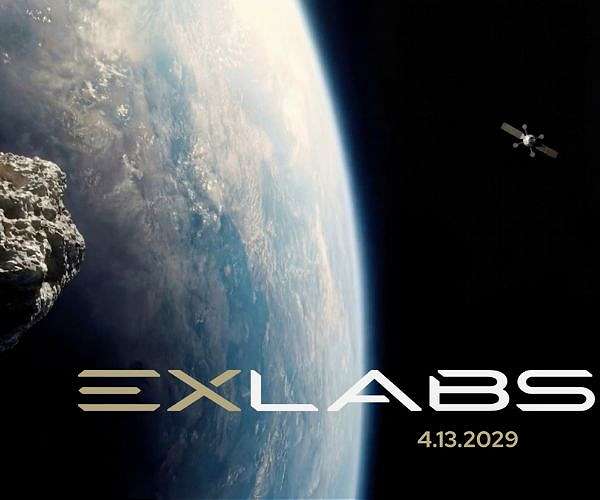
illustration only

ExLabs taps SpacePilot autonomy for Apophis asteroid mission

by Clarence Oxford
Los Angeles CA (SPX) Feb 04, 2026

ExLabs has selected CUS-GNC's SpacePilot onboard autonomy software to provide guidance, navigation, and control for its planned Mission to Asteroid Apophis, a commercial deep-space campaign that will operate at distances exceeding 100 million kilometers from Earth. The company describes itself as a commercial deep-space mission operator developing next-generation platforms for exploration beyond Earth orbit, and it is positioning autonomy as core infrastructure for missions that must function with long communication delays and limited ground intervention.

The Apophis mission is scheduled for launch during the asteroid's 2029 close-approach window, with spacecraft integration, demonstration activities, and autonomy validation planned as part of upcoming flight-readiness milestones. By embedding SpacePilot into its flight architecture, ExLabs aims to reduce operational risk, ease mission-operations workload, and enable responsive, low-touch spacecraft behavior that would be impractical to manage using traditional ground-dependent control loops.

Operating more than 100 million kilometers from Earth places the spacecraft in a dynamic and largely uncharacterized environment, where long one-way light times and uncertain local conditions make continuous ground control difficult. ExLabs is targeting an operational concept in which the spacecraft can sense its environment, make decisions, and execute maneuvers onboard, while mission operators focus on higher-level oversight and planning rather than real-time command sequences.

SpacePilot is a flight-proven autonomy platform developed by CUS-GNC to enable spacecraft to perceive changes in their surroundings, make onboard decisions, and conduct maneuvers without continuous ground oversight. For deep-space missions such as the Apophis campaign, this approach is intended to enhance mission resilience, shorten response times to unexpected conditions, and allow complex mission profiles to be managed by smaller teams working under reduced latency constraints.

"This collaboration with ExLabs on the Apophis mission is truly exciting," said Simone Chesi, Founder of CUS-GNC. "It is a mission that pushes the boundaries of commercial space. Announcing the use of SpacePilot onboard autonomy allows us to demonstrate an AI-driven GNC approach that goes beyond standard architectures and has already been proven in orbit."

ExLabs Chief Technology Officer Dalibor Djuran framed autonomy as a prerequisite for scalable deep-space operations and highlighted SpacePilot's role in meeting that requirement. "Operating more than 100 million kilometers from Earth in a largely unknown and constantly evolving environment demands autonomy that is not only intelligent, but flight-proven," Djuran said. "CUS-GNC's SpacePilot is differentiated by its ability to close the loop onboard, adapt to uncertainty in real time, and significantly reduce reliance on Earth-based intervention. That capability is foundational to how we scale deep-space missions beyond one-off demonstrations."

The Mission to Asteroid Apophis is timed to coincide with the asteroid's close Earth flyby, creating an opportunity to demonstrate advanced autonomous guidance, navigation, and control while expanding commercial participation in planetary exploration. ExLabs views this mission as a step toward a scalable framework for exploration, planetary defense, and resource-driven deep-space missions, built on partnerships with global space infrastructure providers and the use of flight-heritage technologies.

CUS-GNC develops advanced guidance, navigation, control, and autonomy software for space missions, with SpacePilot as its flagship product for resilient, low-latency spacecraft operations across varied environments. ExLabs is building commercial deep-space platforms intended to deliver both technical credibility and practical economics, aiming to show that autonomous, commercially operated missions to targets such as Apophis can be executed without the heavy operational burden typically associated with planetary missions.

Related Links
ExLabs
Asteroid and Comet Mission News, Science and Technology

Subscribe Free To Our Daily Newsletters
Tweet

RELATED CONTENT
The following news reports may link to other Space Media Network websites.
IRON AND ICE
ExLabs and ChibaTech team up to land student CubeLanders on asteroid Apophis
Sydney, Australia (SPX) Jan 21, 2026
ExLabs has partnered with Japan's Chiba Institute of Technology and its Planetary Exploration Research Center to deliver university-led payloads to the surface of asteroid Apophis during its close approach to Earth in 2029. The ApophisExL mission is described as the world's first commercial deep-space rideshare and is supported through mission design and operations collaboration with NASA's Jet Propulsion Laboratory operated by Caltech. Under the leadership of planetary scientist and PERC Director ... read more

IRON AND ICE
Bezos's Blue Origin to 'pause' space tourism to focus on Moon efforts

Crew 12 set for Dragon launch to Station in February

NASA Heat Shield Technology Enables Space Industry Growth

Earliest launch window to ISS set for February 11: NASA

IRON AND ICE
NASA delays Moon mission over frigid weather

China sea launch boosts private rocket activity in 2026

Rocket Lab conducts second Electron mission in eight days to orbit Korean imaging satellite

NASA books fifth Axiom private astronaut flight to space station

IRON AND ICE
Martian toxin found to toughen microbe built bricks

Perseverance rover completes landmark AI guided trek across Jezero rim

New clues to Mars habitability in discovery of ancient beach

Ancient deltas reveal vast Martian ocean across northern hemisphere

IRON AND ICE
Dragon spacecraft gears up for crew 12 arrival and station science work

China prepares offshore test base for reusable liquid rocket launches

Retired EVA workhorse to guide China's next-gen spacesuit and lunar gear

Tiangong science program delivers data surge

IRON AND ICE
ESA member states back SWISSto12 HummingSat with fresh funding round

Aerospacelab expands Pulsar navigation constellation work with new Xona satellite order

ThinkOrbital raises seed funding to advance orbital defense and construction systems

China outlines mega constellations in ITU satellite filings

IRON AND ICE
Terran Orbital to supply Nebula satellite platform for Mitsubishi Electric LEO mission

NTU Singapore boosts agile space access with trio of new projects

Smartphone kit offers low cost on site radiation dose checks

Lockheed Martin delivers second lot Sentinel A4 radar to US Army

IRON AND ICE
Survey of 80 near Earth asteroids sharpens view of their origins and risks

Lab made cosmic dust experiment reveals paths to life chemistry

Einstein effect clears planets from tight double star systems

Engineered microbes use light to build new molecules

IRON AND ICE
Polar weather on Jupiter and Saturn hints at the planets' interior details

Europa ice delamination may deliver nutrients to hidden ocean

Birth conditions fixed water contrast on Jupiters moons

Study links Europa's quiet seafloor to hidden potential for life

Subscribe Free To Our Daily Newsletters


The content herein, unless otherwise known to be public domain, are Copyright 1995-2024 - Space Media Network. All websites are published in Australia and are solely subject to Australian law and governed by Fair Use principals for news reporting and research purposes. AFP, UPI and IANS news wire stories are copyright Agence France-Presse, United Press International and Indo-Asia News Service. ESA news reports are copyright European Space Agency. All NASA sourced material is public domain. Additional copyrights may apply in whole or part to other bona fide parties. All articles labeled "by Staff Writers" include reports supplied to Space Media Network by industry news wires, PR agencies, corporate press officers and the like. Such articles are individually curated and edited by Space Media Network staff on the basis of the report's information value to our industry and professional readership. Advertising does not imply endorsement, agreement or approval of any opinions, statements or information provided by Space Media Network on any Web page published or hosted by Space Media Network. General Data Protection Regulation (GDPR) Statement Our advertisers use various cookies and the like to deliver the best ad banner available at one time. All network advertising suppliers have GDPR policies (Legitimate Interest) that conform with EU regulations for data collection. By using our websites you consent to cookie based advertising. If you do not agree with this then you must stop using the websites from May 25, 2018. Privacy Statement. Additional information can be found here at About Us.