24/7 Space News
IRON AND ICE
ExLabs and ChibaTech team up to land student CubeLanders on asteroid Apophis
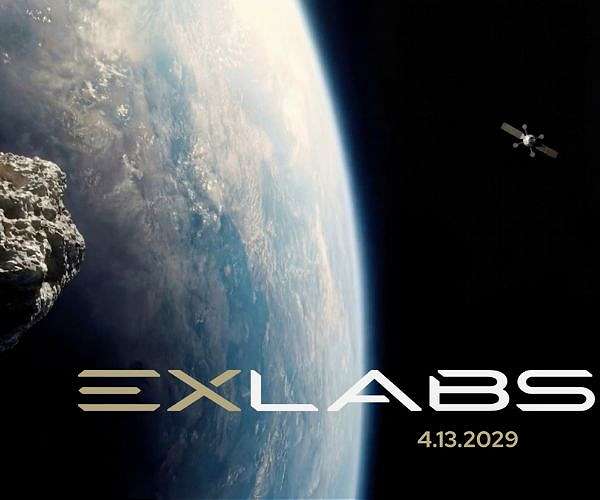
illustration only

ExLabs and ChibaTech team up to land student CubeLanders on asteroid Apophis

by Simon Mansfield
Sydney, Australia (SPX) Jan 21, 2026
ExLabs has partnered with Japan's Chiba Institute of Technology and its Planetary Exploration Research Center to deliver university-led payloads to the surface of asteroid Apophis during its close approach to Earth in 2029. The ApophisExL mission is described as the world's first commercial deep-space rideshare and is supported through mission design and operations collaboration with NASA's Jet Propulsion Laboratory operated by Caltech.

Under the leadership of planetary scientist and PERC Director, Dr. Tomoko Arai, ChibaTech students and researchers are developing two landing payloads that will be deployed to Apophis's surface. This effort represents one of the few cases worldwide in which students directly contribute to flight hardware destined to leave Earth orbit.

"This project challenges us to do three things never done before," said Dr. Arai. "First, we will conduct a rapid-response planetary defense/asteroid mission through industry-academia collaboration. Second, CubeSat heritage technologies are being utilized in the lander design. Third, engineering students with hands-on CubeSat development experience will develop the lander. These efforts connect education directly to exploration and continues Japan's legacy of contribution in asteroid missions."

The ApophisExL spacecraft is scheduled to arrive at Apophis before the asteroid passes Earth and will remain nearby to conduct observations throughout the April 13, 2029 encounter. During this flyby, Apophis will come within about 32,000 kilometers of Earth, passing inside the orbit of geostationary satellites and becoming visible to the naked eye for billions of people.

ChibaTech's payload suite includes a multiband imaging camera mounted on the ExLabs mothership and deployable CubeSat-shaped landers known as CubeLanders. These systems are designed to investigate the asteroid's surface composition and structure, building on flight heritage from ChibaTech student CubeSat projects and Japan's Hayabusa missions.

"Giving students the opportunity to design and fly hardware that will land on an asteroid is transformative. It reshapes how they see engineering, science, and their role in humanity's future in space. Japan has a strong legacy in asteroid exploration, and this mission extends that legacy through international collaboration and a new commercial approach to deep-space. We're proud to partner with ExLabs on a mission that places students at the center of real deep space exploration." - Joi Ito, President, Chiba Institute of Technology.

The partners present ApophisExL as a new model for access to deep space. Historically, asteroid missions have been large, multi billion dollar undertakings driven by national space agencies, but this mission is structured as a commercially led, fully operated deep-space flight with co-manifested payload access intended to cut costs, complexity, and barriers to participation.

"We're working to overcome the barriers that have long kept deep-space exploration in the hands of only the largest space agencies," said Keiko Nakamura-Messenger, Vice President of Mission Development at ExLabs and a former NASA mission scientist. "There are likely dozens of advanced, space-qualified instruments sitting in cleanrooms around the world, flight spares, experiments from missions that never launched, or amazing instruments developed by college students. ExLabs is building the affordable, flexible spacecraft needed to give these payloads real flight opportunities to the inner solar system. Our collaboration with ChibaTech embodies our vision of deep space exploration: internationally collaborative, commercially enabled, and open to the next generation for the future space exploration."

ApophisExL is described as the first in a planned series of fully hosted deep-space missions that follow this commercial rideshare model. ExLabs positions the approach as a way to establish a recurring cadence of deep-space opportunities for science, defense, university, and commercial customers.

To help ensure mission readiness and adherence to established deep-space practices, ExLabs is working with NASA's Jet Propulsion Laboratory on mission architecture support, spacecraft design reviews, and operational planning. JPL's involvement is intended to align the commercial mission with deep-space stand

Related Links
ExLabs
Asteroid and Comet Mission News, Science and Technology

Subscribe Free To Our Daily Newsletters
Tweet

RELATED CONTENT
IRON AND ICE
Asteroid metals harden under extreme particle blasts
London, UK (SPX) Jan 09, 2026
Physicists at the University of Oxford have contributed to a study showing that iron-rich asteroids can withstand much higher energy inputs than expected without breaking apart, a result that affects assessments of planetary defence strategies against hazardous objects. The work, published in Nature Communications, indicates that under rapid, intense heating these bodies can even become tougher as internal stresses develop. Recent missions such as NASA's Double Asteroid Redirection Test (DART), wh ... read more

IRON AND ICE
NASA astronaut stuck in space for nine months retires

Tourists hit record in Japan, despite plunge from China

What happens when fire ignites in space? 'A ball of flame'

ISS astronauts splash down on Earth after first-ever medical evacuation

IRON AND ICE
NASA moves moon rocket to launch pad ahead of Artemis 2 mission

Starfighters completes key wind tunnel campaign for STARLAUNCH 1 air launch vehicle

Interstellar raises major Series F funding to expand launch and satellite business

Major equity deal backs Gilmour Space expansion of sovereign launch capability

IRON AND ICE
Ancient deltas reveal vast Martian ocean across northern hemisphere

Tiny Mars' big impact on Earth's climate

The electrifying science behind Martian dust

Sandblasting winds sculpt Mars landscape

IRON AND ICE
China prepares offshore test base for reusable liquid rocket launches

Retired EVA workhorse to guide China's next-gen spacesuit and lunar gear

Tiangong science program delivers data surge

China tallies record launch year as lunar and asteroid plans advance

IRON AND ICE
Aerospacelab expands Pulsar navigation constellation work with new Xona satellite order

ThinkOrbital raises seed funding to advance orbital defense and construction systems

China outlines mega constellations in ITU satellite filings

Multiple satellite filings demonstrate transparency, responsibility and ambition: China Daily editorial

IRON AND ICE
Seismic networks offer new way to track space junk reentering atmosphere

Comtech wins multi-million dollar follow-on contract for civil space components

China lofts AlSat 3A imaging craft for Algeria

China starts large scale production of T1000 carbon fiber

IRON AND ICE
Hidden magma oceans could shield rocky exoplanets from harmful radiation

Cosmic dust chemistry forges peptide building blocks in deep space

Hidden magma oceans could shield rocky exoplanets from harmful radiation

Icy cycles may have driven early protocell evolution

IRON AND ICE
Computer models let scientists peer into the mystery beneath Jupiter's clouds

Polar weather on Jupiter and Saturn hints at the planets' interior details

Europa ice delamination may deliver nutrients to hidden ocean

Birth conditions fixed water contrast on Jupiters moons


The content herein, unless otherwise known to be public domain, are Copyright 1995-2026 - SpaceDaily.com. All websites are published in Australia and are solely subject to Australian law and governed by Fair Use principals for news reporting and research purposes. AFP, UPI and IANS news wire stories are copyright Agence France-Presse, United Press International and Indo-Asia News Service. ESA news reports are copyright European Space Agency. All NASA sourced material is public domain. Additional copyrights may apply in whole or part to other bona fide parties. All articles labeled "by Staff Writers" include reports supplied to Space Media Network by industry news wires, PR agencies, corporate press officers and the like. Such articles are individually curated and edited by Space Media Network staff on the basis of the report's information value to our industry and professional readership. Advertising does not imply endorsement, agreement or approval of any opinions, statements or information provided by Space Media Network on any Web page published or hosted by Space Media Network. General Data Protection Regulation (GDPR) Statement Our advertisers use various cookies and the like to deliver the best ad banner available at one time. All network advertising suppliers have GDPR policies (Legitimate Interest) that conform with EU regulations for data collection. By using our websites you consent to cookie based advertising. If you do not agree with this then you must stop using the websites from May 25, 2018. Privacy Statement. Additional information can be found here at About Us.
Subscribe Free To Our Daily Newsletters