24/7 Space News
ROBO SPACE
Shenzhen district powers dense robot innovation ecosystem
illustration only

Shenzhen district powers dense robot innovation ecosystem

by Riko Seibo
Tokyo, Japan (SPX) Feb 06, 2026

Nanshan district in Shenzhen has built one of the densest hardware and robotics clusters on the planet, centered on a 10-kilometer stretch of Liuxian Avenue known locally as Robot Valley that packs together startups, factories and research labs.

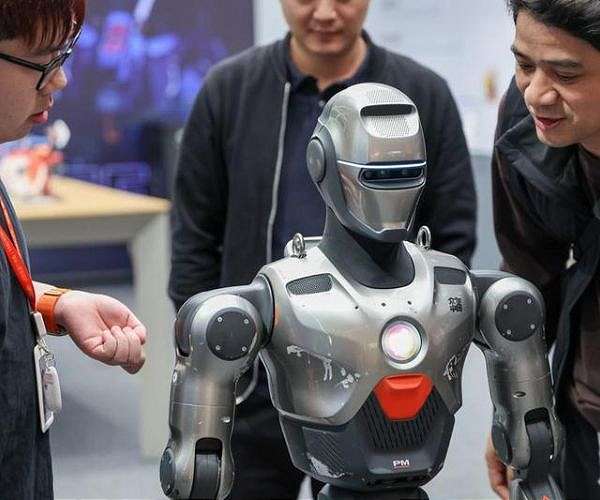
Inside this corridor, an embodied intelligent robot serving customers in a cafe has become a shorthand scene for how quickly hardware ideas now reach real-world use, reflecting a broader shift by local robotics firms toward practical, industry-specific applications such as catering, manufacturing and logistics.

RoboSense, founded by Qiu Chunxin and now a listed company, illustrates the valley's LiDAR strength: its laser sensors act as the "eyes" for autonomous machines on the ground and in the air, similar to perception stacks used on rovers and orbital robots, and the firm expanded rapidly after local authorities arranged a larger facility within three months of an urgent space crunch.

The same strip has also produced globally known consumer hardware such as Insta360's panoramic cameras, which grew from a Nanshan base into popular products in markets like the United States as early adopters lined up to buy new releases, reinforcing the area's reputation as a launchpad for international hardware hits.

Much of the district's speed advantage comes from density: Nanshan pioneered an "Industrial Upstairs" model that stacks factories in multi-story buildings and supports a "same-day closed-loop" supply chain where design, component sourcing, prototyping, testing and assembly all happen within the district in a single day.

Geography tightens this loop further, with university campuses such as Tsinghua and Harbin Institute of Technology facing directly onto industrial parks and corporate headquarters, and joint labs helping move ideas from research into robotics and sensor products in what officials describe as a large petri dish for future autonomous systems.

Officials say they prefer to act as an "invisible string" connecting labs, factories and investors rather than picking winners, bundling together workspace, early-stage funding and faster regulatory approvals into single packages for startups with strong research and commercialization potential.

Finance is being scaled to match that approach, with a national venture capital guidance fund and the Guangdong-Hong Kong-Macao Greater Bay Area Fund-registered in Nanshan and targeting about 50.45 billion yuan-aimed at early-stage, hard-tech companies in sectors such as robotics, sensors and autonomous systems.

By 2025 the district's GDP had climbed past 1 trillion yuan, and its presence was felt at CES in Las Vegas, where hundreds of Shenzhen exhibitors and more than 100 Nanshan companies-at least 65 of them from along Liuxian Avenue-showcased everything from drones to embodied AI service robots.

As evening traffic backs up outside Robot Valley, engineers in stacked factories and labs continue to tune LiDAR units, robot arms and sensor modules, underscoring that the real competitive edge here is not slogans or subsidies but how close everything is to everything else in the robotics and hardware supply chain.

Related Links
China Daily
All about the robots on Earth and beyond!

Subscribe Free To Our Daily Newsletters
Tweet

RELATED CONTENT
The following news reports may link to other Space Media Network websites.
ROBO SPACE
Reprogrammable metal bricks give robots muscle-like adaptability
Los Angeles CA (SPX) Feb 04, 2026
Mechanical engineers at Duke University have demonstrated a proof-of-concept material system that allows solid Lego-like building blocks to be programmed with different mechanical properties and then reset for reuse. The approach uses a metal composite that can reversibly switch between solid and liquid states in selected locations, letting a structure change stiffness and damping without altering its overall geometry. The team filled individual internal cells with a blend of gallium and iron that ... read more

ROBO SPACE
The coming end of ISS, symbol of an era of global cooperation

NASA confirms first flight to ISS since medical evacuation

Crew 12 set for Dragon launch to Station in February

Bezos's Blue Origin to 'pause' space tourism to focus on Moon efforts

ROBO SPACE
Isar Aerospace expands engine and stage testing at Esrange

NASA Moon mission launch srubbed to March after test

NASA books fifth Axiom private astronaut flight to space station

Musk merges xAI into SpaceX in bid to build space data centers

ROBO SPACE
Martian toxin found to toughen microbe built bricks

Curiosity Blog, Sols 4788-4797: Welcome Back from Conjunction

NASA Study: Non-biologic Processes Don't Fully Explain Mars Organics

Perseverance rover completes landmark AI guided trek across Jezero rim

ROBO SPACE
Dragon spacecraft gears up for crew 12 arrival and station science work

China prepares offshore test base for reusable liquid rocket launches

Retired EVA workhorse to guide China's next-gen spacesuit and lunar gear

Tiangong science program delivers data surge

ROBO SPACE
BlackSky expands Gen 3 Assured deals with new defense customer

ESA member states back SWISSto12 HummingSat with fresh funding round

Muon Space ramps up multi-mission satellite constellations

Aerospacelab expands Pulsar navigation constellation work with new Xona satellite order

ROBO SPACE
Launching the idea of data centers in space

Gilat books multimillion order for Sidewinder inflight ESA terminals

NTU Singapore boosts agile space access with trio of new projects

Musk merges xAI into SpaceX in bid to build space data centers

ROBO SPACE
Survey of 80 near Earth asteroids sharpens view of their origins and risks

Lab made cosmic dust experiment reveals paths to life chemistry

Einstein effect clears planets from tight double star systems

Engineered microbes use light to build new molecules

ROBO SPACE
Jupiter size refined by new radio mapping

Polar weather on Jupiter and Saturn hints at the planets' interior details

Europa ice delamination may deliver nutrients to hidden ocean

Birth conditions fixed water contrast on Jupiters moons

Subscribe Free To Our Daily Newsletters


The content herein, unless otherwise known to be public domain, are Copyright 1995-2024 - Space Media Network. All websites are published in Australia and are solely subject to Australian law and governed by Fair Use principals for news reporting and research purposes. AFP, UPI and IANS news wire stories are copyright Agence France-Presse, United Press International and Indo-Asia News Service. ESA news reports are copyright European Space Agency. All NASA sourced material is public domain. Additional copyrights may apply in whole or part to other bona fide parties. All articles labeled "by Staff Writers" include reports supplied to Space Media Network by industry news wires, PR agencies, corporate press officers and the like. Such articles are individually curated and edited by Space Media Network staff on the basis of the report's information value to our industry and professional readership. Advertising does not imply endorsement, agreement or approval of any opinions, statements or information provided by Space Media Network on any Web page published or hosted by Space Media Network. General Data Protection Regulation (GDPR) Statement Our advertisers use various cookies and the like to deliver the best ad banner available at one time. All network advertising suppliers have GDPR policies (Legitimate Interest) that conform with EU regulations for data collection. By using our websites you consent to cookie based advertising. If you do not agree with this then you must stop using the websites from May 25, 2018. Privacy Statement. Additional information can be found here at About Us.