





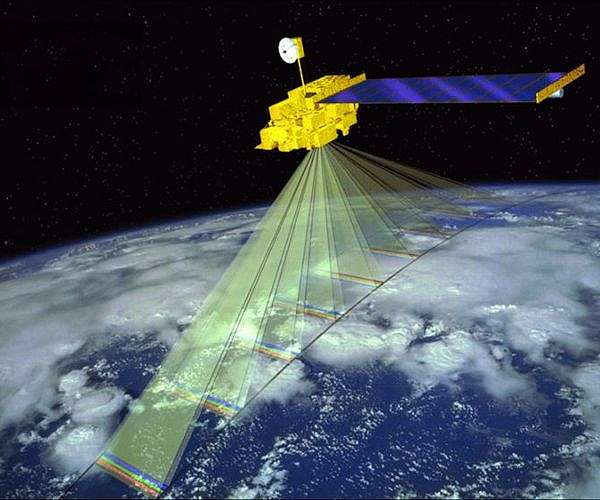
In 1987, astronaut Sally Ride's report "Leadership and America's Future in Space" argued that NASA should adopt "Mission to Planet Earth" as a core pillar, using a fleet of satellites to view the planet as a single, interacting system rather than as isolated parts. That recommendation eventually produced the Earth Observing System flagships Terra, Aqua and Aura-large "bus" platforms carrying multiple instruments to measure land, oceans, atmosphere, ice and radiation in a tightly coordinated way.
On December 31, 2025, NASA's long running publication The Earth Observer releases its final issue after more than three decades of chronicling those missions and the science they enabled. Editors describe the shutdown as an "orderly" sunset directed by NASA Earth Science Communications, with archives preserved but no new content after the end of 2025, effectively closing the house journal of the EOS era.
The symbolism is backed by hardware reality. Terra, launched in 1999, stopped making inclination adjustments in 2020 to conserve fuel and has been slowly drifting to an earlier equator crossing time while its instruments face power limits and, in MOPITT's case, shutdown. Aqua, launched in 2002, left the tightly synchronized "A Train" constellation in 2022 and is now in a drifting orbit that degrades the consistency of its long term records. Aura, launched in 2004 to study atmospheric chemistry and ozone, is also drifting and nearing the end of its ability to provide continuous stratospheric measurements.
Together, the three spacecraft have supplied what many researchers describe as the "gold standard" of climate data-calibrated, overlapping records of aerosols, clouds, ocean color, land surface change, outgoing radiation and trace gases collected in a way that allows scientists to cross check instruments against each other. Their potential loss within a few years, with no like for like replacements ready, has scientists warning of disruptions to key climate "vital signs," including solar radiation, ozone recovery and long term aerosol trends.
Satellite aging was expected. What was not, Earth scientists say, is the policy shift coming from Washington. The FY26 presidential budget request would cut NASA's Science Mission Directorate by nearly half, with Earth science funding falling from about 2.14 billion dollars to roughly 1.04 billion dollars, a 52 percent reduction. Commentators and advocacy groups describe the proposal as the steepest single year hit to NASA science since the post Apollo drawdown.
Acting NASA Administrator Sean Duffy has framed the cuts as part of a philosophical realignment, arguing in interviews and speeches that "NASA's purpose is to explore, not to do all of these Earth sciences." In this view, climate and environmental monitoring should shift to agencies such as NOAA and USGS or to commercial providers, freeing NASA to focus its shrinking science budget on exploration hardware and deep space missions.
The budget documents and external analyses point to several immediate consequences. NASA has been told to prepare plans to deorbit still functioning missions such as the Orbiting Carbon Observatory satellites OCO 2 and OCO 3, which track global carbon dioxide, even though Congress has continued to fund them. Internal systems such as the Earth Science Data and Information System, which processes and distributes nearly all of NASA's Earth observation products, are flagged by outside observers as vulnerable to either sharp cuts or full closure, raising the risk that even archived datasets could become harder to access over time.
The Decadal Survey released in 2017 laid out an ambitious successor architecture to the EOS flagships called the Earth System Observatory, a suite of missions designed to maintain and expand records of clouds, aerosols, surface biology, mass change and atmospheric composition. Under the FY26 proposal and associated internal restructuring, large pieces of that architecture are now in doubt.
The Atmosphere Observing System was conceived as a pair of missions, AOS Storm and AOS Sky, to replace and improve on the A Train's cloud and aerosol capabilities with new radars and radiometers in formation. Budget commentary from analysts notes that Decadal Survey class elements of AOS have been removed from the near term plan, with NASA now directed to restructure the program into smaller, cheaper components or defer it entirely.
Landsat Next, originally planned as a three satellite constellation launching around 2030, would have shortened revisit times to about six days and expanded to 26 spectral bands for monitoring water quality, crop health and surface temperature. Under the FY26 proposal, the dedicated three satellite architecture is cancelled in favor of lower cost commercial and hybrid alternatives, raising questions over whether the 50 year, tightly calibrated Landsat land record can be maintained in a consistent way.
Another Earth System Observatory element, the Surface Biology and Geology mission, is also hit. Briefings summarizing the budget indicate that key Visual Shortwave Infrared and Thermal Infrared instruments, central for tracking vegetation health, agriculture and mineralogy, are removed from the near term portfolio. Scientists warn that this would weaken global monitoring of biodiversity, food systems and water use at precisely the time such data are increasingly demanded by policymakers and industry.
The combined effect of retiring Terra, Aqua and Aura while cutting back their successors is an emerging data gap in the late 2020s. Analyses by journalists and scientific societies highlight several especially sensitive areas: long term stratospheric ozone measurements as the ozone hole recovers under the Montreal Protocol, stable records of total and reflected solar radiation for climate models, and precise global maps of carbon flux needed to verify national emissions pledges.
Administration officials and some outside commentators suggest that commercial constellations can fill much of the gap by selling imagery and derived products to government users. Yet many climate scientists counter that while firms such as Planet and Maxar provide frequent, high resolution pictures, most commercial satellites are not designed or calibrated to the standards required for climate quality time series. Differences in orbit, sensor design and calibration can make it difficult or impossible to stitch commercial data onto decades of MODIS, CERES or Landsat records without introducing artificial jumps.
Researchers and professional societies also worry about a quieter impact, the loss of human capital. With research grants and mission lines under threat, early career scientists and engineers may look elsewhere, hollowing out the community that designs instruments, writes algorithms and interprets data. Editors of The Earth Observer used their final column to thank generations of contributors and to encourage readers to mine the archive, a tone many interpreted as both gratitude and warning.
The Mission to Planet Earth framework is thus ending not because the observational problem is solved, but because policy priorities have shifted. As NASA prepares to wind down its original flagships and confront a sharply constrained Earth science budget, the question facing the wider community is who, if anyone, will sustain the kind of global, public, climate grade monitoring system that those missions created.
+ The Earth Observer: Offering Perspectives from Space through Time
+ The Final Earth Observer Editor's Corner: October-December 2025
Related Links
NASA Earth Science Division
Earth Observation News - Suppiliers, Technology and Application
| Subscribe Free To Our Daily Newsletters |
| Subscribe Free To Our Daily Newsletters |








