24/7 Space News
SPACE TRAVEL
China launches twin Shijian-29 satellites to test space-target detection tech
illustration only

China launches twin Shijian-29 satellites to test space-target detection tech

by Riko Seibo
Tokyo, Japan (SPX) Dec 31, 2025
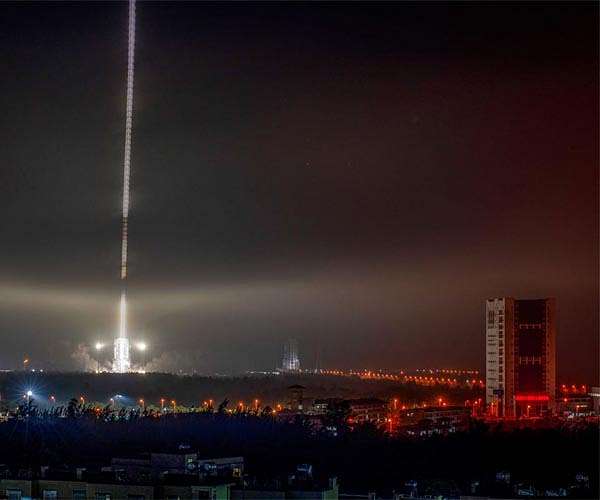
China has launched a pair of Shijian-29 satellites on a Long March 7A rocket, adding new technology-demonstration assets to its growing space-based surveillance and tracking capabilities. The mission lifted off from the coastal Wenchang Space Launch Site on Hainan Island at 6:40 a.m. Beijing Time on Wednesday, placing the two spacecraft into their planned orbit and marking the 623rd flight of the Long March launch vehicle family.

Designated Shijian-29A and Shijian-29B, the satellites are described by Chinese authorities as platforms for "related new technology verification for space target detection," a term typically associated with on-orbit sensing, tracking and characterization of objects in space. While detailed technical specifications have not been released, the dual-satellite configuration suggests experiments that may involve coordinated observations, relative navigation or formation-flying techniques to improve space object surveillance performance.

The Shijian ("Practice") series is one of China's longest-running experimental satellite lines, used to validate new sensors, propulsion systems, data links and space-environment technologies before they transition into fully operational programs. Earlier Shijian and related Shiyan missions have carried payloads for space debris detection, space environment monitoring and proximity operations, illustrating how China uses technology-test spacecraft to incrementally build a more capable space situational awareness infrastructure.

Space-target detection technologies can include optical imaging, infrared sensors and radar or laser ranging systems designed to locate and characterize satellites and debris across a range of orbits. Data from such missions can feed collision-avoidance systems, improve catalog accuracy and, in some cases, support national security applications that require detailed knowledge of foreign space assets.

The Long March 7A launcher used for the flight is a three-stage, medium-to-heavy class rocket tailored for high-energy orbits, including geostationary transfer and other demanding trajectories. Its use from Wenchang, China's newest coastal spaceport, allows higher-performance flight paths over open ocean and reflects an ongoing shift of China's most advanced missions to the Hainan site.

With the successful arrival of Shijian-29A and 29B in their target orbit, China closes out 2025 by reinforcing its emphasis on technology verification missions that underpin long-term plans for a more resilient, better-informed presence in space. As with many of the country's experimental satellites, further details about the payload suite, orbital behavior and specific objectives are expected to emerge gradually through tracking data and official releases over the coming months.

Related Links
Microsatellite Innovation Institute of the Chinese Academy of Sciences
Space Tourism, Space Transport and Space Exploration News

Subscribe Free To Our Daily Newsletters
Tweet

RELATED CONTENT
SPACE TRAVEL
ESA reaches new benchmark in autonomous formation flying
Berlin, Germany (SPX) Jan 01, 2026
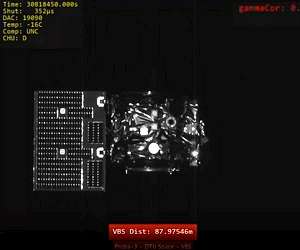
ESA reports that its Proba-3 mission has achieved autonomous formation flying in orbit with millimetre-level precision. Ian Carnelli, ESA Head of Systems Department, stated: "Proba-3 proves that bold in-orbit experimentation is essential to turning breakthrough ideas into real space capabilities. ESA does not just design innovation, it flies it". Proba-3 operates as two spacecraft flying as a single distributed system, running fully autonomously without guidance from ground controllers on Ea ... read more

SPACE TRAVEL
Second ESCAPADE spacecraft completes key trajectory fix on path to Mars

China launches twin Shijian-29 satellites to test space-target detection tech

ESA reaches new benchmark in autonomous formation flying

Overseas scholars drawn to China's scientific clout, funding

SPACE TRAVEL
North Korea tests hypersonic missiles, says nuclear forces ready for war

Starfighters completes supersonic tests for GE Aerospace ramjet program

Galileo satellites ride Ariane 6 to boost Europe navigation resilience

AI systems proposed to boost launch cadence reliability and traffic management

SPACE TRAVEL
Sandblasting winds sculpt Mars landscape

Thin ice may have protected lake water on frozen Mars

Curiosity's Nevado Sajama postcard captures Mars on the eve of conjunction

Wind-Sculpted Landscapes: Investigating the Martian Megaripple 'Hazyview'

SPACE TRAVEL
China harnesses nationwide system to drive spaceflight and satellite navigation advances

Shenzhou 21 crew complete eight hour spacewalk outside Tiangong station

Foreign satellites ride Kinetica 1 on new CAS Space mission

Experts at Hainan symposium call for stronger global space partnership

SPACE TRAVEL
Time-expanded network model cuts complexity in mega constellation launch planning

Southern Launch to Host Lux Aeterna Re-Entries South Australia

Smart modeling framework targets 6G spectrum chaos in space air and ground networks

K2 Space raises 250m to scale Mega class high power satellites

SPACE TRAVEL
Essential Strategies for Enhancing Data Integrity and Compliance in Today's Business Environment

Momentus to flight test 3D printed fuel tank on Vigoride 7

Satellites lined up for shared space computing power networks

Planet delivers first light image from Pelican 6 satellite capturing Lhasa Gonggar Airport

SPACE TRAVEL
Deep Arctic gas hydrate mounds host ultra deep cold seep ecosystem

Joint ground- and space-based observations reveal Saturn-mass rogue planet

ALMA views giant dusty disk in Gomezs Hamburger with signs of early giant planet formation

We finally know how the most common types of planets are created

SPACE TRAVEL
Jupiter's moon Europa has a seafloor that may be quiet and lifeless

Uranus and Neptune may be rock rich worlds

SwRI links Uranus radiation belt mystery to solar storm driven waves

Looking inside icy moons


The content herein, unless otherwise known to be public domain, are Copyright 1995-2026 - SpaceDaily.com. All websites are published in Australia and are solely subject to Australian law and governed by Fair Use principals for news reporting and research purposes. AFP, UPI and IANS news wire stories are copyright Agence France-Presse, United Press International and Indo-Asia News Service. ESA news reports are copyright European Space Agency. All NASA sourced material is public domain. Additional copyrights may apply in whole or part to other bona fide parties. All articles labeled "by Staff Writers" include reports supplied to Space Media Network by industry news wires, PR agencies, corporate press officers and the like. Such articles are individually curated and edited by Space Media Network staff on the basis of the report's information value to our industry and professional readership. Advertising does not imply endorsement, agreement or approval of any opinions, statements or information provided by Space Media Network on any Web page published or hosted by Space Media Network. General Data Protection Regulation (GDPR) Statement Our advertisers use various cookies and the like to deliver the best ad banner available at one time. All network advertising suppliers have GDPR policies (Legitimate Interest) that conform with EU regulations for data collection. By using our websites you consent to cookie based advertising. If you do not agree with this then you must stop using the websites from May 25, 2018. Privacy Statement. Additional information can be found here at About Us.
Subscribe Free To Our Daily Newsletters