24/7 Space News
SOLAR SCIENCE
Alfven waves drive stable electric fields that power auroras
illustration only

Alfven waves drive stable electric fields that power auroras

by Riko Seibo
Tokyo, Japan (SPX) Feb 08, 2026

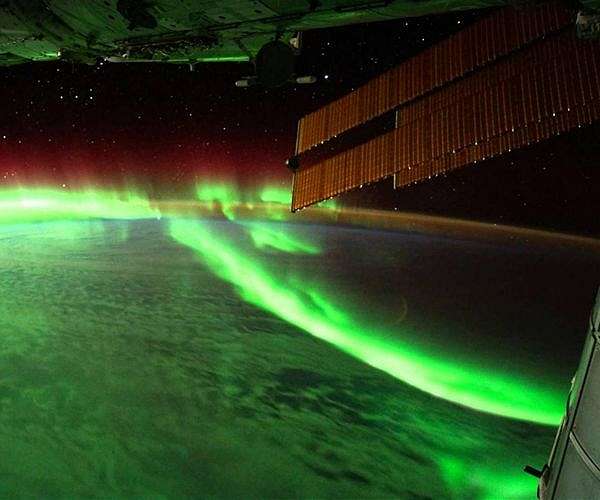
The shimmering curtains of the aurora form when energetic electrons plunge into Earths upper atmosphere and collide with atoms and molecules, releasing light across the polar skies. For decades, scientists have known that these electrons are accelerated by intense electric fields above the auroral regions, but they lacked a clear explanation for how those fields are generated and sustained in near-Earth space.

A new study led by researchers at the University of Hong Kong (HKU) and the University of California, Los Angeles (UCLA) identifies Alfven waves as the engine behind this long-suspected space battery above the auroral zones. The work, published in Nature Communications, shows that plasma waves traveling along Earths magnetic field lines can feed energy into a region of stable electric potential, acting as a persistent driver for auroral particle acceleration.

Alfven waves are a fundamental type of magnetized plasma wave that propagates along a magnetic field line by coupling motions of charged particles with the magnetic field itself. In the context of auroras, these waves can carry energy from distant regions of the magnetosphere into the narrower auroral acceleration region, where electric fields align with the magnetic field and accelerate electrons downward into the atmosphere.

The team analysed how electrons move and gain energy in different parts of Earths near-space environment, linking these changes to the presence of Alfven waves. They demonstrated that, instead of electric fields forming and fading in isolation, Alfven waves continually replenish the energy needed to maintain a static potential drop above the auroral arcs. This process effectively converts the energy carried by waves into the kinetic energy of precipitating particles that generate visible auroras.

To test this mechanism, the researchers used observations from multiple spacecraft traversing the magnetosphere and auroral regions. Data from NASAs Van Allen Probes and the THEMIS mission provided detailed measurements of particle distributions, electric fields and wave activity. These multi-point observations revealed a consistent pattern in which Alfven wave energy flows into the auroral acceleration zone, where it supports the long-lived electric potential structures associated with luminous auroral arcs.

The study highlights that the resulting electron energy spectra above the auroral regions display characteristic inverted V-shaped structures, signatures of a steady potential drop along the magnetic field line. Similar inverted V features have been observed at Jupiter, where the Juno spacecraft has recorded electron spectra associated with that planets powerful auroras. This resemblance suggests that a common physical mechanism, rooted in wave-driven electric potentials, operates across different planetary magnetospheres.

Professor Zhonghua Yao of the Department of Earth and Planetary Sciences at HKU emphasized that resolving the origin of the auroral electric fields closes a long-standing gap in auroral physics. He noted that the new model not only clarifies the dynamics of Earths auroras but also provides a framework that can be applied to interpret auroral processes on other planets, including the gas giants, where direct in situ measurements are less frequent and more challenging.

Yao leads a dedicated space and planetary science team at HKU that has built expertise in the magnetospheric environments of Jupiter and Saturn. By comparing high-resolution measurements near Earth with auroral observations at these giant planets, the team was able to bridge auroral research traditionally separated between Earth science and planetary exploration. That broader view proved essential to identifying a universal acceleration process rooted in Alfven wave dynamics.

The collaboration also drew on extensive knowledge of Earths auroral physics from the UCLA side. Led by Dr Sheng Tian, the UCLA researchers contributed detailed analyses of auroral arcs, electric field structures and particle signatures in Earths magnetosphere. Combining this Earth-focused expertise with the comparative planetary insights from HKU allowed the team to link wave activity, potential drops and observed particle spectra in a single, coherent picture.

Beyond explaining how the space battery above Earths auroral regions operates, the findings have implications for understanding energy transport throughout magnetized plasma environments. The wave-driven acceleration mechanism provides a pathway for converting large-scale electromagnetic energy into localized particle beams, a process that can influence space weather conditions, satellite operations and radio communications in high-latitude regions.

By establishing that Alfven waves can power stable electric potentials over long periods, the study offers a framework for interpreting auroral observations from future missions to the outer planets and exoplanetary systems. As new spacecraft probe distant magnetospheres, the model developed by the HKU and UCLA teams may help researchers decode how invisible wave processes shape some of the most spectacular light displays in the solar system.

Research Report:Evidence for Alfven waves powering auroral arc via a static electric potential drop

Related Links
The University of Hong Kong
Solar Science News at SpaceDaily

Subscribe Free To Our Daily Newsletters
Tweet

RELATED CONTENT
The following news reports may link to other Space Media Network websites.
SOLAR SCIENCE
Geomagnetic storm to bring northern lights to central US
Washington, United States (AFP) Jan 19, 2026
Meteorologists say a major disturbance in Earth's magnetic field Monday could mean the northern lights will be seen further south than typical in the US, possibly even in Alabama or northern California. The National Oceanic and Atmospheric Administration (NOAA) warned the severe geomagnetic storm could also cause tech problems, including issues with voltage control and impacts on satellite operations. NOAA officials said those in northern and central states of the continental US "can look for th ... read more

SOLAR SCIENCE
New crew set to launch for ISS after medical evacuation

The coming end of ISS, symbol of an era of global cooperation

Bezos's Blue Origin to 'pause' space tourism to focus on Moon efforts

Crew 12 set for Dragon launch to Station in February

SOLAR SCIENCE
NASA Moon mission launch srubbed to March after test

NASA delays Moon mission over frigid weather

China sea launch boosts private rocket activity in 2026

Rocket Lab conducts second Electron mission in eight days to orbit Korean imaging satellite

SOLAR SCIENCE
Martian toxin found to toughen microbe built bricks

Perseverance rover completes landmark AI guided trek across Jezero rim

New clues to Mars habitability in discovery of ancient beach

Ancient deltas reveal vast Martian ocean across northern hemisphere

SOLAR SCIENCE
Dragon spacecraft gears up for crew 12 arrival and station science work

China prepares offshore test base for reusable liquid rocket launches

Retired EVA workhorse to guide China's next-gen spacesuit and lunar gear

Tiangong science program delivers data surge

SOLAR SCIENCE
BlackSky expands Gen 3 Assured deals with new defense customer

ESA member states back SWISSto12 HummingSat with fresh funding round

Muon Space ramps up multi-mission satellite constellations

Aerospacelab expands Pulsar navigation constellation work with new Xona satellite order

SOLAR SCIENCE
Launching the idea of data centers in space

Anthropic unveils new AI model as OpenAI rivalry heats up

NTU Singapore boosts agile space access with trio of new projects

Musk merges xAI into SpaceX in bid to build space data centers

SOLAR SCIENCE
Survey of 80 near Earth asteroids sharpens view of their origins and risks

Lab made cosmic dust experiment reveals paths to life chemistry

Einstein effect clears planets from tight double star systems

Engineered microbes use light to build new molecules

SOLAR SCIENCE
Jupiter size refined by new radio mapping

Polar weather on Jupiter and Saturn hints at the planets' interior details

Europa ice delamination may deliver nutrients to hidden ocean

Birth conditions fixed water contrast on Jupiters moons

Subscribe Free To Our Daily Newsletters


The content herein, unless otherwise known to be public domain, are Copyright 1995-2024 - Space Media Network. All websites are published in Australia and are solely subject to Australian law and governed by Fair Use principals for news reporting and research purposes. AFP, UPI and IANS news wire stories are copyright Agence France-Presse, United Press International and Indo-Asia News Service. ESA news reports are copyright European Space Agency. All NASA sourced material is public domain. Additional copyrights may apply in whole or part to other bona fide parties. All articles labeled "by Staff Writers" include reports supplied to Space Media Network by industry news wires, PR agencies, corporate press officers and the like. Such articles are individually curated and edited by Space Media Network staff on the basis of the report's information value to our industry and professional readership. Advertising does not imply endorsement, agreement or approval of any opinions, statements or information provided by Space Media Network on any Web page published or hosted by Space Media Network. General Data Protection Regulation (GDPR) Statement Our advertisers use various cookies and the like to deliver the best ad banner available at one time. All network advertising suppliers have GDPR policies (Legitimate Interest) that conform with EU regulations for data collection. By using our websites you consent to cookie based advertising. If you do not agree with this then you must stop using the websites from May 25, 2018. Privacy Statement. Additional information can be found here at About Us.