24/7 Space News
MICROSAT BLITZ
Teledyne detector arrays power NASAs BlackCAT CubeSat X-ray mission
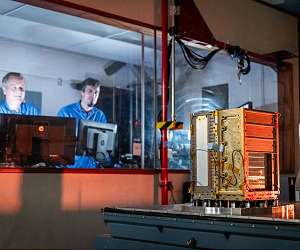
illustration only

Teledyne detector arrays power NASAs BlackCAT CubeSat X-ray mission

by Simon Mansfield
Sydney, Australia (SPX) Jan 21, 2026

Teledyne Technologies has confirmed that its Space Imaging division has successfully deployed Speedster HyViSI Hybrid Visible Silicon Imager focal plane arrays aboard NASAs BlackCAT CubeSat mission, which launched on January 11, 2026 on a SpaceX Twilight rideshare flight.

The mission, led by Pennsylvania State University, places an x ray observatory on a CubeSat platform to capture transient x ray events and study bursts from the collapse of early stars into black holes, probing conditions in the early universe using the sensitivity of Teledynes detector technology.

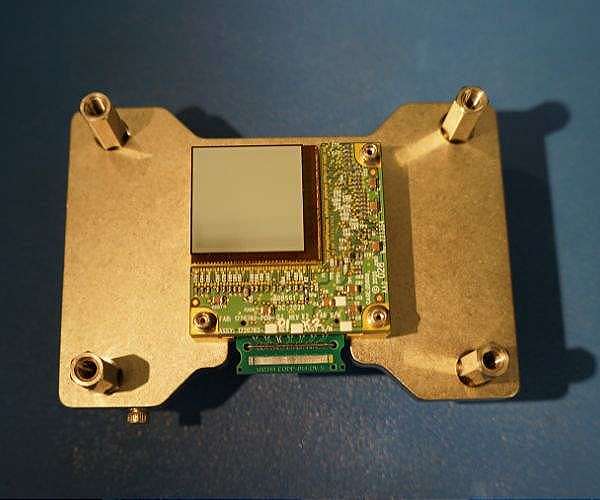
At the heart of the BlackCAT payload, a 2 by 2 mosaic of Speedster HyViSI focal plane arrays forms the primary imager, enabling the spacecraft to monitor some of the most energetic phenomena in the cosmos. The Speedster design uses a Si PIN hybrid CMOS architecture that is optimized for space based x ray detection, providing high efficiency for soft x ray photons while maintaining the robustness required for long duration missions in orbit.

The Si PIN array delivers high quantum efficiency in the soft x ray band, allowing the instrument to register faint signals from distant and short lived sources that are central to BlackCATs science goals. The hybrid structure couples this absorber layer to a CMOS readout, combining the spectral performance needed for astronomy with the flexibility and radiation tolerance associated with modern integrated electronics.

Teledyne highlights that the CMOS functionality in Speedster HyViSI underpins several key performance advantages for the CubeSat instrument. Event driven fast readout allows the detector to capture and process x ray hits as they occur, improving temporal resolution for rapid transient events while reducing unnecessary data volume when the field is quiet.

Low power operation is another core attribute of the Speedster architecture, a critical factor for CubeSat platforms that must operate within tight electrical and thermal budgets. The detector electronics are designed to support efficient power use without compromising readout speed or signal quality, helping the BlackCAT spacecraft maintain stable operations during extended observation campaigns.

Radiation hard performance is also central to the Speedster HyViSI implementation, ensuring that the focal plane arrays can operate reliably in the space environment over the planned mission lifetime. By combining radiation tolerant CMOS circuitry with a robust absorber design, the detector aims to sustain sensitivity and calibration as it encounters charged particles and other space weather effects in low Earth orbit.

X ray detection is described by Teledyne as a natural extension of the HyViSI technology family, which has already been applied in other imaging domains. Dr Yibin Bai, Director of FPA Development, stated that with its adaptable CMOS features and advanced absorber design, the Speedster HyViSI establishes itself as a high performance alternative to other sensors for x ray astronomy in space, positioning the platform for future missions and instruments.

Through its Space Imaging business, Teledyne manufactures advanced electronics, imaging systems and sensor solutions for space applications across the growing global space economy. The group has a long heritage of supplying space qualified imaging sensors, focal plane arrays and camera systems to major agencies including NASA, ESA, JAXA and KARI, contributing to more than 250 space projects spanning scientific, Earth observation and commercial missions.

Teledyne Space Imaging develops CCD, CMOS and infrared detectors with a range of optical filters, packaging options and proximity electronics to meet diverse performance requirements. The company delivers imagers for institutional science programs as well as commercial space operators, aligning each focal plane design with specific spectral, resolution and environmental targets defined by mission teams.

Teledyne Space Imaging forms part of Teledyne Technologies, whose operations extend across digital imaging products and software, instrumentation, aerospace and defense electronics and engineered systems. Headquartered primarily in the United States, Canada, the United Kingdom and Western and Northern Europe, Teledyne supports a broad customer base in both government and commercial markets that rely on high performance sensing and imaging capabilities.

The BlackCAT deployment continues Teledynes practice of placing its imaging technologies at the center of space instruments that observe high energy astrophysical events. By pairing the Speedster HyViSI focal plane arrays with an x ray optical system in a compact CubeSat form factor, the mission seeks to demonstrate that small spacecraft can deliver scientifically valuable data on some of the most distant and dynamic processes in the universe, potentially shaping the design of future distributed constellations of x ray observatories.

Related Links
Teledyne Space Imaging
Microsat News and Nanosat News at SpaceMart.com

Subscribe Free To Our Daily Newsletters
Tweet

RELATED CONTENT
The following news reports may link to other Space Media Network websites.
MICROSAT BLITZ
Axelspace sets multi launch framework with Exolaunch for AxelLiner mission growth
Los Angeles CA (SPX) Dec 26, 2025
Axelspace Corporation has signed a multi-launch agreement with Exolaunch to support a series of missions using Axelspace microsatellites. The framework covers multiple launches and is intended to secure launch access and mission management for Axelspace programs, including new spacecraft assigned to in-orbit demonstration services. Under the agreement, one satellite is scheduled to launch as part of the AxelLiner business in-orbit demonstration service known as AxelLiner Laboratory. In addition, E ... read more

MICROSAT BLITZ
Explore the World with These Travel Tips

The Quiet Transformation of GPS - What's Coming by 2026

NASA Back for Seconds with New Food System Design Challenge

New orbital mapping system targets Earth Moon libration traffic

MICROSAT BLITZ
NASA moves moon rocket to launch pad ahead of Artemis 2 mission

Interstellar raises major Series F funding to expand launch and satellite business

GE and Lockheed validate compact rotating detonation ramjet for hypersonic missiles

China tests Long March 12B reusable first stage at Jiuquan

MICROSAT BLITZ
Tiny Mars' big impact on Earth's climate

Ancient deltas reveal vast Martian ocean across northern hemisphere

The electrifying science behind Martian dust

Sandblasting winds sculpt Mars landscape

MICROSAT BLITZ
Tiangong science program delivers data surge

China tallies record launch year as lunar and asteroid plans advance

China harnesses nationwide system to drive spaceflight and satellite navigation advances

Shenzhou 21 crew complete eight hour spacewalk outside Tiangong station

MICROSAT BLITZ
ThinkOrbital raises seed funding to advance orbital defense and construction systems

Aerospacelab expands Pulsar navigation constellation work with new Xona satellite order

Multiple satellite filings demonstrate transparency, responsibility and ambition: China Daily editorial

China outlines mega constellations in ITU satellite filings

MICROSAT BLITZ
The decentralized future of space transactions

Top 5 Best Live Sports Betting Sites For North Carolina Sports Fans

How IVRT Testing Ensures Consistent Product Quality

How Path Social's AI Targeting Really Works: A Deep Dive into the Tech

MICROSAT BLITZ
Hidden magma oceans could shield rocky exoplanets from harmful radiation

Frozen hydrogen cyanide crystals may have helped spark early chemistry for life

Berkeley Scientists set to home in on 100 signals from Seti at Home

Scientist wins 'Environment Nobel' for shedding light on hidden fungal networks

MICROSAT BLITZ
Computer models let scientists peer into the mystery beneath Jupiter's clouds

Jupiter's moon Europa has a seafloor that may be quiet and lifeless

Uranus and Neptune may be rock rich worlds

SwRI links Uranus radiation belt mystery to solar storm driven waves

Subscribe Free To Our Daily Newsletters


The content herein, unless otherwise known to be public domain, are Copyright 1995-2024 - Space Media Network. All websites are published in Australia and are solely subject to Australian law and governed by Fair Use principals for news reporting and research purposes. AFP, UPI and IANS news wire stories are copyright Agence France-Presse, United Press International and Indo-Asia News Service. ESA news reports are copyright European Space Agency. All NASA sourced material is public domain. Additional copyrights may apply in whole or part to other bona fide parties. All articles labeled "by Staff Writers" include reports supplied to Space Media Network by industry news wires, PR agencies, corporate press officers and the like. Such articles are individually curated and edited by Space Media Network staff on the basis of the report's information value to our industry and professional readership. Advertising does not imply endorsement, agreement or approval of any opinions, statements or information provided by Space Media Network on any Web page published or hosted by Space Media Network. General Data Protection Regulation (GDPR) Statement Our advertisers use various cookies and the like to deliver the best ad banner available at one time. All network advertising suppliers have GDPR policies (Legitimate Interest) that conform with EU regulations for data collection. By using our websites you consent to cookie based advertising. If you do not agree with this then you must stop using the websites from May 25, 2018. Privacy Statement. Additional information can be found here at About Us.