





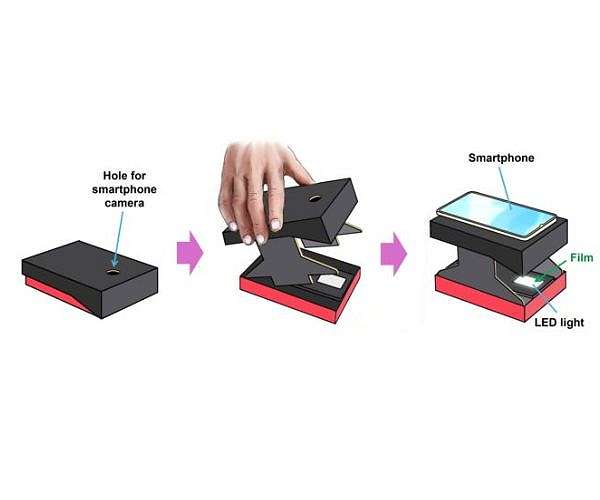
The system uses Gafchromic EBT4 radiochromic film, which changes color instantly when exposed to ionizing radiation in a way that can be seen with the naked eye. In the new setup, a user places a film sample inside a compact, battery powered scanning chamber that provides controlled illumination, then captures an image of the exposed film using a standard smartphone positioned above the chamber. The team reports that doses up to 10 Gray can be quantified from these images with sufficient accuracy for emergency triage purposes, with a 10 Gray skin dose being high enough to cause permanent hair loss.
According to the study, the researchers focused on keeping the design simple, universal, and inexpensive so it can still function during severe accident scenarios, including situations where infrastructure is damaged after a natural disaster. The hardware relies on low cost components and can be assembled for less than about 70 US dollars, excluding the smartphone itself, while the image analysis is handled by mobile applications that are already widely available. This approach is intended to support voluntary, on site dose checks by individuals and first responders when conventional instruments are limited or unavailable.
To evaluate performance, the team tested several smartphone models, including devices from Samsung and Apple, and compared how different color channels in the captured images tracked radiation dose. Their analysis showed that the cyan color channel from the digital images gave the most consistent and reliable dose response, providing a practical basis for calibration curves that convert color intensity into dose estimates. While professional desktop scanners still offer higher precision and lower uncertainty, the authors conclude that the smartphone based method delivers adequate accuracy for emergency applications and benefits from much greater portability.
The portable scanner is designed as a foldable enclosure with integrated LED lighting to ensure stable and uniform illumination of the film during imaging. By controlling the geometry between the smartphone camera and the illuminated film, the system reduces variations due to viewing angle or ambient light, which can otherwise degrade the relationship between color change and dose. The researchers emphasize that this mechanical and optical stability is important if the method is to be used reliably by non specialists in the field.
The study also addresses how such a system could be deployed in real world emergencies, where users might have different smartphone models and where environmental conditions such as temperature or battery life could affect performance. The authors note that, although inter device differences exist, the dominance of the cyan channel response provides a common reference that supports practical cross calibration between phones. They propose that pre defined calibration data and simple instructions distributed in advance could allow large numbers of people to perform their own dose checks during an incident.
Looking ahead, the Hiroshima University team is working on standardizing operating protocols and validating the system under a wider range of environmental and use conditions. This includes testing the robustness of color based dose estimates when films are exposed to different radiation qualities or stored for varying periods before reading. The researchers aim to refine the approach so that governments and organizations can integrate smartphone based dosimetry kits into broader emergency preparedness and response plans.
The paper describing the system, titled "Cost effective on site dose assessment by a combination of radiochromic film and smartphone," appears in the journal Radiation Measurements. The open access publication costs were supported by Hiroshima University, and the work was carried out by doctoral student Hassna Bantan and Professor Hiroshi Yasuda at the university's Research Institute for Radiation Biology and Medicine. The authors see their approach as a practical bridge between high end dosimetry technologies and the need for widely accessible tools that can function during worst case radiological accident scenarios.
Research Report:Cost-effective on-site dose assessment by a combination of radiochromic film and smartphone
Related Links
Hiroshima University
Space Technology News - Applications and Research
| Subscribe Free To Our Daily Newsletters |
| Subscribe Free To Our Daily Newsletters |







