24/7 Space News
TECH SPACE
Quantum camera startup plans satellite and telescope constellations
illustration only

Quantum camera startup plans satellite and telescope constellations

by Clarence Oxford
Los Angeles CA (SPX) Jan 14, 2026

Diffraqtion, a space startup spun out of MIT and the University of Maryland, has closed a pre-seed funding round to advance satellite constellations and telescope systems powered by a novel quantum camera. The round is led by QDNL Participations, with participation from milemark+ capital, Aether VC, ADIN, Offline Ventures, and a non-dilutive DARPA SBIR Direct-to-Phase 2 contract that supports space situational awareness capabilities, bringing the total between dilutive and non-dilutive funding to 4.2 million dollars.

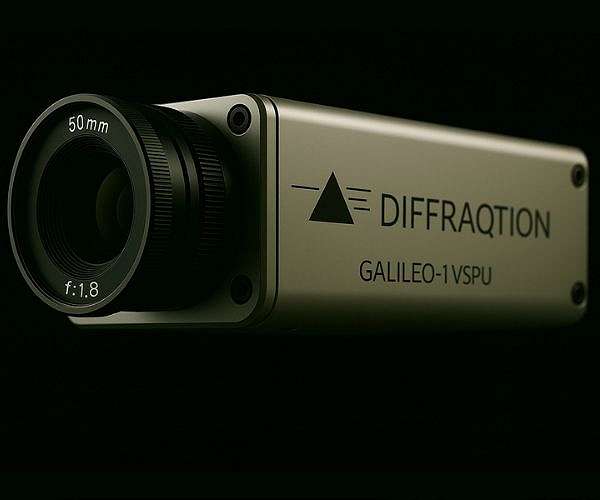
The company has developed a first-of-its-kind quantum camera that enables satellites and telescopes to see farther and process visual information much faster than conventional systems. Built on research led by co-founder Prof. Saikat Guha in collaboration with NASA and DARPA, the technology is designed to deliver up to 20 times higher resolution and 1,000 times faster processing than traditional cameras and processors, enabling ultra-high-resolution imaging at a fraction of the cost of today's satellites and ground-based observatories.

Diffraqtion plans to use its quantum imaging architecture to field large constellations of low-cost, high-precision satellites for space domain awareness, defense, and commercial Earth observation. Targeted applications include orbital safety and intelligence, as well as agriculture, disaster response, and environmental monitoring, where improved spatial and temporal coverage can significantly enhance decision-making.

In parallel with closing the pre-seed round, the company has secured multiple high-profile recognitions. Diffraqtion took first place at the SLUSH 100 competition, selected from more than 1,000 startups, earning a 1.1 million dollar equity prize from Cherry Ventures and General Catalyst, and also received TechConnect's 2025 Best Space Innovation award worth 100,000 dollars.

Diffraqtion is participating in the U.S. Space Force's Apollo Accelerator, where it is working with government stakeholders to demonstrate and refine its quantum imaging technology for operational use. The company plans on-sky demonstrations with the University of California Observatories in early 2026, followed by space-based demonstrations that will validate performance in orbit-like conditions.

"Space-based infrastructure powers our communications, navigation, and defense, and through Earth Imaging, it supports everything from agriculture to disaster response," said Diffraqtion CEO and Co-Founder Johannes Galatsanos. "Yet despite the boom in low-cost launches, we still lack clear, continuous visibility of what's happening above and below the atmosphere. Our quantum camera changes that: it tracks smaller, faster objects to keep assets in orbit safe, while delivering ultra-high-resolution imaging for critical applications on Earth."

"Quantum sensing can bring new capabilities to monitoring and protecting orbital infrastructure," said Chad Rigetti, Venture Partner at QDNL Participations. "Diffraqtion's team combines deep photonics and quantum expertise with practical defense and space insight - exactly what's needed to bring quantum imaging into operational reality."

The founding team brings experience spanning quantum technologies, photonics, space systems, and large-scale product development. Co-Founder and CEO Johannes Galatsanos has more than 15 years of experience in AI, quantum technologies, and operations, with prior roles as an MIT researcher, Executive Director at Novartis, and technical consultant leading data and AI products across manufacturing and R and D.

Co-Founder and CTO Christine Wang completed her Ph.D. at Harvard and postdoctoral work at EPFL and the Max Planck Institute, and has over two decades of experience designing and prototyping photonics and optics devices for defense and commercial systems, most recently as Director of Optics and Photonics at Riverside Research and Principal Scientist at Draper Labs. Co-Founder and CSA Prof. Saikat Guha is a leading quantum sensing scholar, IEEE Fellow, Distinguished Chair Professor at the University of Maryland, adjunct faculty at MIT, and Director of the NSF Center for Quantum Networks, with more than 100 papers and patents related to quantum technologies.

Head of Product Mark Michael previously co-founded and served as CTO of Kepler Communications, which has grown into one of North America's largest space companies. He holds an engineering degree from the University of Toronto and worked at IBM before building Kepler, bringing satellite communications and product scaling experience to Diffraqtion's roadmap.

Diffraqtion is headquartered in Somerville, Massachusetts, and is focused on building what it describes as the world's first quantum camera powering a large ultra-high-resolution imaging satellite network. By combining quantum photonics with AI-enabled processing, the company aims to enable machines to see further and analyze complex visual scenes faster, with implications for space exploration, defense, and intelligent systems across multiple sectors.

Related Links
Diffraqtion
Space Technology News - Applications and Research

Subscribe Free To Our Daily Newsletters
Tweet

RELATED CONTENT
The following news reports may link to other Space Media Network websites.
TECH SPACE
NASA heavy ion tests confirm Sakura II AI chip for orbital and lunar use
Los Angeles CA (SPX) Jan 14, 2026
EdgeCortix Inc. reports that its Sakura II edge AI co-processor has demonstrated high levels of radiation resiliency in heavy ion testing conducted under the NASA Electronic Parts and Packaging Program. The results mark the second time an EdgeCortix device has completed this test campaign, following earlier work in 2024 on the Sakura I co-processor. According to the new NASA report, Sakura II delivered radiation performance metrics comparable to those of Sakura I, which had previously shown greate ... read more

TECH SPACE
NASA Back for Seconds with New Food System Design Challenge

New orbital mapping system targets Earth Moon libration traffic

International Space Station crew to return early after astronaut medical issue

Startups go public in litmus test for Chinese AI

TECH SPACE
PH-1 test flight advances Chinese reusable suborbital spacecraft plans

Starfighters completes supersonic tests for GE Aerospace ramjet program

Fueling research in nuclear thermal propulsion

Indian rocket hits snag during launch

TECH SPACE
Ancient deltas reveal vast Martian ocean across northern hemisphere

Tiny Mars' big impact on Earth's climate

The electrifying science behind Martian dust

Sandblasting winds sculpt Mars landscape

TECH SPACE
Tiangong science program delivers data surge

China tallies record launch year as lunar and asteroid plans advance

China harnesses nationwide system to drive spaceflight and satellite navigation advances

Shenzhou 21 crew complete eight hour spacewalk outside Tiangong station

TECH SPACE
Aerospacelab expands Pulsar navigation constellation work with new Xona satellite order

China outlines mega constellations in ITU satellite filings

Multiple satellite filings demonstrate transparency, responsibility and ambition: China Daily editorial

ThinkOrbital raises seed funding to advance orbital defense and construction systems

TECH SPACE
Momentus to flight test 3D printed fuel tank on Vigoride 7

How IVRT Testing Ensures Consistent Product Quality

Quantum camera startup plans satellite and telescope constellations

This exotic form of ice just got weirder

TECH SPACE
Creating hallucination-free, psychedelic-like molecules by shining light on life's basic building blocks

Pandora exoplanet mission checks in after launch

Mixed crystal phase of superionic water mapped inside giant planets

Berkeley Scientists set to home in on 100 signals from Seti at Home

TECH SPACE
Jupiter's moon Europa has a seafloor that may be quiet and lifeless

Uranus and Neptune may be rock rich worlds

SwRI links Uranus radiation belt mystery to solar storm driven waves

Looking inside icy moons

Subscribe Free To Our Daily Newsletters


The content herein, unless otherwise known to be public domain, are Copyright 1995-2024 - Space Media Network. All websites are published in Australia and are solely subject to Australian law and governed by Fair Use principals for news reporting and research purposes. AFP, UPI and IANS news wire stories are copyright Agence France-Presse, United Press International and Indo-Asia News Service. ESA news reports are copyright European Space Agency. All NASA sourced material is public domain. Additional copyrights may apply in whole or part to other bona fide parties. All articles labeled "by Staff Writers" include reports supplied to Space Media Network by industry news wires, PR agencies, corporate press officers and the like. Such articles are individually curated and edited by Space Media Network staff on the basis of the report's information value to our industry and professional readership. Advertising does not imply endorsement, agreement or approval of any opinions, statements or information provided by Space Media Network on any Web page published or hosted by Space Media Network. General Data Protection Regulation (GDPR) Statement Our advertisers use various cookies and the like to deliver the best ad banner available at one time. All network advertising suppliers have GDPR policies (Legitimate Interest) that conform with EU regulations for data collection. By using our websites you consent to cookie based advertising. If you do not agree with this then you must stop using the websites from May 25, 2018. Privacy Statement. Additional information can be found here at About Us.