24/7 Space News
IRON AND ICE
Iron rich asteroids show surprising resilience in impact simulation study
illustration only

Iron rich asteroids show surprising resilience in impact simulation study

by Sophie Jenkins
London, UK (SPX) Jan 08, 2026

Physicists at the University of Oxford have contributed to a new experimental study that shows iron rich asteroids can withstand far more energy than previously estimated before breaking apart. The work provides direct insight into how metallic asteroid material behaves under impact like conditions and could help refine planetary defense strategies.

Recent demonstration missions such as NASA s Double Asteroid Redirection Test, which altered the orbit of the small asteroid Dimorphos in 2022, have proven that it is possible to deflect a potentially hazardous object by imparting momentum. To predict the outcome of such interventions with confidence, however, scientists need to understand how real asteroid materials respond to extremely rapid and intense energy deposition instead of the slow loading conditions typically used in conventional laboratory tests.

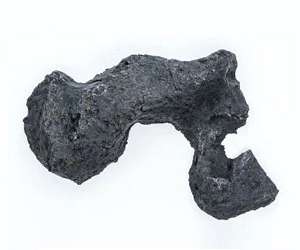
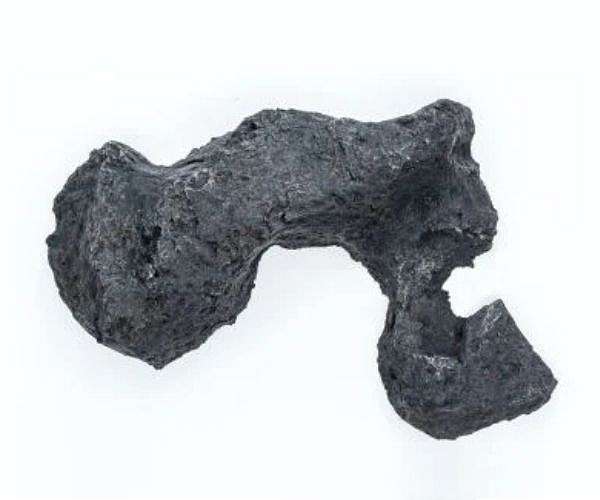
In the new study, an international team including Oxford researchers used CERN s High Radiation to Materials (HiRadMat) facility to expose a sample of the Campo del Cielo iron meteorite to highly energetic proton beams with energies of 440 GeV. The meteorite served as a proxy for metal rich asteroids that contain significant amounts of iron and nickel. By using this accelerator based approach, the team was able to reproduce the kind of rapid internal heating and stress buildup that would occur if an asteroid were struck by a high energy beam or projectile.

The experiment was designed to be non destructive so that the evolution of the material could be followed continuously. The researchers employed laser Doppler vibrometry, a technique that uses laser light to measure extremely small vibrations at the material surface, to monitor how stress waves propagated through the meteorite during and after irradiation. This allowed them to track stress, strain, and deformation in real time rather than relying solely on before and after inspection.

The measurements revealed that the Campo del Cielo sample was able to absorb significantly more energy than predicted by standard material strength models without fragmenting. Instead of failing catastrophically, the meteorite exhibited behavior more typical of a complex composite in which internal structure redistributes stress in non intuitive ways. The response suggested that, under rapid loading, heterogeneous meteorite material can reorganize and strengthen as energy is deposited.

One of the most striking findings was the observation of strain rate dependent damping. The faster the meteorite was stressed, the more effectively it dissipated energy through its internal microstructure. This means that at the very high rates associated with an impact or beam interaction, asteroid material may become tougher rather than weaker, in contrast to expectations based on slower mechanical tests.

These results help explain a long standing discrepancy between the relatively high strengths measured for meteorite samples in the laboratory and the lower strengths inferred from how meteoroids break up in Earth s atmosphere. The new data show that the way stress redistributes through the complex internal structure of meteorites can lead to very different behavior depending on how quickly the load is applied. Atmospheric entry involves a different combination of thermal and mechanical effects from the conditions reproduced in the HiRadMat experiment.

For planetary defense, the study indicates that it may be possible to inject energy deep into a solid or metal rich asteroid without causing it to shatter into many fragments. If energy can be delivered while keeping the body largely intact, deflection methods that rely on imparting a controlled push to the asteroid could become more efficient and predictable. This insight is relevant to concepts that use kinetic impactors as well as to emerging ideas that involve high energy particle beams.

The project was carried out in collaboration with the Outer Solar System Company, which is exploring the feasibility of high energy proton beam systems operating in space. By combining expertise in experimental physics, accelerator technology, and planetary science, the team has opened up a new way to probe the dynamic strength and stability of asteroid materials under conditions that more closely resemble those of real planetary defense scenarios.

The research is reported in the paper Dynamical development of strength and stability of asteroid material under 440 GeV proton beam irradiation, published in the journal Nature Communications. The authors note that further experiments on different meteorite types and structures, as well as complementary numerical modeling, will be needed to build a comprehensive framework for predicting the response of diverse asteroid classes to deflection attempts.

Research Report:Dynamical development of strength and stability of asteroid material under 440 GeV proton beam irradiation

Related Links
University of Oxford
Asteroid and Comet Mission News, Science and Technology

Subscribe Free To Our Daily Newsletters
Tweet

RELATED CONTENT
The following news reports may link to other Space Media Network websites.
IRON AND ICE
NSF-DOE Vera C. Rubin Observatory spots record-breaking asteroid in pre-survey observations
Washington DC (SPX) Jan 08, 2026
As part of the NSF-DOE Vera C. Rubin Observatory First Look event in June 2025, Rubin announced that it had observed thousands of asteroids cruising about our Solar System, about 1900 of which have been confirmed as never-before-seen. Within the flurry, a team of astronomers has discovered 19 super- and ultra-fast-rotating asteroids. One of these is the fastest-spinning asteroid larger than 500 meters (0.3 miles) ever found. The study was led by Sarah Greenstreet, NSF NOIRLab assistant astronomer ... read more

IRON AND ICE
International Space Station crew to return early after astronaut medical issue

Second ESCAPADE spacecraft completes key trajectory fix on path to Mars

Why Space Exploration Depends on Predicting the Unpredictable

China launches twin Shijian-29 satellites to test space-target detection tech

IRON AND ICE
Starfighters completes supersonic tests for GE Aerospace ramjet program

Galileo satellites ride Ariane 6 to boost Europe navigation resilience

North Korea tests hypersonic missiles, says nuclear forces ready for war

AI systems proposed to boost launch cadence reliability and traffic management

IRON AND ICE
The electrifying science behind Martian dust

Sandblasting winds sculpt Mars landscape

Thin ice may have protected lake water on frozen Mars

Curiosity's Nevado Sajama postcard captures Mars on the eve of conjunction

IRON AND ICE
Tiangong science program delivers data surge

China tallies record launch year as lunar and asteroid plans advance

China harnesses nationwide system to drive spaceflight and satellite navigation advances

Shenzhou 21 crew complete eight hour spacewalk outside Tiangong station

IRON AND ICE
Time-expanded network model cuts complexity in mega constellation launch planning

Southern Launch to Host Lux Aeterna Re-Entries South Australia

Smart modeling framework targets 6G spectrum chaos in space air and ground networks

K2 Space raises 250m to scale Mega class high power satellites

IRON AND ICE
Momentus to flight test 3D printed fuel tank on Vigoride 7

How IVRT Testing Ensures Consistent Product Quality

This exotic form of ice just got weirder

Planet delivers first light image from Pelican 6 satellite capturing Lhasa Gonggar Airport

IRON AND ICE
Joint ground- and space-based observations reveal Saturn-mass rogue planet

Creating hallucination-free, psychedelic-like molecules by shining light on life's basic building blocks

ALMA views giant dusty disk in Gomezs Hamburger with signs of early giant planet formation

Giant amoeba virus ushikuvirus sheds light on how complex cells evolved

IRON AND ICE
Jupiter's moon Europa has a seafloor that may be quiet and lifeless

Uranus and Neptune may be rock rich worlds

SwRI links Uranus radiation belt mystery to solar storm driven waves

Looking inside icy moons

Subscribe Free To Our Daily Newsletters


The content herein, unless otherwise known to be public domain, are Copyright 1995-2024 - Space Media Network. All websites are published in Australia and are solely subject to Australian law and governed by Fair Use principals for news reporting and research purposes. AFP, UPI and IANS news wire stories are copyright Agence France-Presse, United Press International and Indo-Asia News Service. ESA news reports are copyright European Space Agency. All NASA sourced material is public domain. Additional copyrights may apply in whole or part to other bona fide parties. All articles labeled "by Staff Writers" include reports supplied to Space Media Network by industry news wires, PR agencies, corporate press officers and the like. Such articles are individually curated and edited by Space Media Network staff on the basis of the report's information value to our industry and professional readership. Advertising does not imply endorsement, agreement or approval of any opinions, statements or information provided by Space Media Network on any Web page published or hosted by Space Media Network. General Data Protection Regulation (GDPR) Statement Our advertisers use various cookies and the like to deliver the best ad banner available at one time. All network advertising suppliers have GDPR policies (Legitimate Interest) that conform with EU regulations for data collection. By using our websites you consent to cookie based advertising. If you do not agree with this then you must stop using the websites from May 25, 2018. Privacy Statement. Additional information can be found here at About Us.