24/7 Space News
ROCKET SCIENCE
China verifies Long March 10 booster splashdown and crew escape in key lunar test
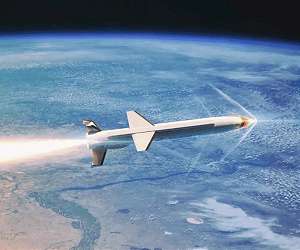
illustration only

China verifies Long March 10 booster splashdown and crew escape in key lunar test

by Riko Seibo
Tokyo, Japan (SPX) Feb 13, 2026
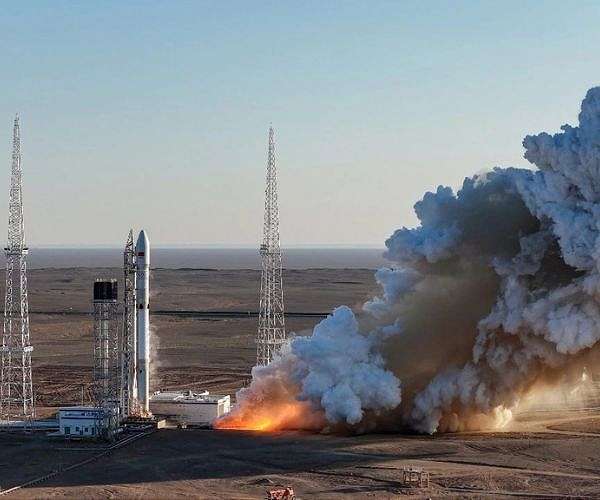
China has carried out a pivotal flight test of a prototype rocket and crew spacecraft for its planned manned lunar landing program, validating key ascent, abort, and recovery technologies needed for future missions to the Moon.

In the demonstration, a prototype of the new-generation Mengzhou crew spacecraft was mounted on a prototype first-stage booster of the Long March 10 heavy-lift rocket and launched from the coastal Wenchang Space Launch Center in Hainan province at 11 am local time. The test focused on behavior around maximum dynamic pressure, or Max-Q, when aerodynamic forces on the vehicle are at their peak.

As the booster climbed and approached Max-Q, the Mengzhou return capsule separated from the first stage and was rapidly pulled clear by an escape rocket mounted on top of the spacecraft. This sequence simulated an emergency abort under the most demanding aerodynamic conditions. Shortly afterward, at a preplanned altitude, the escape rocket detached from the capsule, which then deployed its parachutes and descended to a designated recovery zone in the South China Sea.

While the capsule followed its escape and recovery profile, the Long March 10 first-stage booster continued its ascent before its engines were temporarily shut down to allow the vehicle to coast on inertia. After crossing the Karman Line, commonly defined as the boundary between Earth's atmosphere and outer space, the booster deployed grid fins and activated its reaction control system to manage attitude and prepare for controlled descent.

During the descent phase, some of the booster's engines were restarted twice to work together with the grid fins and reaction control system. This combination slowed the vehicle and maintained the desired orientation and trajectory as it returned toward the sea. In the final seconds of the maneuver, the engines shut down, allowing the large first stage to perform a controlled splashdown in a predesignated ocean area.

Near the splashdown site, a mobile recovery platform designed to support retrieval of Long March 10 reusable boosters simulated the full recovery sequence. Using real-time telemetry from the booster, the platform rehearsed tracking, approach, and notional capture operations that would be required in an operational recovery mission.

According to the China Manned Space Agency, the campaign marked the first flight test of a Long March 10 prototype, the country's first Max-Q escape test for a crewed spacecraft, and the first sea splashdown of both a manned spacecraft return capsule and a rocket first-stage booster. It also represented the first operation of the newly built heavy rocket launch tower at the Wenchang spaceport, which will support China's forthcoming lunar exploration architecture.

Program officials said the test successfully verified the first-stage ascent and recovery phases for the Long March 10 and demonstrated the Mengzhou spacecraft's Max-Q escape and sea recovery capabilities. The mission generated engineering data and operational experience that will feed directly into the design, qualification, and flight planning for China's future crewed lunar missions.

Related Links
China Manned Space Agency
Rocket Science News at Space-Travel.Com

Subscribe Free To Our Daily Newsletters
Tweet

RELATED CONTENT
ROCKET SCIENCE
NASA backs studies to boost hypersonic flight testing
Los Angeles CA (SPX) Feb 02, 2026
NASA is preparing for a new phase in hypersonic aviation by funding industry studies aimed at expanding flight test capabilities for reusable airbreathing vehicles that can cruise at several times the speed of sound. The agency has awarded short term study contracts to SpaceWorks Enterprises of Atlanta, Georgia, and Stratolaunch of Mojave, California, to examine how existing platforms could be adapted to conduct frequent and affordable hypersonic flight experiments. The work is managed under NASA' ... read more

ROCKET SCIENCE
Chinese visitors to Japan slump as spat rumbles on

International crew takes off for space station

Launch to ISS pushed to Thursday over weather: NASA

Voyager wins NASA ISS mission management role through 2030

ROCKET SCIENCE
xAI sees key staff exits, Musk promises moon factories

Exolaunch to deploy five satellites on Spectrum mission from Norway

UK backs new electric propulsion hub for satellite engines

India's tougher AI social media rules spark censorship fears

ROCKET SCIENCE
Mars' 'Young' Volcanoes Were More Complex Than Scientists Once Thought

Curiosity Blog, Sols 4788-4797: Welcome Back from Conjunction

NASA Study: Non-biologic Processes Don't Fully Explain Mars Organics

Martian toxin found to toughen microbe built bricks

ROCKET SCIENCE
Dragon spacecraft gears up for crew 12 arrival and station science work

China prepares offshore test base for reusable liquid rocket launches

Retired EVA workhorse to guide China's next-gen spacesuit and lunar gear

Tiangong science program delivers data surge

ROCKET SCIENCE
BlackSky expands Gen 3 Assured deals with new defense customer

Muon Space ramps up multi-mission satellite constellations

ESA member states back SWISSto12 HummingSat with fresh funding round

Aerospacelab expands Pulsar navigation constellation work with new Xona satellite order

ROCKET SCIENCE
Valen array advances multi-mission sensing tech

NGA taps Vantor for AI change detection from space

Junk to high-tech: India bets on e-waste for critical minerals

SatService to supply Q V band satcom ground station for Bundeswehr university

ROCKET SCIENCE
Engineered microbes use light to build new molecules

Debris disc oddities point to hidden outer planets

JWST study links sulfur rich gas giants to core growth in distant HR 8799 system

Pressure driven leakage from marine snow feeds deep ocean microbes

ROCKET SCIENCE
Jupiter size refined by new radio mapping

Polar weather on Jupiter and Saturn hints at the planets' interior details

Europa ice delamination may deliver nutrients to hidden ocean

Birth conditions fixed water contrast on Jupiters moons


The content herein, unless otherwise known to be public domain, are Copyright 1995-2026 - SpaceDaily.com. All websites are published in Australia and are solely subject to Australian law and governed by Fair Use principals for news reporting and research purposes. AFP, UPI and IANS news wire stories are copyright Agence France-Presse, United Press International and Indo-Asia News Service. ESA news reports are copyright European Space Agency. All NASA sourced material is public domain. Additional copyrights may apply in whole or part to other bona fide parties. All articles labeled "by Staff Writers" include reports supplied to Space Media Network by industry news wires, PR agencies, corporate press officers and the like. Such articles are individually curated and edited by Space Media Network staff on the basis of the report's information value to our industry and professional readership. Advertising does not imply endorsement, agreement or approval of any opinions, statements or information provided by Space Media Network on any Web page published or hosted by Space Media Network. General Data Protection Regulation (GDPR) Statement Our advertisers use various cookies and the like to deliver the best ad banner available at one time. All network advertising suppliers have GDPR policies (Legitimate Interest) that conform with EU regulations for data collection. By using our websites you consent to cookie based advertising. If you do not agree with this then you must stop using the websites from May 25, 2018. Privacy Statement. Additional information can be found here at About Us.
Subscribe Free To Our Daily Newsletters