24/7 Space News
STELLAR CHEMISTRY
Gemini North tracks changing glow of interstellar Comet 3IATLAS
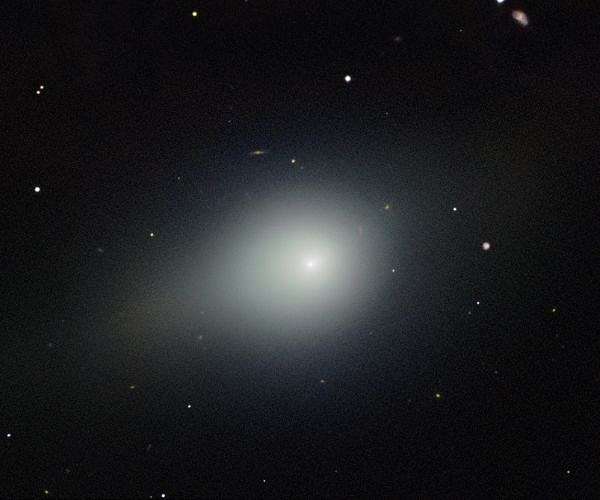
illustration only

Gemini North tracks changing glow of interstellar Comet 3IATLAS

by Clarence Oxford
Tucson AZ (SPX) Dec 16, 2025

Gemini North has obtained new color images of Comet 3I/ATLAS after the interstellar object emerged from behind the Sun on its outbound trajectory from the Solar System. Using the Gemini Multi-Object Spectrograph (GMOS) on the Gemini North telescope at Maunakea in Hawaii, scientists observed the comet on 26 November 2025 to study how it has evolved since perihelion.

The observations were conducted as part of a Shadow the Scientists session, an outreach program that connects students and the public with astronomers during live observing runs on major telescopes, and the scientific program was led by Bryce Bolin of Eureka Scientific.

In the new Gemini North images, the comet displays a faint greenish glow that contrasts with earlier Shadow the Scientists observations from Gemini South in Chile, where the object appeared more red. The composite image combines exposures taken through four filters - blue, green, orange, and red - while the telescope tracks the comet, causing background stars to appear as multicolored streaks as they move across the field during the observations.

The green tint arises from emission by gases in the comet's coma that are released as solar heating drives sublimation, including diatomic carbon (C2), a reactive molecule consisting of two carbon atoms that radiates strongly at green wavelengths.

Researchers now aim to follow how 3I/ATLAS changes as it recedes from the Sun and cools. Many comets respond to solar heating with a delay because it takes time for heat to propagate into their interiors, which can later initiate the evaporation of new volatile species or trigger outbursts as trapped material escapes. Continued monitoring with Gemini will track shifts in the comet's gas composition and any outburst activity as this third-known interstellar object travels back into interstellar space.

The Shadow the Scientists collaboration with NSF NOIRLab is designed to merge front-line astronomical observing with direct public participation. By involving learners in real-time observing sessions and making the resulting data available through the Gemini Archive, the program provides access to authentic research material while highlighting notable events such as the passage of 3I/ATLAS.

"Sharing an observing experience in some of the best conditions available gives the public a truly front-row view of our interstellar visitor," Bolin said, adding that opening the observing process to the public helps demystify how astronomers collect and analyze data on targets like this comet.

"Allowing the public to see what we do as astronomers and how we do it also helps demystify the scientific and data collection process, adding transparency to our study of this fascinating object."

Related Links
NSF NOIRLab
Stellar Chemistry, The Universe And All Within It

Subscribe Free To Our Daily Newsletters
Tweet

RELATED CONTENT
The following news reports may link to other Space Media Network websites.
STELLAR CHEMISTRY
Roman infrared survey to chart hidden structure of Milky Way
Greenbelt MD (SPX) Dec 12, 2025
NASA's Nancy Grace Roman Space Telescope team has released detailed plans for a major survey that will reveal our home galaxy, the Milky Way, in unprecedented detail. In one month of observations spread across two years, the survey will unveil tens of billions of stars and explore previously uncharted structures. "The Galactic Plane Survey will revolutionize our understanding of the Milky Way," said Julie McEnery, Roman's senior project scientist at NASA's Goddard Space Flight Center in Greenbelt, ... read more

STELLAR CHEMISTRY
ISS to change commanders before Soyuz crew leaves orbit

Lodestar Space wins SECP support to advance AI satellite awareness system

Micro nano robots aim to cut carbon buildup in closed life support systems

NASA extends ISS National Lab management contract through 2030

STELLAR CHEMISTRY
Musk signals plan to launch IPO for SpaceX

China launches carrier rocket to deploy experimental cargo ship and satellite

LandSpace reviews booster loss after Zhuque-3 reusable rocket test

UK plasma thruster test positions Pulsar Fusion for larger satellite propulsion

STELLAR CHEMISTRY
Martian sound study models acoustic signals in Jezero crater

NASA JPL Unveils Rover Operations Center for Moon, Mars Missions

Ancient Martian brines left bromine rich fingerprints in jarosite minerals

Maven stays silent after routine pass behind Mars

STELLAR CHEMISTRY
Experts at Hainan symposium call for stronger global space partnership

Foreign satellites ride Kinetica 1 on new CAS Space mission

Triple Long March launches mark record day for Chinese space program

China prepares Qingzhou cargo ship for low cost resupply flights

STELLAR CHEMISTRY
Beyond Gravity positions new modular satellite platform for European LEO missions

K2 Space raises 250m to scale Mega class high power satellites

Private capital targets mission-critical software power and platforms in new space economy

Applied Aerospace and PCX create US flight and space hardware group

STELLAR CHEMISTRY
Bible 1.0: How Ancient Canon Became Our First Large Language Models

Galactic Slots: Space-Themed Games with Out-of-This-World Bonus Features

ONE Bow River backs Odyssey Space Research growth in flight software and mission engineering

D-Orbit launches dual orbital transportation missions, passes 200-payload milestone

STELLAR CHEMISTRY
RISTRETTO spectrograph cleared for Proxima b atmospheric hunt

Ultra hot super Earth shows dense atmosphere over magma ocean

Hidden circumbinary giant planet emerges from decade old Gemini data

NASA backs WHOI effort to read organic signals from ocean worlds

STELLAR CHEMISTRY
Uranus and Neptune may be rock rich worlds

SwRI links Uranus radiation belt mystery to solar storm driven waves

Looking inside icy moons

Saturn moon mission planning shifts to flower constellation theory

Subscribe Free To Our Daily Newsletters


The content herein, unless otherwise known to be public domain, are Copyright 1995-2024 - Space Media Network. All websites are published in Australia and are solely subject to Australian law and governed by Fair Use principals for news reporting and research purposes. AFP, UPI and IANS news wire stories are copyright Agence France-Presse, United Press International and Indo-Asia News Service. ESA news reports are copyright European Space Agency. All NASA sourced material is public domain. Additional copyrights may apply in whole or part to other bona fide parties. All articles labeled "by Staff Writers" include reports supplied to Space Media Network by industry news wires, PR agencies, corporate press officers and the like. Such articles are individually curated and edited by Space Media Network staff on the basis of the report's information value to our industry and professional readership. Advertising does not imply endorsement, agreement or approval of any opinions, statements or information provided by Space Media Network on any Web page published or hosted by Space Media Network. General Data Protection Regulation (GDPR) Statement Our advertisers use various cookies and the like to deliver the best ad banner available at one time. All network advertising suppliers have GDPR policies (Legitimate Interest) that conform with EU regulations for data collection. By using our websites you consent to cookie based advertising. If you do not agree with this then you must stop using the websites from May 25, 2018. Privacy Statement. Additional information can be found here at About Us.