24/7 Space News
GPS NEWS
Bats use sound flow to steer through cluttered habitats
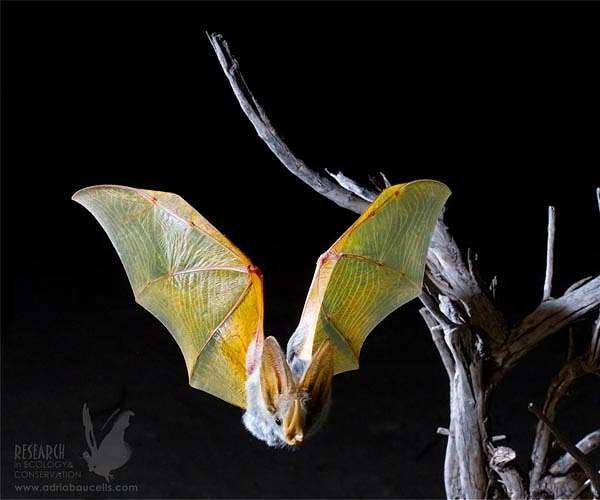
illustration only

Bats use sound flow to steer through cluttered habitats

by Sophie Jenkins
London, UK (SPX) Jan 21, 2026

A new study has resolved how wild bats navigate complex environments in complete darkness by showing they regulate their flight using a form of acoustic flow, offering fresh insight into biosonar and potential applications for autonomous navigation systems. The research, led by the University of Bristol, appears in Proceedings of the Royal Society B and addresses how bats manage thousands of overlapping echoes when flying through cluttered habitats such as hedgerows and forests.

Bats hunting at night rely on echolocation to detect and track objects, emitting calls and analysing returning echoes to build a representation of their surroundings. In complex habitats, a single call produces echoes from many objects at different distances and directions, making it impractical for bats to inspect each echo individually, so researchers have proposed that they instead use broader patterns in the echo field as a navigational cue.

The team investigated the idea that bats exploit acoustic flow velocity, a property of the echo scene that changes with both the animal's speed and the distance to surrounding structures. Acoustic flow is analogous to the visual flow that humans experience when moving through the world, where nearby objects appear to move faster across the visual field than distant ones as speed increases, and the researchers hypothesised that bats may use equivalent patterns in echo timing and frequency to control their motion.

To test this hypothesis, aerospace engineers and biologists at Bristol built a custom bat accelerator machine, an eight metre flight corridor lined with revolving hedge like panels. These panels carried around 8,000 acoustic reflectors acting as artificial leaves, chosen and arranged to mimic the dense, complex echoes produced by a real hedge so that the team could systematically manipulate the acoustic conditions that bats experience in flight.

Over three nights, the researchers recorded 181 flight trajectories from free ranging pipistrelle bats interacting with the corridor. Of these, they analysed 104 flights in which individual bats traversed at least the full eight metre test section, ensuring that each trajectory included a substantial segment of controlled acoustic flow conditions.

During the experiments, the team altered the motion of the reflector panels to change the acoustic flow speed relative to the bats' forward motion. When the reflectors moved against the bats' direction of travel, effectively increasing the acoustic flow speed that the animals would perceive, the bats responded by flying significantly more slowly, reducing their speed by up to 28 percent relative to the induced change in acoustic flow conditions.

When the reflectors moved in the same direction as the bats, thereby reducing the acoustic flow speed, the bats showed the opposite response and accelerated along the corridor. These behavioural adjustments indicate that bats are sensitive to systematic changes in the Doppler shifts and timing patterns that characterise acoustic flow and that they use these changes as a feedback signal to regulate their own flight speed within cluttered environments.

The findings support the conclusion that echolocating bats use Doppler based acoustic flow as a core mechanism for speed control and navigation in complex habitats. By demonstrating that bats adjust their flight in line with artificial manipulations of acoustic flow, the study provides evidence that they rely on global properties of the echo field, rather than analysing every single echo separately, to maintain precise control while flying in darkness.

The work also highlights an opportunity to transfer biological principles of navigation into engineered systems. By incorporating acoustic flow based control strategies into drones or other autonomous vehicles, designers may enable machines to navigate safely and efficiently through cluttered or GPS denied environments using sound, in a similar way to how bats move through hedges and forests at night.

Lead author Athia Haron from Bristol's School of Civil, Aerospace and Design Engineering noted that the results reveal how bats exploit their sensory system at a systems level to solve a complex control problem. Co author Marc Holderied from the School of Biological Sciences emphasised that the study links sensory biology and flight behaviour by showing how the structure of echoes across space and time informs movement decisions.

Co author Shane Windsor of the School of Civil, Aerospace and Design Engineering added that the bat accelerator experiment demonstrates how changing the apparent motion of the acoustic scene can tune bat speed, making them fly even faster or slower depending on the direction of reflector motion. The authors suggest that this controlled manipulation of acoustic environments offers a powerful tool for probing how animals integrate sensory information to guide movement.

Research Report:Acoustic flow velocity manipulations affect the flight velocity of free-ranging Pipistrelle bats

Related Links
University of Bristol
GPS Applications, Technology and Suppliers

Subscribe Free To Our Daily Newsletters
Tweet

RELATED CONTENT
The following news reports may link to other Space Media Network websites.
GPS NEWS
China tracks surge in geospatial information industry
Tokyo, Japan (SPX) Jan 05, 2026
China's geospatial information industry is approaching a total value of 1 trillion yuan (about $143 billion), according to the Ministry of Natural Resources. The ministry reported that by the end of 2025 the sector is expected to generate more than 900 billion yuan in output, an increase of over 30 percent compared with 2020, and now employs more than 4 million people. A core element of this industry is tianditu.gov.cn, the national geospatial information service platform operated by the ministry. ... read more

GPS NEWS
NASA astronaut stuck in space for nine months retires

Tourists hit record in Japan, despite plunge from China

What happens when fire ignites in space? 'A ball of flame'

ISS astronauts splash down on Earth after first-ever medical evacuation

GPS NEWS
NASA moves moon rocket to launch pad ahead of Artemis 2 mission

Starfighters completes key wind tunnel campaign for STARLAUNCH 1 air launch vehicle

Interstellar raises major Series F funding to expand launch and satellite business

Major equity deal backs Gilmour Space expansion of sovereign launch capability

GPS NEWS
Ancient deltas reveal vast Martian ocean across northern hemisphere

Tiny Mars' big impact on Earth's climate

The electrifying science behind Martian dust

Sandblasting winds sculpt Mars landscape

GPS NEWS
China prepares offshore test base for reusable liquid rocket launches

Retired EVA workhorse to guide China's next-gen spacesuit and lunar gear

Tiangong science program delivers data surge

China tallies record launch year as lunar and asteroid plans advance

GPS NEWS
Aerospacelab expands Pulsar navigation constellation work with new Xona satellite order

ThinkOrbital raises seed funding to advance orbital defense and construction systems

China outlines mega constellations in ITU satellite filings

Multiple satellite filings demonstrate transparency, responsibility and ambition: China Daily editorial

GPS NEWS
Seismic networks offer new way to track space junk reentering atmosphere

Comtech wins multi-million dollar follow-on contract for civil space components

China lofts AlSat 3A imaging craft for Algeria

China starts large scale production of T1000 carbon fiber

GPS NEWS
Hidden magma oceans could shield rocky exoplanets from harmful radiation

Cosmic dust chemistry forges peptide building blocks in deep space

Hidden magma oceans could shield rocky exoplanets from harmful radiation

Icy cycles may have driven early protocell evolution

GPS NEWS
Computer models let scientists peer into the mystery beneath Jupiter's clouds

Polar weather on Jupiter and Saturn hints at the planets' interior details

Europa ice delamination may deliver nutrients to hidden ocean

Birth conditions fixed water contrast on Jupiters moons

Subscribe Free To Our Daily Newsletters


The content herein, unless otherwise known to be public domain, are Copyright 1995-2024 - Space Media Network. All websites are published in Australia and are solely subject to Australian law and governed by Fair Use principals for news reporting and research purposes. AFP, UPI and IANS news wire stories are copyright Agence France-Presse, United Press International and Indo-Asia News Service. ESA news reports are copyright European Space Agency. All NASA sourced material is public domain. Additional copyrights may apply in whole or part to other bona fide parties. All articles labeled "by Staff Writers" include reports supplied to Space Media Network by industry news wires, PR agencies, corporate press officers and the like. Such articles are individually curated and edited by Space Media Network staff on the basis of the report's information value to our industry and professional readership. Advertising does not imply endorsement, agreement or approval of any opinions, statements or information provided by Space Media Network on any Web page published or hosted by Space Media Network. General Data Protection Regulation (GDPR) Statement Our advertisers use various cookies and the like to deliver the best ad banner available at one time. All network advertising suppliers have GDPR policies (Legitimate Interest) that conform with EU regulations for data collection. By using our websites you consent to cookie based advertising. If you do not agree with this then you must stop using the websites from May 25, 2018. Privacy Statement. Additional information can be found here at About Us.