24/7 Space News
SPACEWAR
Planet secures multi year satellite contract with Swedish Armed Forces
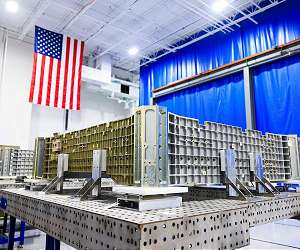
illustration only

Planet secures multi year satellite contract with Swedish Armed Forces

by Clarence Oxford
Los Angeles CA (SPX) Jan 13, 2026

Planet Labs PBC has signed a multi year, low nine figure agreement with the Swedish Armed Forces to deliver a suite of satellites, space based data and awareness solutions in support of Sweden's peace and security operations.

The contract gives Sweden ownership of a fleet of Planet satellites alongside access to high resolution imagery and intelligence solutions, providing a sovereign space capability without the cost and complexity of developing and operating proprietary systems.

Planet has standardized this satellite services model to offer governments a cost effective, low risk and rapid pathway to advanced space based capabilities, avoiding prohibitive capital investments and operational burdens associated with standalone constellations.

Over the last year, Planet has signed more than half a billion dollars in satellite services contracts, including agreements supporting the national security needs of Japan via JSAT and in collaboration with Germany, underscoring rising demand for commercial Earth observation in defense applications.

"Europe needs its own eyes, and Sweden is leading the way by rapidly securing its own, comprehensive space capability - helping achieve its own security objectives and assisting regional allies, like Ukraine, with timely, critical information," said Will Marshall, Planet CEO and Co Founder.

Marshall said Sweden is leveraging Planet's scaled production line and agile aerospace methodology to combine acquisition speed with long term sovereignty, gaining independent access to strategic geospatial intelligence without compromising on responsiveness or control.

Planet operates one of the world's largest Earth observation fleets and supplies governments and commercial customers with near daily imagery to monitor and detect change across land and ocean domains, helping promote transparency and security at regional and global scales.

The company has launched more than 600 satellites to date and currently delivers a near daily scan of the Earth's landmass and tens of millions of square kilometers of global oceans, complemented by high resolution, rapid tasking capabilities from its SuperDove, Tanager and Pelican constellations.

Planet has also announced its forthcoming Owl constellation, which is being designed to provide near daily 1 meter class imagery, further increasing the company's ability to supply detailed, frequently refreshed views of strategic locations worldwide.

Revenues from the Swedish Armed Forces agreement are expected to be recognized over several years, and Planet said the deal does not change its previously issued financial guidance for the fourth quarter of its 2026 fiscal year.

The company plans to use the added capacity from the expanded fleet to support both government and commercial users globally, broadening access to space based monitoring services across sectors including security, environmental monitoring, and infrastructure management.

Related Links
Planet Labs PBC
Military Space News at SpaceWar.com

Subscribe Free To Our Daily Newsletters
Tweet

RELATED CONTENT
The following news reports may link to other Space Media Network websites.
SPACEWAR
Sierra Space finishes first plane of SDA missile tracking satellite structures
Los Angeles CA (SPX) Jan 07, 2026
Sierra Space has completed the first nine satellite structures for the Space Development Agency's Tranche 2 Tracking Layer program, delivering Plane 1 of its contracted 18 satellites three months ahead of schedule. The milestone supports delivery and launch preparation timelines for the Tranche 2 Tracking Layer within the Proliferated Warfighter Space Architecture. Erik Daehler, Senior Vice President of Sierra Space Defense, said the company brought its Victory Works high-rate manufacturing facili ... read more

SPACEWAR
International Space Station crew to return early after astronaut medical issue

Startups go public in litmus test for Chinese AI

Second ESCAPADE spacecraft completes key trajectory fix on path to Mars

Overseas scholars drawn to China's scientific clout, funding

SPACEWAR
North Korea tests hypersonic missiles, says nuclear forces ready for war

Galileo satellites ride Ariane 6 to boost Europe navigation resilience

AI systems proposed to boost launch cadence reliability and traffic management

China debuts Long March 12A reusable rocket in Jiuquan test flight

SPACEWAR
The electrifying science behind Martian dust

Sandblasting winds sculpt Mars landscape

Thin ice may have protected lake water on frozen Mars

Curiosity's Nevado Sajama postcard captures Mars on the eve of conjunction

SPACEWAR
Tiangong science program delivers data surge

China tallies record launch year as lunar and asteroid plans advance

China harnesses nationwide system to drive spaceflight and satellite navigation advances

Shenzhou 21 crew complete eight hour spacewalk outside Tiangong station

SPACEWAR
ThinkOrbital raises seed funding to advance orbital defense and construction systems

Disaster losses drop in 2025, picture still 'alarming': Munich Re

Time-expanded network model cuts complexity in mega constellation launch planning

Southern Launch to Host Lux Aeterna Re-Entries South Australia

SPACEWAR
Planet delivers first light image from Pelican 6 satellite capturing Lhasa Gonggar Airport

New tool narrows the search for ideal material structures

Chlorine and hydrogen from waste brines without external power

Fast FPGA pulse shaping clears neutron gamma pile ups in nuclear detectors

SPACEWAR
Puffy young exoplanets reveal origin of super Earths

M dwarf plasma torus offers window into space weather and planetary habitability

We finally know how the most common types of planets are created

NASA selects industry partners to mature Habitable Worlds Observatory technologies

SPACEWAR
Jupiter's moon Europa has a seafloor that may be quiet and lifeless

Uranus and Neptune may be rock rich worlds

SwRI links Uranus radiation belt mystery to solar storm driven waves

Looking inside icy moons

Subscribe Free To Our Daily Newsletters


The content herein, unless otherwise known to be public domain, are Copyright 1995-2024 - Space Media Network. All websites are published in Australia and are solely subject to Australian law and governed by Fair Use principals for news reporting and research purposes. AFP, UPI and IANS news wire stories are copyright Agence France-Presse, United Press International and Indo-Asia News Service. ESA news reports are copyright European Space Agency. All NASA sourced material is public domain. Additional copyrights may apply in whole or part to other bona fide parties. All articles labeled "by Staff Writers" include reports supplied to Space Media Network by industry news wires, PR agencies, corporate press officers and the like. Such articles are individually curated and edited by Space Media Network staff on the basis of the report's information value to our industry and professional readership. Advertising does not imply endorsement, agreement or approval of any opinions, statements or information provided by Space Media Network on any Web page published or hosted by Space Media Network. General Data Protection Regulation (GDPR) Statement Our advertisers use various cookies and the like to deliver the best ad banner available at one time. All network advertising suppliers have GDPR policies (Legitimate Interest) that conform with EU regulations for data collection. By using our websites you consent to cookie based advertising. If you do not agree with this then you must stop using the websites from May 25, 2018. Privacy Statement. Additional information can be found here at About Us.