





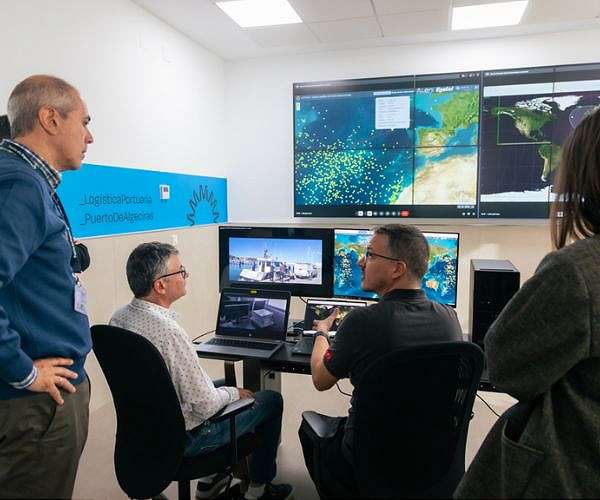
In the first pilot, SATMAR supported message exchanges between a vessel and the port control center to adjust transit times, cut emissions, and improve coordination of ship movements. A second pilot used a drifting vessel as a proxy for an offshore buoy to send environmental and oceanographic measurements through VDES, illustrating how the system can support low-cost sensors over a secure maritime communications channel.
Alen Space also demonstrated long-range reception of AIS messages with SATMAR, allowing the satellite to track vessels beyond the reach of coastal monitoring stations. This capability extends conventional AIS coverage and supports traffic awareness in open-ocean regions.
Before the end of 2025, a final pilot in this campaign is planned with Oritia and Boreas, which will deploy a VDES transmission terminal at one of its meteorological stations in the Bay of Algeciras. Alen Space, Egatel, and additional partners plan further demonstration campaigns and pilots across other ports and use cases in the coming months.
SATMAR has been in orbit for six months after launching on 23 June 2025 aboard a SpaceX Falcon 9 rocket. Shortly after launch, the mission team established first contact and began in-orbit validation of the satellite's subsystems and payloads.
The mission's main objective is to demonstrate the feasibility of the VDES communication standard in orbit for the maritime sector, with the expectation that VDES will eventually supersede AIS. VDES supports bidirectional satellite links in the VHF band, including remote offshore areas, and is designed to improve the efficiency, safety, and environmental performance of maritime traffic while enabling new digital services in port environments.
SATMAR is a 6U nanosatellite developed entirely by Alen Space as part of a wider project that includes Egatel as a partner and the technology center Gradiant as a collaborator. The project receives funding from the Ports 4.0 program promoted by Puertos del Estado and the Spanish Port Authorities to support new applications for the maritime sector.
The satellite operates over Spain and adjacent waters, with use cases co-developed with the Port Authority of the Bay of Algeciras and maritime companies such as Oritia and Boreas. These scenarios focus on traffic management, environmental monitoring, and other operational services that can benefit from space-based VDES connectivity.
Guillermo Lamelas, CEO of Alen Space, highlighted the outcome of the initial pilots: "SATMAR has demonstrated its capability to provide bidirectional communications under the VDES standard in a real maritime environment. The validated functionalities are expected to deliver a substantial improvement in the efficiency, safety, and sustainability of maritime traffic, while simultaneously enabling new opportunities for the provision of digital services at sea. Satellite-based VDES ensures that vessels can maintain continuous communications with shore even in the high seas, receive emergency alerts, and access up-to-date operational information for route optimization, thereby contributing to reduced fuel consumption and associated emissions."
Related Links
Alen Space
Earth Observation News - Suppiliers, Technology and Application
| Subscribe Free To Our Daily Newsletters |
| Subscribe Free To Our Daily Newsletters |








