24/7 Space News
MARSDAILY
Maven stays silent after routine pass behind Mars
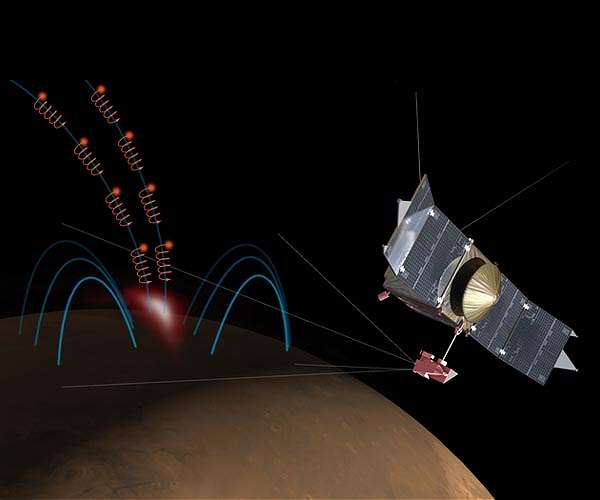
illustration only

Maven stays silent after routine pass behind Mars

by Simon Mansfield
Sydney, Australia (SPX) Dec 14, 2025

NASA engineers are continuing efforts to restore contact with the Mars Atmosphere and Volatile EvolutioN (MAVEN) orbiter after the spacecraft fell silent during a routine pass behind Mars on December 6 2025. Before the loss of signal, telemetry from MAVEN indicated that the spacecraft and its subsystems were operating within expected parameters as it approached occultation by the planet.

As MAVEN moved behind Mars, communications with the Deep Space Network (DSN) cut off as expected, but controllers did not reacquire the downlink when the orbiter reappeared from the planet's shadow. The team declared a spacecraft emergency and began continuous DSN listening and commanding sessions in an attempt to re-establish at least a carrier signal from the orbiter.

Mission controllers are reviewing the last data packets received before occultation to narrow possible fault scenarios and identify any indications that the spacecraft may have entered a protective configuration. One working hypothesis is that MAVEN transitioned into a safe or degraded mode that altered its attitude or antenna pointing, leaving its high-gain antenna misaligned with Earth and preventing normal two-way communication.

Engineers are sending a sequence of contingency commands that target known safe-mode and attitude-control recovery paths, while keeping DSN antennas on standby to detect any response from the orbiter. The analysis includes checks on power generation, thermal conditions and attitude-control behavior inferred from pre-loss telemetry, as well as simulations of how various onboard failures would affect MAVEN's ability to point its antennas and solar arrays.

MAVEN has been in Mars orbit for more than a decade, studying how the solar wind and radiation strip gas from the Martian upper atmosphere and shape the planet's long-term climate evolution. The spacecraft's instruments have measured interactions between the ionosphere, exosphere and incoming space environment, providing constraints on escape rates of key atmospheric species and on how atmospheric loss varied over time.

In addition to its science mission, MAVEN has served as a key communications relay for surface missions including the Curiosity and Perseverance rovers, forwarding data between the Martian surface and Earth. With the orbiter currently offline, other spacecraft such as Mars Reconnaissance Orbiter, Odyssey and ESA's Trace Gas Orbiter are carrying a larger share of relay duties to maintain science return from ongoing missions on the ground.

If controllers cannot recover the spacecraft, Mars atmospheric science would lose a platform that has provided continuous upper-atmosphere and space-weather measurements through changing solar conditions and multiple dust seasons. The mission's long baseline of observations has been central to understanding how present-day escape processes connect to the thicker atmosphere Mars likely possessed billions of years ago.

NASA has not announced a timeline for declaring MAVEN unrecoverable and continues to treat the anomaly as an active recovery case. Future updates are expected once engineers either detect a signal from the orbiter or exhaust planned commanding and listening campaigns using the Deep Space Network.

Related Links
NASA MAVEN Mars Atmosphere and Volatile EvolutioN mission
Mars News and Information at MarsDaily.com
Lunar Dreams and more

Subscribe Free To Our Daily Newsletters
Tweet

RELATED CONTENT
The following news reports may link to other Space Media Network websites.
MARSDAILY
Martian sound study models acoustic signals in Jezero crater
Los Angeles CA (SPX) Dec 05, 2025
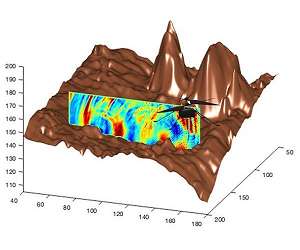
Acoustic signals have been important markers during NASA's Mars missions. Measurements of sound can provide information both about Mars itself - such as turbulence in its atmosphere, changes in its temperature, and its surface conditions - and about the movement of the Mars rovers. Using these sound measurements to the best extent possible requires an accurate understanding of how sound propagates on Mars. Charlie Zheng, a professor of mechanical and aerospace engineering at Utah State University, ... read more

MARSDAILY
Lodestar Space wins SECP support to advance AI satellite awareness system

ISS to change commanders before Soyuz crew leaves orbit

Micro nano robots aim to cut carbon buildup in closed life support systems

NASA extends ISS National Lab management contract through 2030

MARSDAILY
LandSpace reviews booster loss after Zhuque-3 reusable rocket test

UK plasma thruster test positions Pulsar Fusion for larger satellite propulsion

Neutron Hungry Hippo fairing completes qualification ahead of first launch

EU dismisses 'completely crazy statements' after Musk attack

MARSDAILY
Martian sound study models acoustic signals in Jezero crater

NASA JPL Unveils Rover Operations Center for Moon, Mars Missions

Martian butterfly crater reveals low angle impact and buried lava history

Bacterial partnership offers pathway to produce Mars regolith bricks for future habitats

MARSDAILY
Experts at Hainan symposium call for stronger global space partnership

Foreign satellites ride Kinetica 1 on new CAS Space mission

Triple Long March launches mark record day for Chinese space program

China prepares Qingzhou cargo ship for low cost resupply flights

MARSDAILY
Beyond Gravity positions new modular satellite platform for European LEO missions

From 1Mbps to 200: Starlink's Gaming Speed Revolution Explained

Private capital targets mission-critical software power and platforms in new space economy

MDA Space plans C250 million senior unsecured note issue maturing 2030

MARSDAILY
What is the appeal of playing space-themed video games?

ONE Bow River backs Odyssey Space Research growth in flight software and mission engineering

D-Orbit launches dual orbital transportation missions, passes 200-payload milestone

Space operators urged to share costs of clearing orbital debris

MARSDAILY
Subaru OASIS survey uncovers massive planet and brown dwarf

The bacteria that wont wake up found in spacecraft cleanrooms

Supernova mixing traced as source of key life elements

RISTRETTO spectrograph cleared for Proxima b atmospheric hunt

MARSDAILY
Uranus and Neptune may be rock rich worlds

SwRI links Uranus radiation belt mystery to solar storm driven waves

Looking inside icy moons

Saturn moon mission planning shifts to flower constellation theory

Subscribe Free To Our Daily Newsletters


The content herein, unless otherwise known to be public domain, are Copyright 1995-2024 - Space Media Network. All websites are published in Australia and are solely subject to Australian law and governed by Fair Use principals for news reporting and research purposes. AFP, UPI and IANS news wire stories are copyright Agence France-Presse, United Press International and Indo-Asia News Service. ESA news reports are copyright European Space Agency. All NASA sourced material is public domain. Additional copyrights may apply in whole or part to other bona fide parties. All articles labeled "by Staff Writers" include reports supplied to Space Media Network by industry news wires, PR agencies, corporate press officers and the like. Such articles are individually curated and edited by Space Media Network staff on the basis of the report's information value to our industry and professional readership. Advertising does not imply endorsement, agreement or approval of any opinions, statements or information provided by Space Media Network on any Web page published or hosted by Space Media Network. General Data Protection Regulation (GDPR) Statement Our advertisers use various cookies and the like to deliver the best ad banner available at one time. All network advertising suppliers have GDPR policies (Legitimate Interest) that conform with EU regulations for data collection. By using our websites you consent to cookie based advertising. If you do not agree with this then you must stop using the websites from May 25, 2018. Privacy Statement. Additional information can be found here at About Us.