





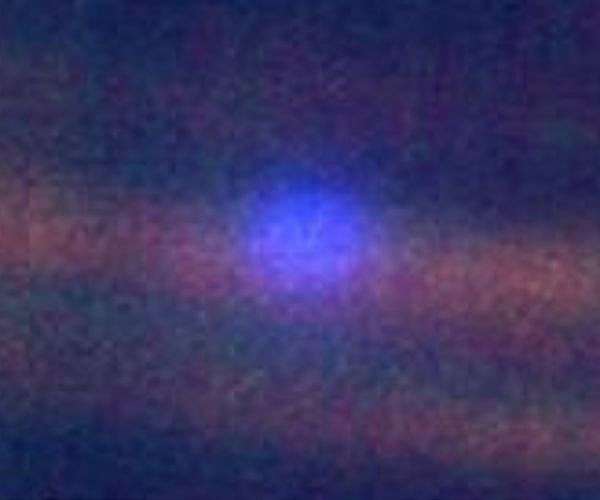
Europa Clipper launched in 2024 and is scheduled to arrive at Jupiter in 2030, where it will orbit the planet and conduct 49 close flybys of the icy moon Europa to study its potential habitability. The UVS instrument records ultraviolet light to determine the composition of Europa's thin atmosphere and surface ices, and those same capabilities were redirected to characterize gases and dust around 3I/ATLAS.
Within about a week of the discovery of 3I/ATLAS, analysts at NASA's Jet Propulsion Laboratory calculated the comet's orbit through the solar system. The Europa Clipper team then identified a November observing window when the spacecraft could target the comet after the best Mars-based viewing period and while the Sun blocked most Earth-based observations.
During this interval, Europa Clipper bridged the gap between Mars observations in late September and later Earth-based campaigns, providing continuous coverage of the comet's evolution. The comet's apparent path crossed the line between Europa Clipper and the Sun, giving UVS a viewing geometry that differs from most comet observations and allowing the team to probe the structure of the surrounding material from a complementary direction.
Comets typically display a dust tail that trails along their orbit and a plasma tail that points away from the Sun. From its position, Europa Clipper's UVS viewed both tails largely from behind, looking back toward the nucleus and the coma, the cloud of gas enveloping the comet's core.
Additional data from the SwRI-led UVS instrument on ESA's Jupiter Icy Moons Explorer (JUICE) are expected to supplement the Europa Clipper observations, because JUICE recorded a more conventional anti-sunward view of 3I/ATLAS at the same time. By combining these spacecraft perspectives with Earth-based data, researchers aim to reconstruct the three-dimensional structure and orientation of the comet's dust and plasma tails.
"We're excited that this opportunity to view another target on the way to Jupiter was completely unexpected," said SwRI's Dr. Kurt Retherford, the principal investigator for Europa-UVS. "Our observations have allowed for a unique and nuanced view of the comet."
"We're hopeful that this new view, along with observations from Earth-based assets and other spacecraft, will help us to piece together a more complete understanding of the tails' geometries," said SwRI's Dr. Thomas Greathouse, co-deputy principal investigator of Europa-UVS.
Europa-UVS detected oxygen, hydrogen and dust-related spectral features in the ultraviolet data, consistent with other observations that indicate 3I/ATLAS went through a phase of elevated outgassing shortly after its closest approach to the Sun. These measurements show that the comet was actively releasing volatile gases and dust as it moved away from perihelion.
"Europa-UVS is particularly adept at measuring fundamental transitions from atoms and molecules," Retherford said. "We can see gases come off the comet, and water molecules break apart into hydrogen and oxygen atoms."
The instrument's sensitivity to these atomic signatures allows the Europa Clipper team to quantify the relative amounts of hydrogen, oxygen and dust-related material in the coma and tails. By comparing the behavior and composition of 3I/ATLAS with those of comets formed in the solar system, scientists can test how material from another planetary system responds to the Sun's radiation and solar wind.
"Understanding the composition of the comet and how readily these gases are emitted can give us a clearer view of the comet's origin and how it may have evolved during transit from elsewhere in the galaxy to our solar system," SwRI's Dr. Tracy Becker, co-deputy principal investigator of Europa-UVS said. "What are the chemical processes at play, and how can we unravel the comet's origin in its own star system? Were those processes similar to how we believe our solar system formed? Those are big questions."
Mission managers note that the 3I/ATLAS campaign adds an interstellar science target to a spacecraft primarily designed to investigate an ocean-bearing moon of Jupiter. The same ultraviolet techniques that will be used to study Europa's atmosphere and potential plumes are now being applied to investigate the composition and physics of material from beyond the solar system.
Related Links
Southwest Research Institute
Stellar Chemistry, The Universe And All Within It
| Subscribe Free To Our Daily Newsletters |
| Subscribe Free To Our Daily Newsletters |








