24/7 Space News
CHIP TECH
Quantum hardware roadmap highlights scaling hurdles on path to everyday applications
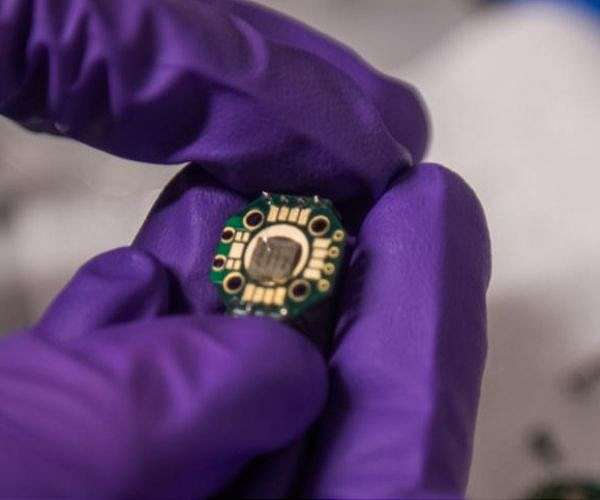
illustration only

Quantum hardware roadmap highlights scaling hurdles on path to everyday applications

by Meredith Fore for UChicago News
Chicago IL (SPX) Dec 05, 2025

Quantum technology is accelerating out of the lab and into the real world, and a new article in Science argues that the field now stands at a turning point - one that is similar to the early computing age that preceded the rise of the transistor and modern computing.

The article, authored by scientists from University of Chicago, Stanford University, the Massachusetts Institute of Technology, the University of Innsbruck in Austria, and the Delft University of Technology in the Netherlands, offers an assessment of the rapidly advancing field of quantum information hardware, outlining the major challenges and opportunities shaping scalable quantum computers, networks, and sensors. The paper appears in the December 4, 2025, issue of Science.

"This transformative moment in quantum technology is reminiscent of the transistor's earliest days," said lead author David Awschalom, the Liew Family Professor of molecular engineering and physics at the University of Chicago, and director of the Chicago Quantum Exchange and the Chicago Quantum Institute. "The foundational physics concepts are established, functional systems exist, and now we must nurture the partnerships and coordinated efforts necessary to achieve the technology's full, utility-scale potential. How will we meet the challenges of scaling and modular quantum architectures?"

Over the past decade, quantum technologies have transitioned from fundamental laboratory demonstrations to systems capable of enabling early real-world applications in areas such as communication, sensing, and computing. The authors note that this rapid maturation has been driven by the same tri-sector collaboration that fueled the rise of microelectronics: strong ties among academia, government, and industry.

Comparing platforms

The article surveys the current state of six leading quantum hardware platforms, including superconducting qubits, trapped ions, spin defects, semiconductor quantum dots, neutral atoms, and optical photonic qubits. To compare the progress between these platforms across the applications of computing, simulation, networking, and sensing, the authors used large language AI models such as ChatGPT and Gemini to assess the relative technology-readiness level (TRL) of each. TRLs evaluate the maturity of a technology on a scale of 1 (basic principles observed in a lab environment) to 9 (proven in an operational environment), though a higher TRL could still apply to an early-stage technology that has demonstrated a higher level of system sophistication.

The results offer a comparative snapshot of the field's progress. Although advanced prototypes have demonstrated system operation and public cloud access, their raw performance remains early in development. For example, many meaningful applications, including large-scale quantum chemistry simulations, could require millions of physical qubits with error performance far beyond what is technologically viable today.

Context, therefore, is essential when evaluating technology readiness, said coauthor William D. Oliver, the Henry Ellis Warren (1894) Professor of electrical engineering and computer science, professor of physics, and director of the Center for Quantum Engineering at MIT.

"While semiconductor chips in the 1970s were TLR-9 for that time, they could do very little compared with today's advanced integrated circuits," he said. "Similarly, a high TRL for quantum technologies today does not indicate that the end goal has been achieved, nor does it indicate that the science is done and only engineering remains. Rather, it reflects a significant, yet relatively modest, system-level demonstration has been achieved - one that still must be substantially improved and scaled to realize the full promise."

Assessing challenges by looking to history

The highest TRL scores went to superconducting qubits for quantum computing, neutral atoms for quantum simulation, photonic qubits for quantum networking, and spin defects for quantum sensing.

The authors identify several overarching challenges that must be addressed for quantum systems to scale effectively. Significant advancements in materials science and fabrication are required to enable consistent, high-quality, mass-producible devices that can be manufactured through reliable and cost-effective foundry processes. Wiring and signal delivery remain a central engineering bottleneck; most quantum platforms still require individual control channels for most qubits, and simply increasing the number of wires is not sustainable as these systems attempt to scale to the millions of qubits. (Similar problems were faced in the 1960s by computer engineers, known as the tyranny of numbers.) Power delivery, temperature management, automated calibration, and system control all pose related challenges, which will demand continuous advances as systems grow in complexity.

The article connects these engineering needs to lessons from the history of computing. Many of the most transformative developments in classical electronics - from the introduction of lithography to novel transistor materials - took years or decades to transition from laboratory research to industrial deployment. The authors argue that progress in quantum technologies will follow a similar arc. They emphasize the importance of system-level, top-down design strategies, a shared body of open scientific knowledge that avoids premature siloing, and...patience.

"Patience has been a key element in many landmark developments," they write, "and points to the importance of tempering timeline expectations in quantum technologies."

Research Report:Challenges and opportunities for quantum information hardware

Related Links
Chicago Quantum Exchange
Computer Chip Architecture, Technology and Manufacture
Nano Technology News From SpaceMart.com

Subscribe Free To Our Daily Newsletters
Tweet

RELATED CONTENT
The following news reports may link to other Space Media Network websites.
CHIP TECH
Single-photon switch could enable photonic computing
West Lafayette, IN (SPX) Nov 21, 2025
There are few technologies more fundamental to modern life than the ability to control light with precision. From fiber-optic communications to quantum sensors, the manipulation of photons underpins much of our digital infrastructure. Yet one capability has remained frustratingly out of reach: controlling light with light itself at the most fundamental level using single photons to switch or modulate powerful optical beams. Now, researchers at Purdue University have achieved this long-sought miles ... read more

CHIP TECH
NASA celebrates a decade of student contributions to space crop production

Lunasa Space funding backs shared in orbit lab platform

Station 10 as Soyuz crew arrives amid Baikonur launch pad crisis

High-flying tech hits potholes in India's Silicon Valley

CHIP TECH
LandSpace ZQ 3 Y1 rocket reaches orbit on first reusable flight attempt

SyLEx test rocket gives France new suborbital launch option

South Korea advances Nuri rocket program with fourth orbital launch

AtSpace A01 reaches record suborbital altitude from Koonibba Test Range

CHIP TECH
Second CHAPEA Crew Begins Extended Mars Habitat Mission at NASA Johnson

Martian dust devils found to generate electrical sparks

NASA Orbiter Shines New Light on Long-Running Martian Mystery

ESCAPADE spacecraft capture first images while en route to Mars

CHIP TECH
China consolidates new commercial space regulator and industry roadmap

Beijing space lab targets orbital data centers for AI era

Successful launch preparations underway for Shenzhou XXII resupply mission

China launches Shenzhou-22 early for stranded space station crew

CHIP TECH
AST SpaceMobile increases US manufacturing capacity with new sites for next generation satellite production

Spire Global faces NYSE noncompliance as contract momentum collides with reporting delay

Europe secures record space budget to boost independence

UK government commits GBP 6.9 million to boost satellite communications sector

CHIP TECH
Meta shares jump on report company slashing VR spending

Exploring Easter Island Quarry Now Possible with Detailed 3D Model

Faraday Effect Reveals Magnetic Role of Light in New Study

In Data Center Alley, AI sows building boom, doubts

CHIP TECH
Machine learning tool distinguishes signs of life from non-living compounds in space samples

Moss spores withstand long term exposure outside space station

Water production on exoplanets revealed by pressure experiments

Exoplanet map initiative earns NASA support for University of Iowa physicist

CHIP TECH
Looking inside icy moons

Saturn moon mission planning shifts to flower constellation theory

Could these wacky warm Jupiters help astronomers solve the planet formation puzzle?

Out-of-this-world ice geysers on Saturn's Enceladus

Subscribe Free To Our Daily Newsletters


The content herein, unless otherwise known to be public domain, are Copyright 1995-2024 - Space Media Network. All websites are published in Australia and are solely subject to Australian law and governed by Fair Use principals for news reporting and research purposes. AFP, UPI and IANS news wire stories are copyright Agence France-Presse, United Press International and Indo-Asia News Service. ESA news reports are copyright European Space Agency. All NASA sourced material is public domain. Additional copyrights may apply in whole or part to other bona fide parties. All articles labeled "by Staff Writers" include reports supplied to Space Media Network by industry news wires, PR agencies, corporate press officers and the like. Such articles are individually curated and edited by Space Media Network staff on the basis of the report's information value to our industry and professional readership. Advertising does not imply endorsement, agreement or approval of any opinions, statements or information provided by Space Media Network on any Web page published or hosted by Space Media Network. General Data Protection Regulation (GDPR) Statement Our advertisers use various cookies and the like to deliver the best ad banner available at one time. All network advertising suppliers have GDPR policies (Legitimate Interest) that conform with EU regulations for data collection. By using our websites you consent to cookie based advertising. If you do not agree with this then you must stop using the websites from May 25, 2018. Privacy Statement. Additional information can be found here at About Us.