

|
|
PREVIOUS ISSUE
MARSDAILY SPACEMART SPACEWAR SPACE TRAVEL TERRADAILY ASTRONAUTIX EMAIL US /ABOUT US SPACEDAILY FORUMS Paid Shopping Links 
|
 "Heavy Metal" Snow On Blazing Venus Is Lead Sulfide
St. Louis - Feb 11, 2004 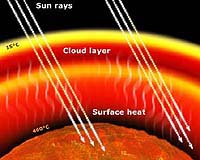 Lead sulfide - also known by its mineral name, galena - is a naturally occurring mineral found in Missouri, other parts of the world, and now. . .other parts of the solar system. That's because recent thermodynamic calculations by researchers at Washington University in St. Louis provide plausible evidence that "heavy metal snow," which blankets the surface of upper altitude Venusian rocks, is composed of both lead and bismuth sulfides.
 |

|
"Aloha, Mars": The Ready Rock Reckoner Model Of Mars Honolulu - Feb 11, 2004
Right after the Spirit rover landed on Mars, I made a flippant remark to my friend Dr. X to the effect that "Gusev Crater is one big basalt flow, not a lakebed like they think. All the rocks in the rover pictures look just like the ones in my neighbor's garden wall." The Imperial Martian Wardrobe Malfunctions  Scottsdale - Feb 11, 2004
Disappearing clothing seems to be in the news these days. From Janet Jackson's bustier to the Emperor's space-policy clothes, more seems to be less and less all the time writes John Carter McKnight in his latest installment of The Spacefaring Web. |
An Odyssey of Mars Science: Part 3 Sacramento - Feb 12, 2004
The lead time on Martian science is measured in years as newly available data is sifted through and tantalizing clues to the story of Mars are uncovered and shared with the rest of the science world. In an extended series of reports based around the 2003 Lunar and Planetary Science Conference, Bruce Moomwaw takes SpaceDaily readers through a wide range of science papers and poster sessions to make for an Odyssey of Martian science. |
EU Commission Presents GMES Concept To European Parliament Brussels - Feb 11, 2004
On 3 February 2004, the European Commission presented a Communication to the European Parliament and the Council on the 'Global Monitoring for Environment and Security' (GMES) initiative. Its focus is a new Action Plan, aimed at establishing a working GMES capacity by 2008. Africa to Atlantic, Dust to Dust 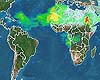 Greenbelt - Feb 11, 2004
The other side of the world could be closer than you think. Little pieces of Earth, particles of dust, can travel halfway around the globe and alter air quality, affecting animals, plants and weather. |
How Plants Split Water Could Provide Key To Our Future Energy Needs London - Feb 11, 2004
The possibility of using the Earth's abundant supply of water as a cheap source of hydrogen could be helped by mimicking the method plants use to split water. Ultra Low-Profile Plastic Bearing Resolves Sat TV Antenna Problems  Foxborough - Feb 11, 2004
Sarnatech has teamed with KVH to produce two custom-designed parts that allow KVH's satellite TV antennas to be packaged in less than five inches and receive more than 300 TV and music channels quickly and smoothly as a motor vehicle is in motion. |
Lockheed Martin Opens Global Vision Center at San Diego SPAWAR Facility San Diego - Feb 11, 2004
Lockheed Martin today opened a new Global Vision Center at the U.S. Navy's Space and Naval Warfare Systems Command (SPAWAR) in San Diego. The Global Vision Center will be used to develop, test and demonstrate advanced Command, Control, Communications, Computers, Intelligence, Surveillance and Reconnaissance (C4ISR) technology. ATK Orion Motors Power Orbital Sciences Interceptor Boost Vehicle 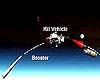 Minneapolis - Feb 11, 2004
Alliant Techsystems (ATK) supplied three solid rocket motors used in the successful flight test of an Orbital Sciences Corporation Ground-based Midcourse Defense (GMD) interceptor boost vehicle. Astronomers Unravel A Mystery From The Dark Ages  Cardiff - Feb 11, 2004
Scientists at Cardiff University, UK, believe they have discovered the cause of crop failures and summer frosts some 1,500 years ago � a comet colliding with Earth. |
Researchers Pinpoint Brain Areas That Process Reality, Illusion by Tony Fitzpatrick
St. Louis - Feb 11, 2004 Marvin Gaye wailed in the '60s hit "Heard it through the Grapevine" that we're supposed to believe just half of what we see. Biomedical engineer Daniel Moran, Ph.D., and University of Pittsburgh researchers, have identified areas of the brain where reality and illusion are processed. Comets Spread Earth-Life Around Galaxy, Say Scientists  Cardiff - Feb 11, 2004
If comets hitting the Earth could cause ecological disasters, including extinctions of species and climate change, they could also disperse Earth-life to the most distant parts of the Galaxy. Columbia To Establish Government Biological Information Site  New York - Feb 11, 2004
Columbia University Senior Research Scientist Robert Worrest, who will direct the development of the new NBII northeast information node, has more than 25 years of ecological research and assessment experience related to environmental change and variability. |
Gilat Selected to Deploy Africa's First Modernized Postal System Petah Tikva - Feb 11, 2004
Gilat's Spacenet subsidiary has been selected by Posta Kenya to supply a satellite-based communications DialAw@y IP network, linking Kenyan postal offices throughout the country. Gilat's DialAw@y IP platform will be installed in the postal offices, each servicing a LAN connecting three PCs. PlanetLink Field Tests GPS Tracker  Cumming - Feb 11, 2004
PlanetLink Communications Inc., a provider of satellite-based products and services announced today the launch of the field-testing phase for its PlanetTRAKS GPS product. Twelve PlanetTRAKS units will be installed on personal vehicles owned by people affiliated with PlanetLink and Karta Technologies, its technology development partner -- 6 in San Antonio, Texas and 6 in the Atlanta area. |
Gravitational Lens Reveals Heart Of A Distant Galaxy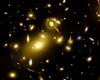 Boston - Feb 11, 2004
Many examples are known where a galaxy acts as a gravitational lens, producing multiple images on the sky of a more distant object like a bright quasar hidden behind it. But there has been a persistent mystery for over 20 years: Einstein's general theory of relativity predicts there should be an odd number of images, yet almost all observed lenses have only 2 or 4 known images. Louisiana Professor Receives $1.8 Million For Cybersecurity Research  Baton Rouge - Feb 11, 2004
The NSF has awarded a $1.8 million grant to Peter Chen for his research on "cybersecurity" methods that could aid law enforcement and security agencies in tracking and capturing terrorists and other types of criminals. |
|
| The contents herein, unless otherwise known to be public domain, are Copyright 1995-2004 - SpaceDaily. AFP Wire Stories are copyright Agence France-Presse ESA Portal Reports are copyright European Space Agency. Additional copyrights may apply in whole or part to other bona fide parties. Advertising does not imply endorsement, agreement or approval of any opinions, statements or information provided by SpaceDaily on any web page published or hosted by SpaceDaily. Privacy Statement |