SpaceDaily.com
Jan 26, 2004
SEARCH SPACEDAILY
 

Paid Links
get help for eating disorders and substance abuse
Making Space For Everyone
Opportunity Lands Downrange
Click for desktop
 Pasadena - Jan 26, 2004
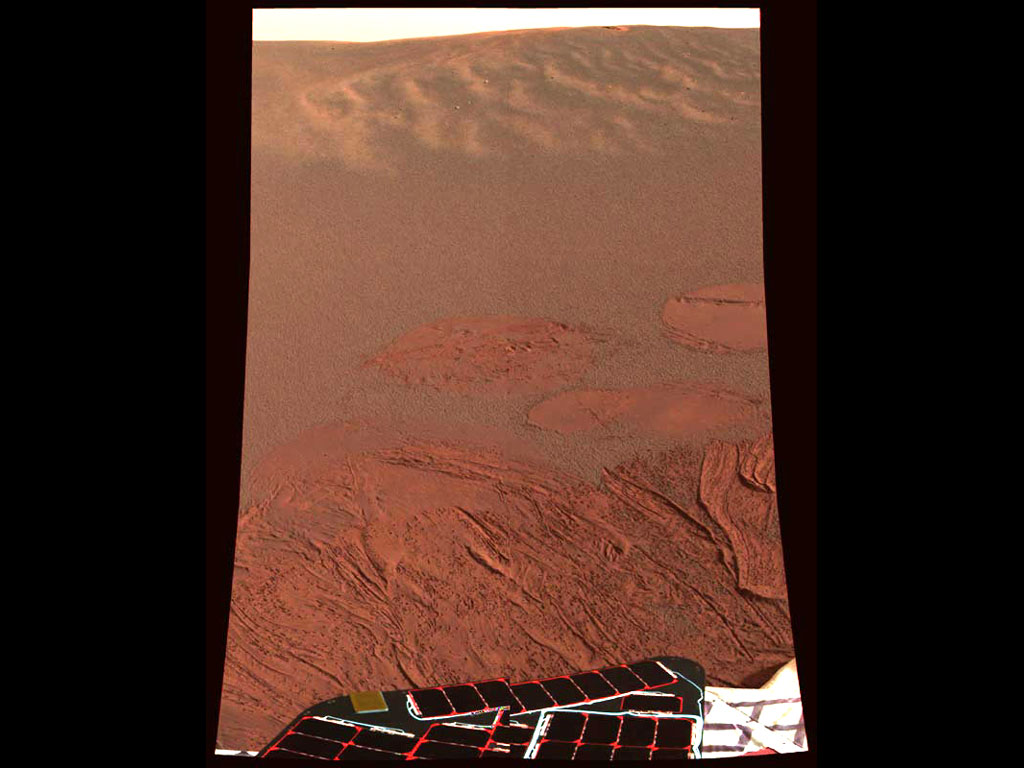
In the pre-dawn hours of sol 2, Opportunity sent back to Earth dramatic new images of Meridiani Planum. Mission scientists continued to be intrigued and astonished by what they see. Included in the new images were the three low-resolution Descent Image Motion Estimation System images taken by the lander during its descent through the martian atmosphere.
  • Previous Spirit Updates Jan 23 and Jan 22
  • Virus traffic is up strongly today. Apx 30% of email traffic coming in today at SpaceDaily had a virus attached. Take extra care with attachments this new one has a very smart AI in it that creates real world subject lines better than ever before. Check Symantec or other supplier for assistance.
  • Bringing Space Home, When Your Mission Depends On It
  • Latest News Headlines
  • SUBSCRIBE TO SPACEDAILY NEWSLETTER
    SubscribeUnsubscribe
      
    Commercial Applications of Space Technology: A Japanese Perspective
    Tokyo - Jan 21, 2004
    Organic Waste Recycling System is one of JAXA's challenging projects. Using space technology, JAXA is trying to develop an garbage disposal system, which could be applied to environmentally friendly recycling on the earth of organic waste materials - such as food waste, livestock manure.

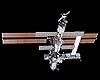
    Teledyne Wins NASA Space Station Cargo Mission Contract
    Los Angeles - Jan 21, 2004
    Teledyne Technologies has won a subcontract from Lockheed Martin Space Operations of Houston in support of ISS cargo services.
    No Hostage to Earth's Geology
    Pasadena - Jan 21, 2004
    "I started my career [studying] lunar samples," said Dr. Dave Des Marais, who is from NASA's Ames Research Center and lead scientist for the Spirit rover's long-range planning group. "So this is a repeat of that rewarding experience..Beyond the challenge of adjusting in the first week, the big challenges are in dealing with the outside world, being careful when calling people. We all wear two watches on our wrist--one for Mars' time, the other for Earth. [For science, the challenge] is not to be hostage to having learned geology on Earth."

    Sediment Samples Show How Plants Would Fare In Hotter, Drier Future

    Champaign - Jan 21, 2004
    Sediment samples dating back thousands of years and taken from under the deep water of West Olaf Lake in Minnesota have revealed an unexpected climate indicator that can be factored into future projections.
    SUBSCRIBE TO SPACEDAILY NEWSLETTER
    SubscribeUnsubscribe
      
    Cassini/Huygens Closing In On The Lord Of The Rings
    Paris - Jan 21, 2004
    This time next year, ESA's Huygens spaceprobe will be descending through the atmosphere of Saturn's largest moon, becoming the first spacecraft to land on a body in the outer Solar System.
    MORE SPACE.WIRE NEWS
    Florida Tech Researching Hacker Models
    Melbourne, Fl - Jan 21, 2004
    Blaster, Slammer and Code Red. These Internet worms in the past year have cost billions of dollars in damage after causing software engineers worldwide to scramble to stop them. Such worms, computer viruses and hacker-introduced program bugs are the targets of Florida Tech researchers who recently received a $70,000 Air Force Research Laboratory grant to model all possible hacker exploits.
    Study Pinpointing Origins Of Siberian Peat Bogs Raises Concerns

    Arlington - Jan 21, 2004
    Massive Siberian peat bogs, widely known as the permanently frozen home of untold kilometers of moss and uncountable hordes of mosquitoes, also are huge repositories for gases that are thought to play an important role in the Earth's climate balance, according to newly published research by a team of U.S. and Russian scientists in the Jan. 16 edition of the journal Science.
    Squirty Star Imitates Black Hole
    Canberra - Jan 19, 2004
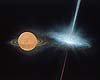
    Scientists using CSIRO's Australia Telescope Compact Array, a radio synthesis telescope in New South Wales, Australia, have seen a neutron star spitting out a jet of matter at very close to the speed of light. This is the first time such a fast jet has been seen from anything other than a black hole.
    CMS Superconducting Magnet Shipped To CERN

    Genova - Jan 21, 2004
    The first module of the CMS superconducting magnet is leaving towards Cern. It is a huge solenoid, which will hold the world record of stored energy. The first module of the five constituting the CMS superconducting magnet is sailing on January 21st of from Genova port to Cern.
    SUBSCRIBE TO TERRADAILY EXPRESS
    SubscribeUnsubscribe
      
    Gene May Be Key To Evolution Of Larger Human Brain
    Chevy Chase - Jan 21, 2004
    Howard Hughes Medical Institute researchers have identified a gene that appears to have played a role in the expansion of the human brain's cerebral cortex -- a hallmark of the evolution of humans from other primates.

    Eagle Broadband Signs Deal For Orb' Phone Exchange Data Solution
    San Diego - Jan 21, 2004
    Eagle Broadband, Inc. announced Tuesday that Science Applications International Corporation (SAIC) has signed a distribution agreement to sell Eagle's Orb' Phone Exchange satellite communications platform to government, military, homeland security and commercial customers worldwide.

    A Golden Ireland Snapped From Orbit
    Toronto - Jan 21, 2004
    European Gold Resources has today released one of a series of detailed satellite images that cover the whole of its 189 sq km exclusive gold license in County Tyrone, Ireland. The image released relates to land over which planning permission has already been granted for gold extraction.

    Monitoring Nuclear Explosions: Why, How, and What is Learned?
    New York - Jan 21, 2004
    A presentation by Dr. Paul G. Richards, Columbia University Recent headlines have revealed the fragility of the international bans on nuclear weapons proliferation and testing. Pakistan has been accused of indiscriminately disclosing nuclear weapons technology.

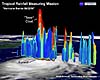
    A "Hot Tower" Above The Eye Can Make Hurricanes Stronger
    Greenbelt - Jan 21, 2004
    They are called hurricanes in the Atlantic, typhoons in the West Pacific, and tropical cyclones worldwide; but wherever these storms roam, the forces that determine their severity now are a little less mysterious. NASA scientists, using data from the Tropical Rainfall Measuring Mission (TRMM) satellite, have found "hot tower" clouds are associated with tropical cyclone intensification.

    SUBSCRIBE TO SPACEWAR EXPRESS
    SubscribeUnsubscribe
      
  • Space Industry Could See $90+ Billion Market This Year
  • XM Satellite Radio Announces Public Offering
  • EU welcomes positive US signals on Galileo satellite project
  • NASA to stop servicing Hubble telescope
  • 60% of Americans oppose Bush's mission to moon, Mars
  • NASA Conducts HQ Management Re/alignment
  • Bush Announces New Vision for Space Exploration
  • Where's The Beef
  • Is Space Exploration Worth the Cost?
  • SMART-1 Set For Payload Commissioning
  • SES Global Increases International Focus With Worldsat
  • Stardust Pelted In Surprise Burst Of Bigger Dust
  • Not So Cold And Not So Warm
  • Another Opportunity To Go Roving On Mars Approaches
  • Europe and US Team Up For Joint Martian Research
  • Golf Carts Today, Mini-Van In 2009?
  • Have Robot, Have Map Let's Go
  • Satellite Surface Wind Data Helps Improve Forecasts
  • Hard-To-Reach Measurement Now Within Grasp
  • One Year In Orbit For AlSAT-1 First DMC Satellite
  • China Plans 10 Launches This Year: Eyes GEO Market
  • The European Tactical Military Communications Market
  • Libya sought deal with US in 1992: ex-senator
  • Pakistan questions eight linked to premier nuclear facility
  • US agrees to pull all troops out of South Korean capital
  • No chemwar agents in Iraqi shells: Danish military
  • Rare snow in Shanghai
  • Quirky weather brings floods to drought-ravaged Australia
  • Spirit robot rolls onto surface of Mars
  • And the weather on Mars today will be...
  • Spirit robot rolls out for short drive on Mars
  • Big Ambitions, But Limited Means To Reach Even Moon
  • NASA makes first changes
  • EU welcomes US space plans, but has concerns
  • Asia, Europe give nuanced welcome to Bush's space dream
  • Russia mulls own missions to Moon and Mars
  • Back to the future as Bush maps out Mars, Moon trips
  • Australia, US set to sign Son of Starwars, PM says
  • Canada talking with US about anti-missile shield
  • Indonesia says Australia could spark arms race
  • Japan Wants To Lift Arms Export Bans
  • US cautions China's over missile build-up
  • India tests anti-aircraft missile for second time
  • NKorea Does Not Want To Be Seen As Stalling
  • US lauds resumption of India-Pakistan rail link
  • Canada withdraws from nuclear fusion project
  • Japan draws blank in Moscow talks on fusion plant
  • Iran insists is respecting nuclear safeguards
  • Kazakhs pledge to buy Russian weaponry
  • Iran ups death toll from Bam earthquake to 41,000
  • Eastern Canada frozen, US North-East preparing for freeze
  • WHO firms up SARS link to civet cats, other animals
  • Vietnam says 13 suspected of bird flu deaths
  • Scientists Find New Way To Store Hydrogen Fuel
  • Researchers Show Evolutionary Theory Adds Up
  • Chemists Crack Secrets Of Nature's Super Glue
  • Questions Raised Over Bush's Reported Grand Space Plans
  • Beagle 2: A Fortunate Failure
  • Martian Landscapes And Rose Colored Memories
  • See January 22 Edition For Yesterday's News

  • The contents herein, unless otherwise known to be public domain, are Copyright 1995-2004 - SpaceDaily. AFP Wire Stories are copyright Agence France-Presse ESA Portal Reports are copyright European Space Agency. Additional copyrights may apply in whole or part to other bona fide parties. Advertising does not imply endorsement, agreement or approval of any opinions, statements or information provided by SpaceDaily on any web page published or hosted by SpaceDaily. Privacy Statement