24/7 Space News
MILITARY COMMUNICATIONS
SpainSat NG programme completed as second secure communications satellite launches
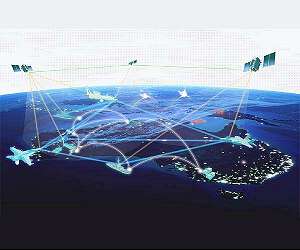
illustration only

SpainSat NG programme completed as second secure communications satellite launches

by ESA Staff Writers
Paris, France (ESA) Nov 25, 2025

Europe has strengthened its secure-communications capabilities with the successful launch of SpainSat NG II on 24 October, wrapping up the SpainSat Next Generation programme supported by the European Space Agency (ESA). With both SpainSat NG satellites now in orbit, Europe will see its most advanced governmental communications system to date, a major step for the continent's security, crisis-response capacity, and technological autonomy.

The launch of SpainSat NG II from Kennedy Space Center comes nine months after its twin, SpainSat NG I. They are part of Spanish satellite service provider Hisdesat's SpainSat Next Generation programme, focused on advancing secure satellite communications for Europe.

Set to begin joint operations in 2026, the satellites will serve the Spanish Armed Forces, and other national and allied government agencies. It will also be used by the European Union through its GOVSATCOM HUB and help cover humanitarian response missions worldwide. Their coverage extends across Europe, the Americas, Africa, and parts of the Middle East and Asia.

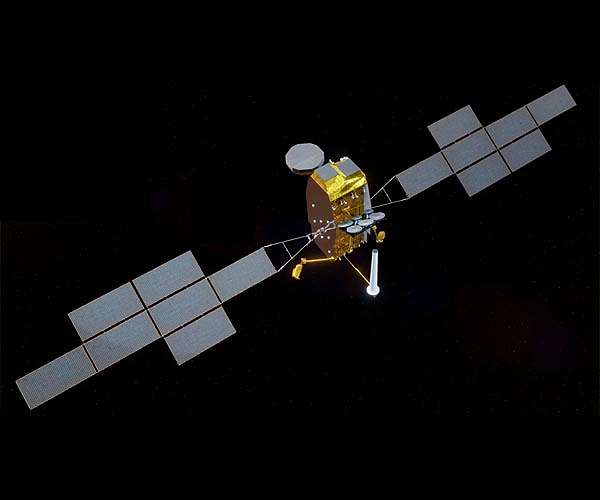
Built on Airbus's Eurostar Neo platform and weighing approximately six tonnes each, the satellites have reconfigurable X-band antennas together with KaGov-band steerable antennas developed under ESA's Pacis 3 Partnership Project. European space collaboration between ESA, Hisdesat, Spanish Space Agency and Airbus Defence and Space enabled the innovative development of these antennas with pooling and sharing capabilities, so that it quickly adapts to changing uses and users.

Instead of relying on many fixed antennas, the X-band antenna system integrates an active array capable of performing the work of 16 traditional antennas. It can shift capacity in real time based on demand or environmental conditions. This is crucial when communication needs suddenly change during natural disasters or high-security operations. The antenna can also geolocate and disable jamming attempts, making sure connections stay reliable when signals are disrupted.

The satellites were built in just five years and launched within the same year, a pace that highlights the efficiency of the industrial process led by industrial prime Airbus Defence and Space. Additionally, Spanish industry contributed extensively through companies such as Sener, Indra, Arquimea, Tecnobit, GMV, and Airbus Crisa, reinforcing Europe's position in secure-satellite technology.

With SpainSat NG now complete, Europe gains a powerful and adaptable system designed to provide reliable, secure communications, strengthening Spain's capabilities and the continent's strategic autonomy in space.

"The success of SpainSat NG demonstrates what Europe's space players are capable of," said Josef Aschbacher, Director General of ESA. "ESA's role as a neutral technological expert allowed us to build a collaborative philosophy directly into the pool-and-share capabilities enabled by Pacis 3, ensuring governmental users can communicate during a crisis. We are proud to champion this collaboration across public and private spheres, which made it possible to innovate quickly and improve our collective safety and strategic autonomy."

"SpainSat NG represents the next generation of secure satellite communications in Europe. This second launch marks a key milestone in providing more adaptable and secure communications services that will benefit governmental users across Europe and beyond," said Laurent Jaffart, ESA's Director of Connectivity and Secure Communications.

"Pacis 3 has been an excellent collaboration between institutional and industrial organisations", said Miguel Angel Garcia Primo, Hisdesat's Chief Executive Officer. "We are proud to have developed SpainSat NG I and II, the most advanced European secure communications satellites, in collaboration with ESA, Spanish Space Agency and Airbus Defence and Space, with the participation of most of the Spanish Space sector. This project has placed Spanish industry at the forefront of active antenna technologies".

Related Links
European Space Agency (ESA)
Read the latest in Military Space Communications Technology at SpaceWar.com

Subscribe Free To Our Daily Newsletters
Tweet

RELATED CONTENT
The following news reports may link to other Space Media Network websites.
MILITARY COMMUNICATIONS
New Laboratory Showcases Advanced Satcom Capabilities for Australian Defence Force
Sydney, Australia (SPX) Nov 18, 2025
ST Engineering iDirect and Black Cat Systems are working together to establish an Advanced Satcom Technology Demonstration Lab to support the Australian Defence Force (ADF). Central to this lab is the ST Engineering iDirect 450 Software Defined Modem (SDM), which provides multi-waveform and multi-orbit capabilities, as well as interference mitigation technology tailored for defense needs. Black Cat Systems has purchased additional Evolution Defense hubs and 9-Series modems and will demonstrate the ... read more

MILITARY COMMUNICATIONS
Kimchi consumption shown to regulate immune response in new clinical study

Starlab secures investment from Janus Henderson for commercial space station project

Can America Beat China Back to the Moon?

Hydroponic plant factories enable continuous urban edamame harvest

MILITARY COMMUNICATIONS
Successful cryogenic engine start enables enhanced mission flexibility for ISRO

Argonaut lunar landers to deliver cargo on Ariane 6 missions

Blue Origin's New Glenn Nails First Ocean Booster Landing

PLD Space expands rocket subsystem testing leadership in Europe

MILITARY COMMUNICATIONS
NASA twin spacecraft depart Earth orbit to begin Mars mission

Ancient Martian groundwater may have prolonged habitability beyond previous estimates

What a Martian ice age left behind

Dust and Sand Movements Reshape Martian Slopes

MILITARY COMMUNICATIONS
China returns research samples from space station to Earth for study

Resupply spacecraft prepared for Tiangong station after safe crew return

China's Shenzhou-20 astronauts return to Earth after delay

Tiangong hosts dual crews after debris impact delays Shenzhou-20 return

MILITARY COMMUNICATIONS
How smarter satellite teamwork can speed up connections in space

York Space Systems prepares for public offering as satellite deployments and contract wins drive growth

Fast Satellite Ground Synchronization Technology Advances Beam Hopping Communications

ESA's impact featured in key UK space policy report

MILITARY COMMUNICATIONS
Orbital cloud project to combine solar powered AI compute and satellite network in low Earth orbit

Frontgrade unveils SADA-10 drive to increase efficiency for LEO and MEO satellites

Faraday Effect Reveals Magnetic Role of Light in New Study

Cool comfort: beating the heat with high-tech clothes

MILITARY COMMUNICATIONS
Machine learning tool distinguishes signs of life from non-living compounds in space samples

Water production on exoplanets revealed by pressure experiments

Exoplanet map initiative earns NASA support for University of Iowa physicist

How to spot life in the clouds on other worlds

MILITARY COMMUNICATIONS
Saturn moon mission planning shifts to flower constellation theory

Could these wacky warm Jupiters help astronomers solve the planet formation puzzle?

Out-of-this-world ice geysers on Saturn's Enceladus

3 Questions: How a new mission to Uranus could be just around the corner

Subscribe Free To Our Daily Newsletters


The content herein, unless otherwise known to be public domain, are Copyright 1995-2024 - Space Media Network. All websites are published in Australia and are solely subject to Australian law and governed by Fair Use principals for news reporting and research purposes. AFP, UPI and IANS news wire stories are copyright Agence France-Presse, United Press International and Indo-Asia News Service. ESA news reports are copyright European Space Agency. All NASA sourced material is public domain. Additional copyrights may apply in whole or part to other bona fide parties. All articles labeled "by Staff Writers" include reports supplied to Space Media Network by industry news wires, PR agencies, corporate press officers and the like. Such articles are individually curated and edited by Space Media Network staff on the basis of the report's information value to our industry and professional readership. Advertising does not imply endorsement, agreement or approval of any opinions, statements or information provided by Space Media Network on any Web page published or hosted by Space Media Network. General Data Protection Regulation (GDPR) Statement Our advertisers use various cookies and the like to deliver the best ad banner available at one time. All network advertising suppliers have GDPR policies (Legitimate Interest) that conform with EU regulations for data collection. By using our websites you consent to cookie based advertising. If you do not agree with this then you must stop using the websites from May 25, 2018. Privacy Statement. Additional information can be found here at About Us.