| . |  |
. |
| . | |
. |


 by Adam Schrader Washington DC (UPI) Jun 13, 2021
The Federal Aviation Administration on Monday said SpaceX will be required to make more than 75 changes to the orbital launch program at its Starbase launch site in Texas after determining there would be some environmental impacts to the surrounding area. Elon Musk's SpaceX must obtain either an experimental permit or a vehicle operator license from the FAA for Starship and Super Heavy launch operations from the Boca Chica facility. "One step closer to the first orbital flight test of Starship," SpaceX tweeted Monday with a link to the FAA report. The FAA decision Monday was made as part of a required environmental review as a part of that process and the agency noted that fulfilling the environmental changes necessary as described by the review would not guarantee that it would issue the permit. SpaceX will be required to take such measures as mitigating water pollution, noise levels and adjusting lighting at the complex to minimize the impact on wildlife and at the nearby beach, the FAA said. If the permit is granted, SpaceX will also be required to perform ongoing monitoring of local vegetation and wildlife by a qualified biologist and coordinate with state and federal agencies on the removal of launch debris from sensitive habitats. The FAA noted that SpaceX made some changes to its proposal before the review was completed, including removing desalination and power plants and modifying its Raptor engine configurations that "would not constitute any discernable changes in environmental impacts." The environmental impacts were not significant and would not require a full environmental impact assessment, the FAA noted. The U.S. Fish and Wildlife Service issued a biological opinion as part of the process that concluded the launch plans are not likely to jeopardize any federally protected endangered species or their habitats.
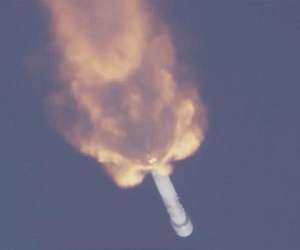
SpaceX launches Nilesat 301 satellite, recovers Falcon 9 first stage Washington DC (UPI) Jun 8, 2021 SpaceX on Wednesday launched a communications satellite and recovered its Falcon 9 rocket at sea. Falcon 9 lifted off from Cape Canaveral Space Force Station in Florida, carrying a Nilesat 301 satellite at 5:04 p.m. on Wednesday. The rocket's first stage booster returned to earth about 8 minutes and 45 seconds after launch and touched down on SpaceX's Just Read the Instructions droneship, which was positioned off the coast of Florida. Nilesat 301, a multi-purpose broadcasting sate ... read more
|
|||||||||||||
| The content herein, unless otherwise known to be public domain, are Copyright 1995-2026 - SpaceDaily. All websites are published in Australia and are solely subject to Australian law and governed by Fair Use principals for news reporting and research purposes. By using our websites you consent to cookie based advertising. If you do not agree with this then you must stop using the websites from May 25, 2018. Privacy Statement. Additional information can be found here at About Us. |

 del.icio.us
 Digg
Digg Reddit
 Google






