| . |  |
. |
| . | |
. |


 by AFP Staff Writers Kabul (AFP) Nov 15, 2021
Afghanistan's food crisis is a "legacy" of the previous government, the Taliban deputy health minister said Monday, as he accused the international community of failing to keep its promises of aid. The UN has warned that around 22 million Afghans or half the country will face an "acute" food shortage in the winter months due to the combined effects of drought caused by global warming and an economic crisis aggravated by the Taliban takeover. "There is a very important problem that has been left over as a legacy from the former regime, and that is malnutrition," Deputy Health Minister Abdul Bari Omar said at a press conference in Kabul. He cited World Food Programme figures showing 3.2 million Afghan children under the age of five will be acutely malnourished by the end of the year, and said the previous US-backed government did not do enough to avert disaster. "For twenty years, the health sector has remained dependent on foreign aid. No basic work has been done ... so the healthcare infrastructure and its resources could survive," he said. Foreign donors and non-governmental organisations have financed everything, he continued, adding: "No factories have been built, the domestic resources haven't been utilised." The Taliban overthrew the previous US-backed government on August 15 following a lightning offensive into the capital. The international community then froze the aid on which the country's economy so heavily relied. "How we can provide services if the foreign resources are curtailed and the international organisations cut their aid?" Omar said. "The World Bank, EU, and USAID (the US development agency) do not fulfil the promises they made to the people of Afghanistan," he said. "Organisations made commitments to the people of Afghanistan, and made promises to mothers, children, and the needy. Their slogan was to keep health services away from politics, but when the (regime) change took place, unfortunately, they all ended up with a political agenda," he said. The food crisis comes after Afghanistan has already been devastated by more than four decades of conflict.
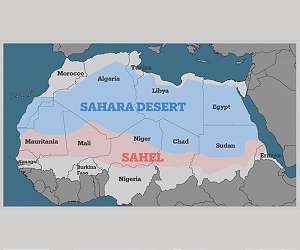
North African climate change threatens farming, political stability Sidi Salem, Tunisia (AFP) Nov 15, 2021 Tunisian olive farmer Ali Fileli looked out over his parched fields and crushed a lump of dry, dusty earth in his hand. "I can't do anything with my land because of the lack of water," he said. Fileli is just one of many farmers who have been left high and dry by increasingly long and intense droughts across North Africa. "When I started farming with my father, there was always rain, or we'd dig a well and there would be water," said the 54-year-old, who farms around 22 hectares (54 acres) o ... read more
|
|||||||||||||
| The content herein, unless otherwise known to be public domain, are Copyright 1995-2026 - SpaceDaily. All websites are published in Australia and are solely subject to Australian law and governed by Fair Use principals for news reporting and research purposes. By using our websites you consent to cookie based advertising. If you do not agree with this then you must stop using the websites from May 25, 2018. Privacy Statement. Additional information can be found here at About Us. |

 del.icio.us
 Digg
Digg Reddit
 Google







