 |
|
|
|


|
Jupiter's Icy Moon Orbiter San Francisco - Dec 11, 2003
As a follow-on to the recently ended Galileo mission to Jupiter, the next goal seems to be investigating its icy moons--Io, Ganymede, Callisto and Europa. A subsurface ocean and tidal heating may make possible at least two of the three requirements for life, namely water and energy. If a thick ice layer protects the ocean, even the final requirement for a thick atmosphere may be less important to subsurface life. The mission is called the Jupiter Icy Moon Orbiter, or JIMO. |
 Pasadena - Dec 14, 2003
In an article appearing on page 1 of the science section of the New York Times December 9, Times reporter Mathew Wald grossly misrepresented the danger posed by cosmic radiation to astronauts on a human Mars mission, writes Robert Zubrin. |
NASA Scientists Discover Spring Thaw Makes A Difference Pasadena - Dec 11, 2003
Using a suite of microwave remote sensing instruments aboard satellites, scientists at NASA's Jet Propulsion Laboratory and the University of Montana, Missoula, have observed a recent trend of earlier thawing across the northern high latitudes. |
Goodrich Delivers Telescope Optics to Chilean Mountaintop Charlotte - Dec 14, 2003
Goodrich has delivered a complex optical assembly for the Southern Astrophysical Research (SOAR) telescope that will located on an 2,500-meter mountain in the Chilean Andes. The effort is funded by a partnership between the US and Brazil. |

|
FRINGE Scientists Use Radar Vision To See The Earth Move Paris - Dec 14, 2003
Tiny ground movements that occur too gradually to be seen by the human eye can nevertheless be detected by ESA satellites looking down to Earth from 800 km away. DATAC Releases New Power Generator Monitor and Secure Tracker  Dublin - Dec 11, 2003
DATAC today announce the release of DATAC GeMSeT, a power generator monitoring and secure tracking device for the construction and utility industries. DATAC GeMSeT monitors engine operations and detects alarms or failures, identifying issues before they become real problems. |
Materials Retain Useful Properties At Nanoscale Researchers Find Fayetteville - Dec 14, 2003
One of the materials that powers modern technology like medical ultrasound and nationwide cell phones has been discovered to retain its properties when present in extraordinarily tiny amounts. Robot Navigates Using Its Own Voice 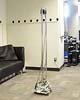 Toronoto - Dec 14, 2003
In the past, museum guides carried a clipboard and waved a flag to help straggling tourists find the group. In the future - thanks to technology developed at the University of Toronto - talking robotic guides carrying a customized microchip and four-way speakers could lead tourists from exhibit to exhibit. |

|
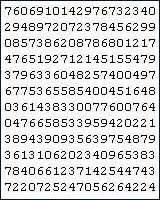 East Lansing - Dec 14, 2003
An MSU graduate student has harnessed the power of the PC to discover the largest known prime number. The number is 6,320,430 digits long, and took just more than two years to find using a distributed network of 60,000 volunteers' computers around the world. Chinese Space Mission Uses University Of Sussex-Designed Software To Study Space Weather 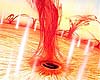 Beijing - Dec 11, 2003
A Chinese space rocket incorporating software designed by University of Sussex space scientists is set for launch later this month. Extensive Destruction Powers Solar Explosions 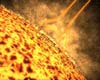 Greenbelt - Dec 11, 2003
Large-scale destruction of magnetic fields in the sun's atmosphere likely powers enormous solar explosions, according to a new observation from NASA's Ramaty High Energy Solar Spectroscopic Imager (RHESSI) spacecraft. NASA Learning To Monitor Coral Reef Health From The Sky  San Francisco - Dec 11, 2003
Coral reef health may be accurately estimated from sensors on airplanes and satellites in the future, according to a NASA scientist who is the principal investigator in a collaborative project to develop a method to remotely sense coral health. Research Generates Reliable Energy Source During Outages  Madison - Dec 11, 2003
As utility companies search for ways to avoid blackouts, like the one that shut down the northeastern corner of the United States last summer, one idea comes from UW-Madison. |
|

|
|
|
|
|
|
| The contents herein, unless otherwise known to be public domain, are Copyright 1995-2003 - SpaceDaily. AFP Wire Stories are copyright Agence France-Presse ESA Portal Reports are copyright European Space Agency. Additional copyrights may apply in whole or part to other bona fide parties. Advertising does not imply endorsement, agreement or approval of any opinions, statements or information provided by SpaceDaily on any web page published or hosted by SpaceDaily. Privacy Statement |