|
 |
 |
 |
 |
 |
 |
 |
 |
 |

| . |  |
. |
Improved Guidance Systems Can Reduce Collateral Damage
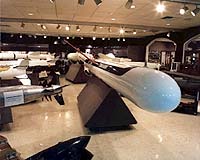
The collateral damage caused by "carpet bombing" has compelled the U.S. military to develop more precise air-to-surface missiles. This technology is based on a combination of radar sensors, global positioning systems, and inertial navigation systems. Improving accuracy of munitions will not only minimize civilian casualties and infrastructure wreckage, but also reduce the number of weapons that need to be fired. A major British aerospace company has developed a tiny, silicon ring-based inertial measurement unit, using micro-electro mechanical system (MEMS) technology, to help guide projectiles to their targets accurately. "The main advantage of solid state measurement units over conventional gyroscope-based solutions is that they have a longer life, modest manufacturing costs, and higher reliability," says Frost & Sullivan Analyst Michael Valenti. "The silicon technology that these systems rely on also minimizes the size, weight, and power consumption of the units." Since some of these MEMS devices are rugged enough to withstand acceleration forces exceeding 20,000 times the force of gravity, they are being incorporated into next-generation, shoulder-launched, anti-armor rockets for use by the British and Swedish forces. The U.S. Army and Marines will incorporate these guidance systems in their helicopter rockets, while the U.S. Navy will use them to improve the accuracy of ground support fire. Britain's Royal Air Force and Royal Navy have been supplied with laser-guided, precision bomb systems that are not affected by bad weather or smoke. Their anti-jamming and anti-spoofing technologies maintain the intended projectile of the missiles and help minimize unwanted damage. For small combat units, situational awareness is vital. WSI Corp's InFlight system, for example, was specifically designed as an in-flight decision support aid for pilots along with the company's high-quality weather information systems. Its lightweight receiver can operate at up to 55,000 feet at temperatures ranging from -20 degrees to +70 degrees centigrade. Small, corporate aircraft have multi-function displays of important flight information including air traffic and terrain features that give pilots time to adjust their flight plan. "Pilots and battlefield commanders have several satellite communication systems that link them to different military units," notes Valenti. "However, the U.S. government is looking to replace several of these bulky, complex systems." The U.S. military intends to simplify aeronautical communications by developing digital tactical systems that are compact and simple. For instance, the all-digital receiver directly digitizes incoming radio-frequency signals to provide greater support to signal processing in diverse military applications. A promising tactical communications system is the light and small heterojunction bipolar transistor, which can transmit information twice as fast as conventional transistors. The adaptability of the digital communications devices and clarity of audio are of immense use in military operations. Related Links Frost & Sullivan SpaceDaily Search SpaceDaily Subscribe To SpaceDaily Express  FullCircle Releases Personal Emergency Response Systems
 Louisville - Dec 09, 2003
FullCircle Registry, Inc. announced Monday the introduction of its Personal Emergency Response Systems (PERS) product line, in partnership with RemoteMDx, Inc. The new wireless products incorporate the satellite tracking technology and world-class monitoring capabilities of Magnavox-branded MobilPal and HomePal systems.
|
|
| |||||||||
| The content herein, unless otherwise known to be public domain, are Copyright 1995-2016 - Space Media Network. All websites are published in Australia and are solely subject to Australian law and governed by Fair Use principals for news reporting and research purposes. AFP, UPI and IANS news wire stories are copyright Agence France-Presse, United Press International and Indo-Asia News Service. ESA news reports are copyright European Space Agency. All NASA sourced material is public domain. Additional copyrights may apply in whole or part to other bona fide parties. Advertising does not imply endorsement, agreement or approval of any opinions, statements or information provided by Space Media Network on any Web page published or hosted by Space Media Network. Privacy Statement All images and articles appearing on Space Media Network have been edited or digitally altered in some way. Any requests to remove copyright material will be acted upon in a timely and appropriate manner. Any attempt to extort money from Space Media Network will be ignored and reported to Australian Law Enforcement Agencies as a potential case of financial fraud involving the use of a telephonic carriage device or postal service. |