 |
|
|
|

YESTERDAY'S SPACE
MARSDAILY MOONDAILY SPACEMART SPACEWAR SPACE TRAVEL TERRADAILY DRAGON SPACE ASTRONAUTIX EMAIL US /ABOUT US AD RATES SPACEDAILY FORUMS |
 Grad Student Uses 60,000 PCs to Find Latest Prime Number  East Lansing - Dec 14, 2003
An MSU graduate student has harnessed the power of the PC to discover the largest known prime number. The number is 6,320,430 digits long, and took just more than two years to find using a distributed network of 60,000 volunteers' computers around the world. |

|

|
Saturn To Ring In The New Year 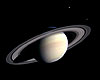 Huntsville - Dec 14, 2003
When the clock strikes midnight on Dec. 31st, heralding the start of 2004, dash outside and look up. Directly overhead you'll see a yellow star outshining the others around it. That star is a planet: Saturn, having its closest encounter with Earth for the next 29 years. Cassini's Huygens Science Teams Begin Final Science Planning  Pasadena - Dec 14, 2003
The most recent spacecraft telemetry was acquired from the Goldstone tracking station on Monday, December 8. The Cassini spacecraft is in an excellent state of health and is operating normally. Information on the present position and speed of the Cassini spacecraft may be found on the "Present Position" web page. |
Tones Break Silence During Mars Exploration Rover Landings Pasadena - Dec 14, 2003
On the phone, tones can signal a connection. On paper, they can add shape and dimension. On Mars, they can do both. This is why members of the Mars Exploration Rover Entry Descent and Landing team at NASA's Jet Propulsion Laboratory will be on the lookout for a series of tones during the mission's landings in January 2004. NY Times Misrepresents Mars Missions Radiation Danger  Pasadena - Dec 14, 2003
In an article appearing on page 1 of the science section of the New York Times December 9, Times reporter Mathew Wald grossly misrepresented the danger posed by cosmic radiation to astronauts on a human Mars mission. |
Disaster Monitoring Constellation Partners Hold 4th Meeting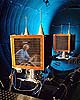 Ankara - Dec 14, 2003
Following the successful launch of the latest three satellites forming the Disaster Monitoring Constellation, the international partners in the constellation held their fourth meeting, hosted by BILTEN (Turkey) in Ankara, 17-18 November. Second GEO Meeting Highly Constructive  Brussels - Dec 11, 2003
The Group on Earth Observations held its second plenary meeting in Baveno Italy on 28 and 29 November 2003. Members reviewed the first draft of the GEO Framework Document, to be presented at the next ministerial meeting in Tokyo in 2004. |
NASA Scientists To Discuss Search For Extraterrestrial Life San Francisco - Dec 11, 2003
The potential for life on other planets is one of the topics that NASA scientists will explore during the American Geophysical Union's fall meeting in San Francisco. Planet-Formation Model Indicates Earthlike Planets Might Be Common  Seattle - Dec 11, 2003
Astrobiologists disagree about whether advanced life is common or rare in our universe. But new research suggests that one thing is pretty certain - if an Earthlike world with significant water is needed for advanced life to evolve, there could be many candidates. |

|
Stratos Launches IP VSAT Service for Broadband Satellite Connectivity Bethesda - Dec 11, 2003
Stratos, a leading global communications services and solutions provider, today announced the launch of its new broadband IP VSAT service, StratosITek, for next generation all-digital global connectivity. The system uses iDirect Technologies' broadband IP solution and is designed to offer a cost effective solution for small to large enterprise users. Intersputnik Provides Capacity to Connexion by Boeing  Moscow - Dec 11, 2003
Connexion by Boeing has signed a contract with the Intersputnik International Organization of Space Communications for transponder capacity of the Yamal-200 geostationary satellite to provide broadband communication services to passengers of commercial airlines and private jets flying over Europe and Asia. |
Gas Hydrates Offer New Major Energy Source Washington - Dec 11, 2003
For the first time, an international research program involving the Department of the Interior's U.S. Geological Survey has proven that it is technically feasible to produce gas from gas hydrates. Gas hydrates are a naturally occurring "ice-like" combination of natural gas and water that have the potential to be a significant new source of energy from the world's oceans and polar regions. A Hot Time For Cold Superconductors  Boston - Dec 09, 2003
A new way to manufacture a low-cost superconducting material should lead to cheaper magnetic resonance imaging machines and other energy-efficient applications, say Los Alamos National Laboratory scientists. Hot isostatic pressing of wires made of magnesium diboride, or MgB2, significantly increased the amount of electrical current the wires can carry without electrical resistance. |

|

|
|
|
|
|
|
| The contents herein, unless otherwise known to be public domain, are Copyright 1995-2003 - SpaceDaily. AFP Wire Stories are copyright Agence France-Presse ESA Portal Reports are copyright European Space Agency. Additional copyrights may apply in whole or part to other bona fide parties. Advertising does not imply endorsement, agreement or approval of any opinions, statements or information provided by SpaceDaily on any web page published or hosted by SpaceDaily. Privacy Statement |