| . |  |
. |
| . | |
. |


 by Richard Tomkins Canberra (UPI) Mar 07, 2017
A C-band space surveillance radar system jointly operated by the United States and Australia has reached Full Operational Capability, the Australian Department of Defense reports. The system, which tracks satellites and space debris, was gradually relocated to Western Australia by the U.S. Air Force from Antigua in the Caribbean beginning in 2014. "The C-Band radar operated from Harold E. Holt Naval Communication Station near Exmouth, Western Australia, is the first low-earth orbit space surveillance network sensor in the Southern Hemisphere," Australian Minister for Defense Marise Payne said in a press release. "In its new location, the radar provides both southern and eastern hemisphere coverage that will lead to improved positional accuracies and predictions." While in Antigua, the system was used to track the telemetry of space launches from Cape Canaveral.
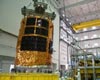 Japan's troubled 'space junk' mission fails
Tokyo (AFP) Feb 6, 2017 An experimental Japanese mission to clear 'space junk' or rubbish from the Earth's orbit has ended in failure, officials said Monday, in an embarassment for Tokyo. Over 100 million pieces of garbage are thought to be whizzing around the planet, including cast-off equipment from old satellites and bits of rocket, which experts say could pose risks for future space exploration. Scientists ... read more Related Links Space Technology News - Applications and Research 
|
||||||||||
| The content herein, unless otherwise known to be public domain, are Copyright 1995-2026 - SpaceDaily. All websites are published in Australia and are solely subject to Australian law and governed by Fair Use principals for news reporting and research purposes. By using our websites you consent to cookie based advertising. If you do not agree with this then you must stop using the websites from May 25, 2018. Privacy Statement. Additional information can be found here at About Us. |


 del.icio.us
 Digg
Digg Reddit
 Google





