| . |  |
. |
| . | |
. |


 by Staff Writers Wellington (AFP) July 16, 2019
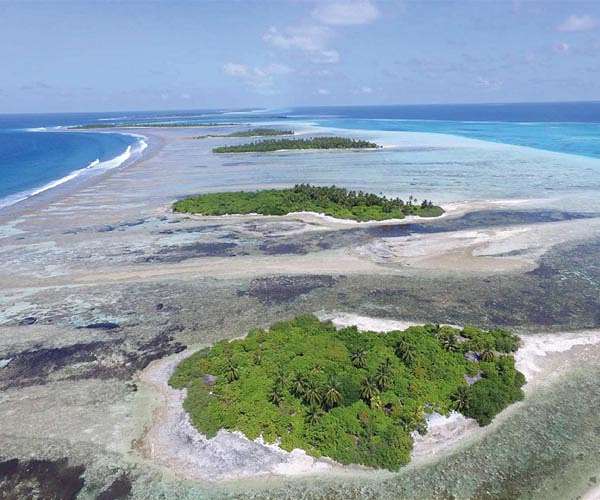
The Pacific's low-lying reef islands are likely to change shape in response to climate change, rather than simply sinking beneath rising seas and becoming uninhabitable as previously assumed, new research has found. Atoll nations such as Tuvalu, Tokelau and Kiribati lie only a few metres above sea level and are considered the world's most vulnerable to global warming, with fears their populations will become climate refugees as waters rise. But a study published this week found that such islands "morphodynamically respond" to the environment because they are composed of the skeletal remains of tiny reef-dwelling organisms, rather than solid rock. The researchers said evidence that such islands slowly change like shifting sands had profound implications for climate change planning in affected nations. Co-author Murray Ford of Auckland University said low-lying reef islands appeared more resilient than previously thought. "The effects on individual islands will vary so that while some areas may become uninhabitable, (other) areas will keep pace with rising seas," he said. "It will be up to governments and communities to decide how to respond over time, but we think this study highlights the fact that nature provides a template for adaptation and island communities may need to adapt too." The study, conducted by researchers from New Zealand, Britain and Canada, was published by the Geological Society of America this week. The researchers created a 1:50 scale model of Tuvalu's Fatato Island in a 20-metre (66-foot) flume tank to test the impact of rising seas and increasing storm surges caused by climate change. They found the crest of the island became higher and the entire landmass shifted across the underlying reef. "These insights highlight an urgent need to incorporate island morphological dynamics into reassessments of future wave-driven flood risk projections for reef islands," the researchers said. The same team last year used historical aerial photographs to show that the land area of Tuvalu's nine atolls and 101 reef islands has increased by 2.9 percent between 1971 and 2014. The concept of climate change forcing Pacific islanders from their homes is a sensitive issue in atoll nations. New Zealand's progressive government entered office in 2017 with a policy of creating a world-first visa that recognised climate change refugees fleeing their swamped homelands. But it quietly shelved the idea last year after receiving feedback from islanders, who wanted relief efforts to concentrate on saving their homes rather than easing access to new ones elsewhere. The 18-member Pacific Islands Forum will hold its annual summit in Tuvalu next month, with climate change expected to again top the agenda.
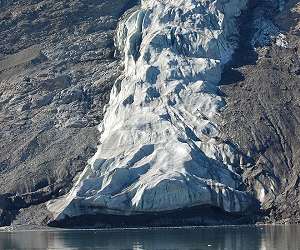
New research shows how melting ice is affecting supplies of nutrients to the sea Bristol UK (SPX) Jul 01, 2019 The findings of a research expedition to coastal Greenland which examined, for the first time, how melting ice is affecting supplies of nutrients to the oceans has been published in the journal Progress in Oceanography. The European Research Council-funded expedition on board the RSS Discovery took place during the summer of 2017. It was led by Dr Kate Hendry a geochemist from the University of Bristol's School of Earth Sciences. The scientific crew spent about five weeks at sea in 2017, mos ... read more
|
|||||||||||||
| The content herein, unless otherwise known to be public domain, are Copyright 1995-2026 - SpaceDaily. All websites are published in Australia and are solely subject to Australian law and governed by Fair Use principals for news reporting and research purposes. By using our websites you consent to cookie based advertising. If you do not agree with this then you must stop using the websites from May 25, 2018. Privacy Statement. Additional information can be found here at About Us. |

 del.icio.us
 Digg
Digg Reddit
 Google







