| . |  |
. |
| . | |
. |


 by Staff Writers Beijing (XNA) Aug 24, 2018
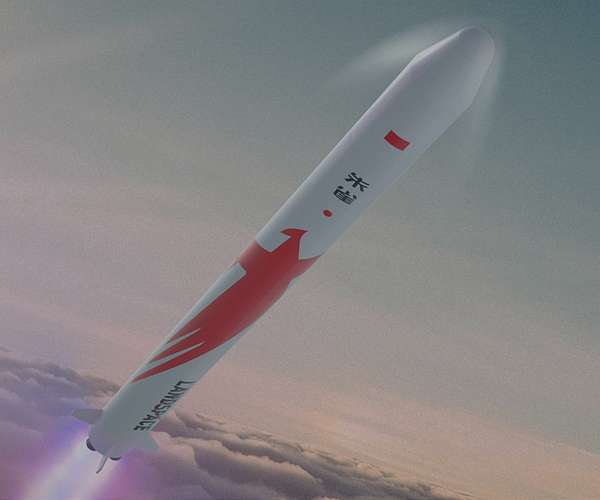
China will launch its first solid-propellant carrier rocket developed by a Chinese private company late this year. The ZQ-1 rocket was developed by Landspace, a Beijing-based rocket-maker. Its technicians are former state-owned aerospace industry workers. Carrying a small satellite, the rocket will be launched at the Jiuquan Satellite Launch Center in northwest China, the company said Thursday. "If the launch mission can go well, the ZQ-1 will become China's first private carrier rocket that can send satellites into space," said Zhang Changwu, CEO of Landspace. The 19-meter-long rocket has a 1.35-meter diameter, a takeoff weight of 27 tonnes and thrust of 45 tonnes. It is flexible, cost-efficient and has been designed with mature technology and fast response ability. "After nine months of development, the rocket completed the final assembly Monday and entered the launching phase, showing that the company is capable of making rockets," Zhang said. The satellite, Future, carried by the rocket is for space science and remote sensing for a TV show on China Central Television. It will orbit for two years. ZQ is short for Zhuque (Vermilion bird). It is one of the four spirits of ancient Chinese mythology, representing fire and controlling the southerly direction. The company also plans to launch ZQ-2, a liquid-fueled rocket, in 2020. China has more than 60 private companies entering the commercial space industry. They are growing fast and competing in market for launches of small satellites and rockets. Source: Sputnik News
Student Experiments Soar with Early Morning Launch from Wallops Wallops VA (SPX) Aug 15, 2018 Approximately 100 undergraduate university and community college students from across the United States were on hand to witness the launch of their experiments and technology demonstration projects on a NASA suborbital rocket at 6:13 a.m., Aug. 14, from NASA's Wallops Flight Facility. The Terrier-Improved Malemute sounding rocket launched as the sun was rising over the horizon and carried the student projects to an altitude of 98.5 miles. After a brief ride into space, the payload carrying t ... read more
|
|||||||||||||
| The content herein, unless otherwise known to be public domain, are Copyright 1995-2026 - SpaceDaily. All websites are published in Australia and are solely subject to Australian law and governed by Fair Use principals for news reporting and research purposes. By using our websites you consent to cookie based advertising. If you do not agree with this then you must stop using the websites from May 25, 2018. Privacy Statement. Additional information can be found here at About Us. |

 del.icio.us
 Digg
Digg Reddit
 Google






